

It was always going to be an uphill task for Ħamrun Spartans in their UEFA Champions League second qualifying round first leg tie against Dynamo Kyiv. And while they started with an aggressive and daring approach, the Ukrainian champions flexed their muscles and secured a comfortable 3-0 victory – a scoreline that, in truth, could have been heavier.
Dynamo’s superiority in quality, athleticism, and tactical clarity came to the fore, especially in the second half, where they created a flurry of chances. They might rue their profligacy, but the three-goal cushion still places them firmly in control heading into the return leg.
Despite the class gulf, there were several tactical layers worth dissecting – both in how Ħamrun tried to challenge their opponents and where they fell short.
Ħamrun opened with bold intentions. Their very first kick-off was a direct long ball aimed at exploiting space on the flanks and putting pressure high up the pitch, rather than drawing Dynamo into their own half.
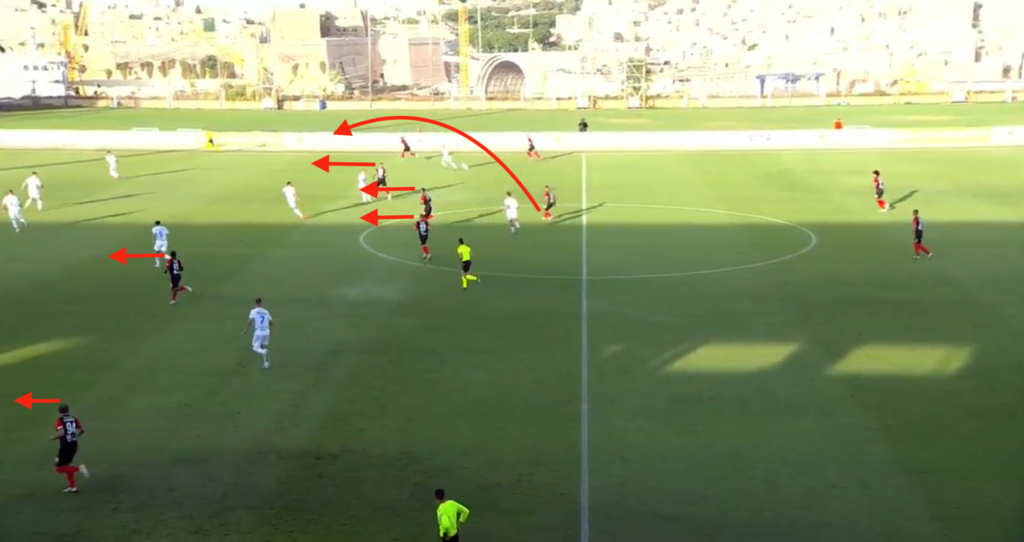
Coach Giacomo Modica’s starting system was a flexible 4-5-1, similar to the setup used against FK Žalgiris in the previous round. Vincenzo Polito started at right-back with Rafael Compri higher up as a wing-back, while Domantas Šimkus operated slightly deeper than the midfield line, linking play and shielding against Dynamo’s advanced players.
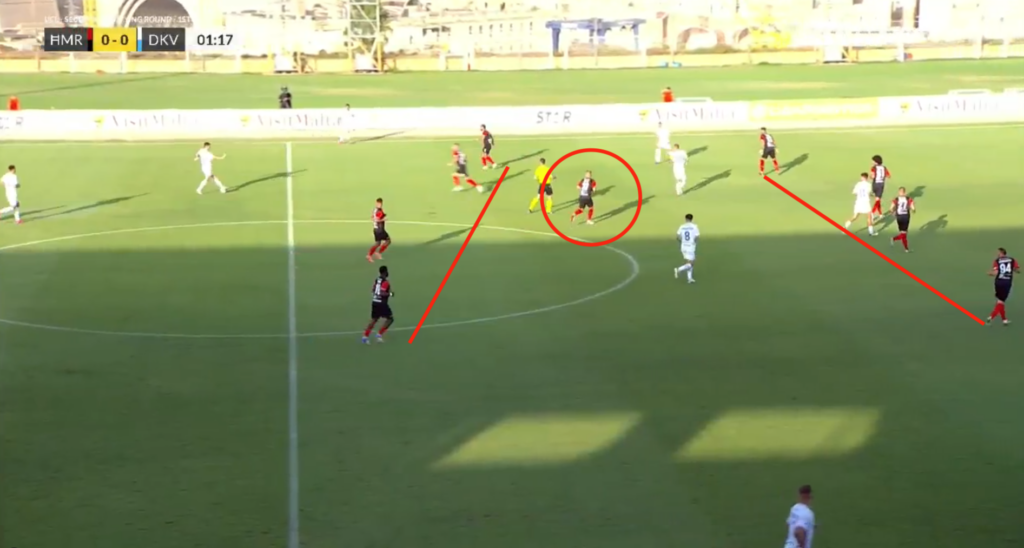
In the early stages, Ħamrun applied a high pressing system against Dynamo’s build-up. It appeared to surprise the Ukrainians, who looked unsettled and were forced to go long from the goalkeeper.
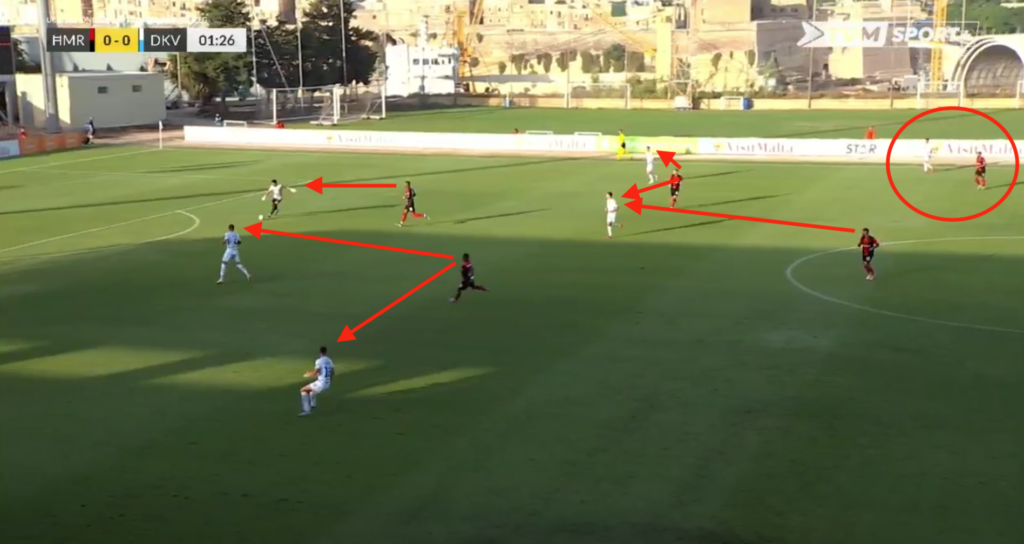
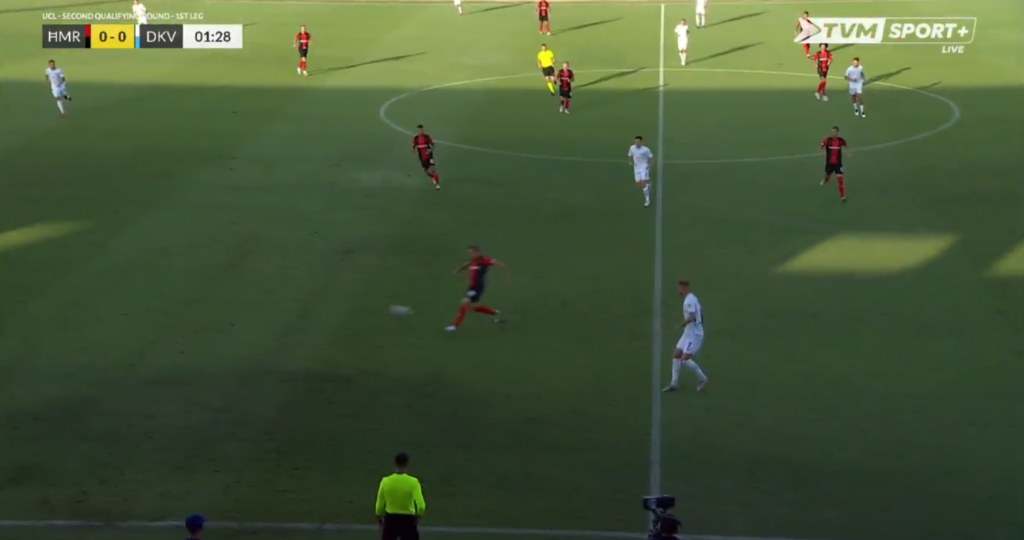
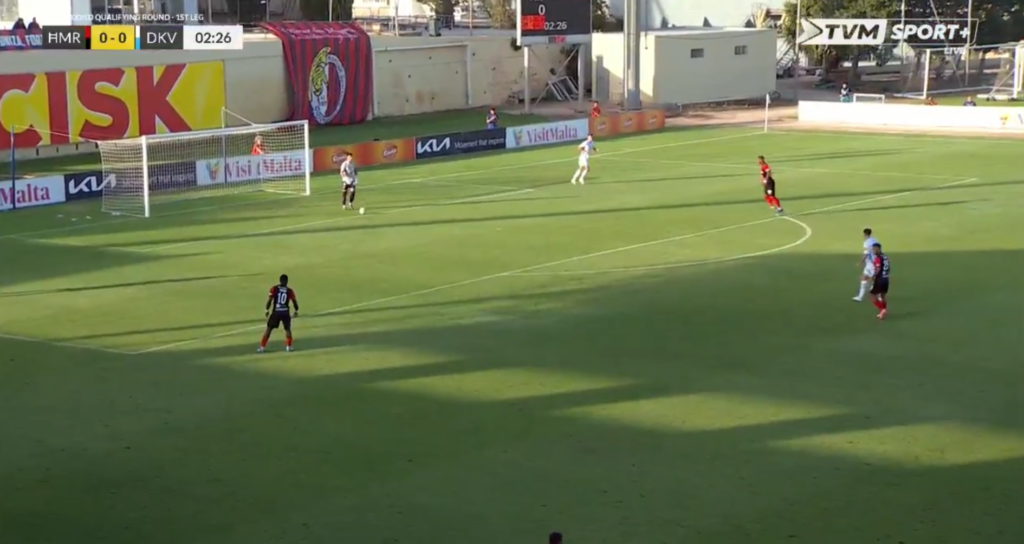
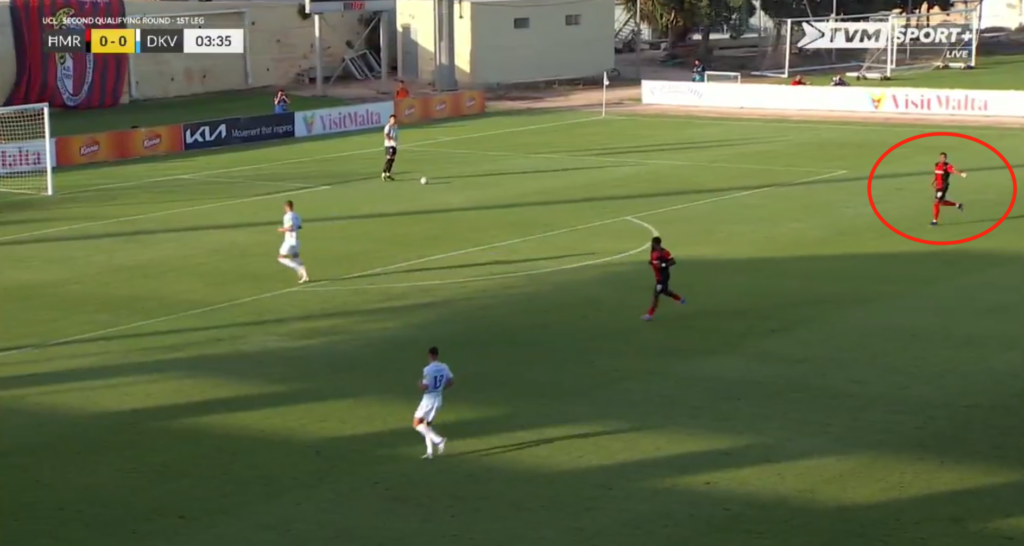
Central to this press was Jovan Čadjenović, or at times Šimkus, tasked with marking whichever of Dynamo’s pivots dropped deep to receive. This press worked initially, but once it became less coordinated and intensity dropped, Dynamo found it easier to play through the centre.
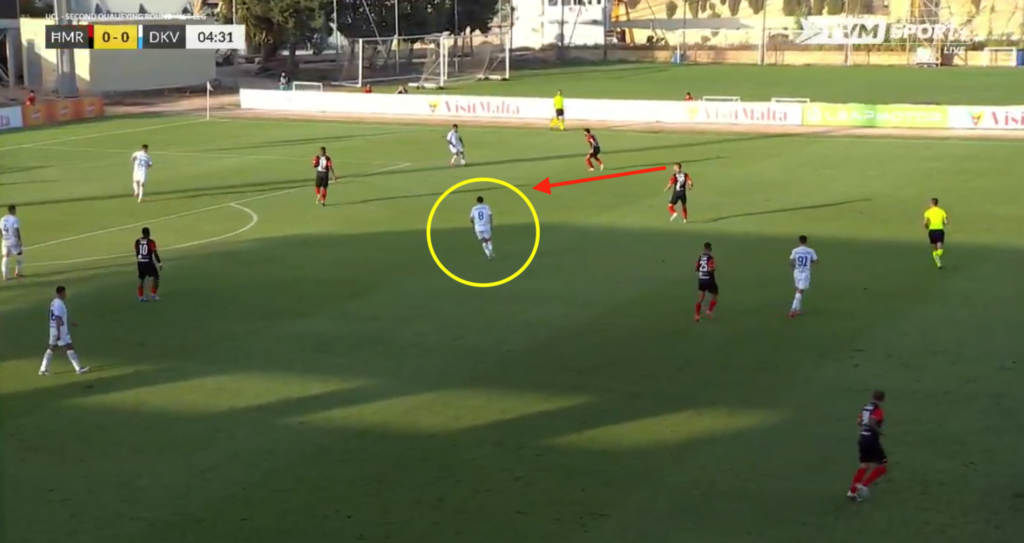
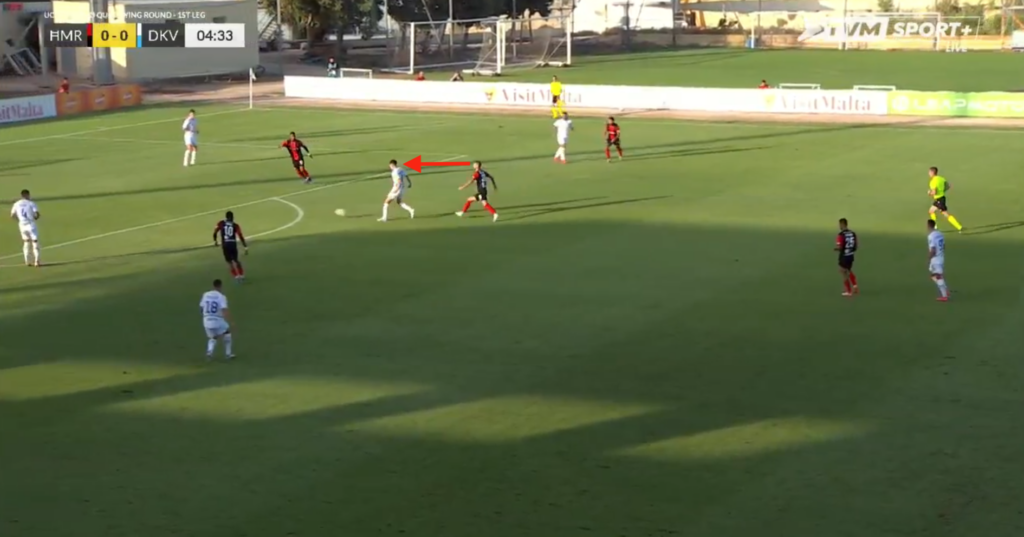
In possession, Dynamo Kyiv aimed to stretch Ħamrun by positioning two wide players high and wide, while their central trio constantly rotated to unbalance the Spartans’ shape and open ideal passing lanes. Their build-up became more fluid as the first half progressed.
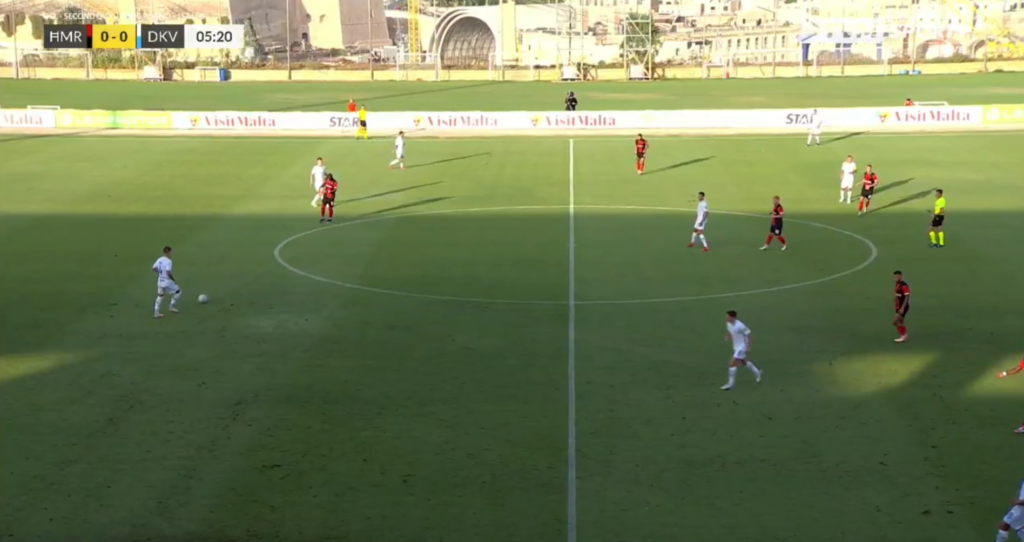
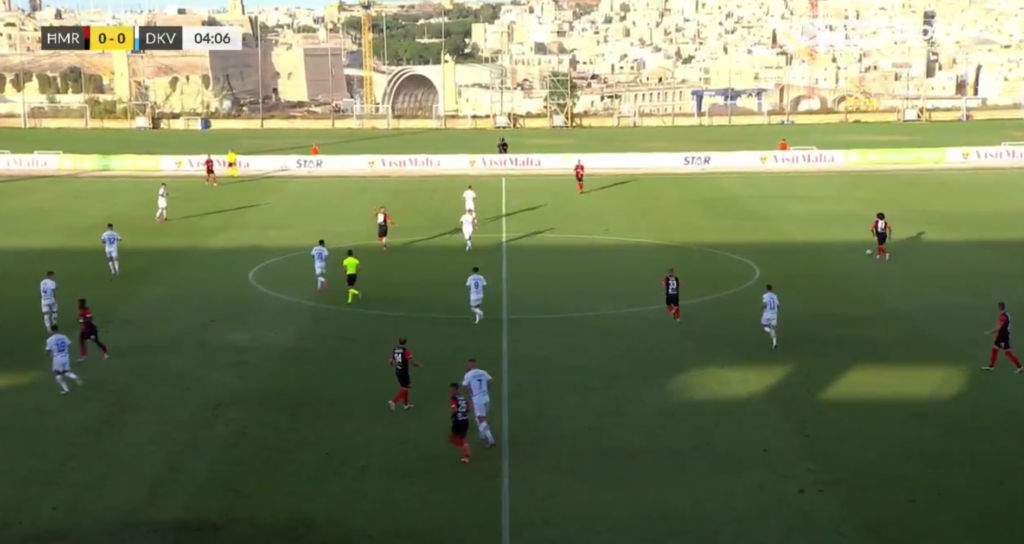
In addition, as expected, Dynamo Kyiv adopted a high-pressing system against Ħamrun’s build-up, to contain the Spartans in their own half and force them to make errors.
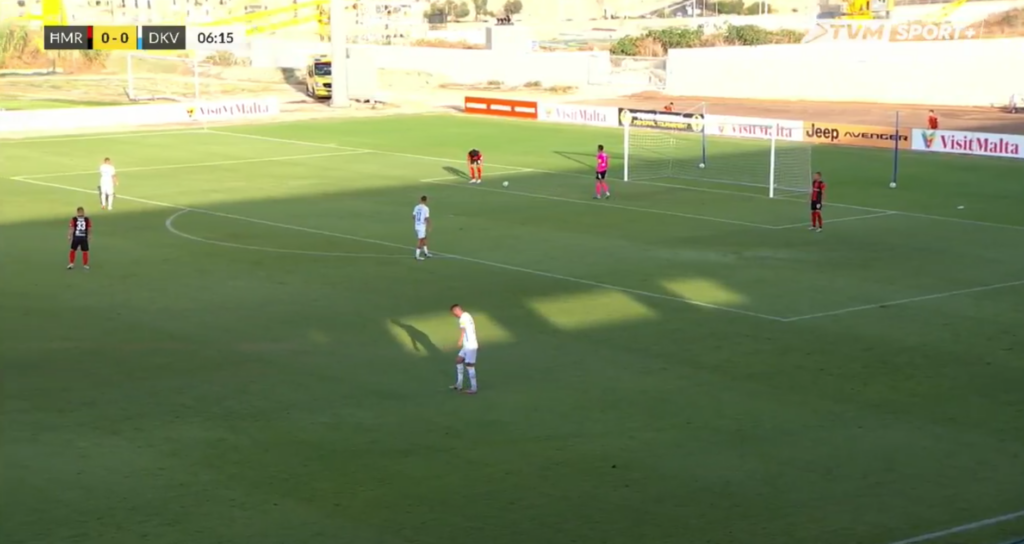
During Ħamrun’s development of play – that means whenever the Spartans would have managed to build-up from the back or recovered the ball a little further from their own box, Dynamo would sit in a 4-1-4-1 mid-block system.
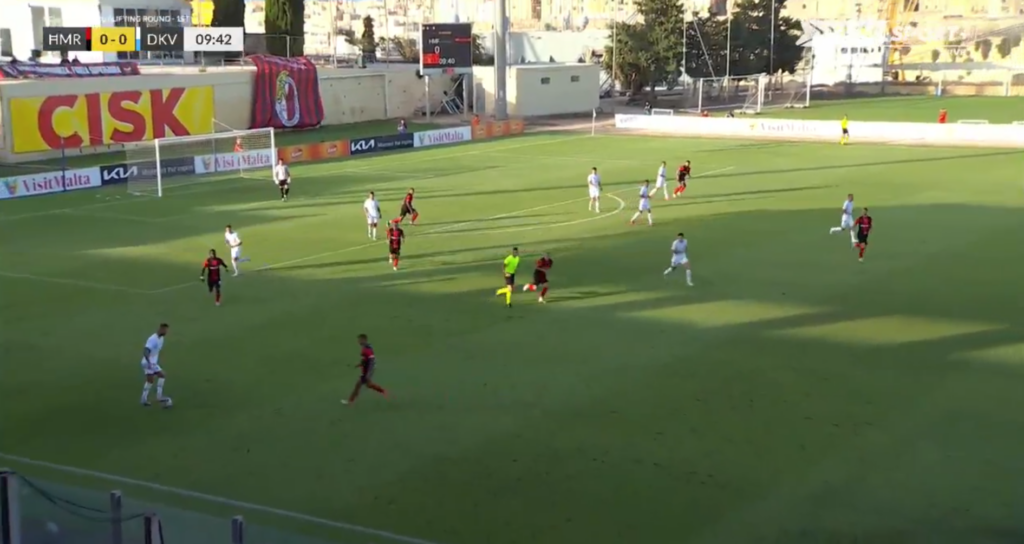
Ħamrun did come close to opening the score on the 10th minute after recovering possession in the final third, with Eder’s shot deflected for a corner a brief moment that showed the value of their initial press.
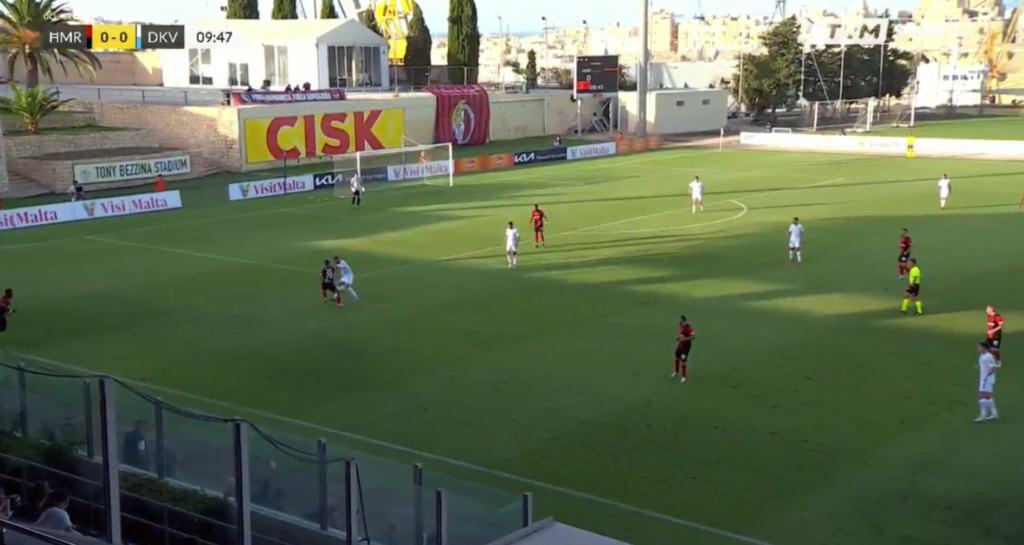
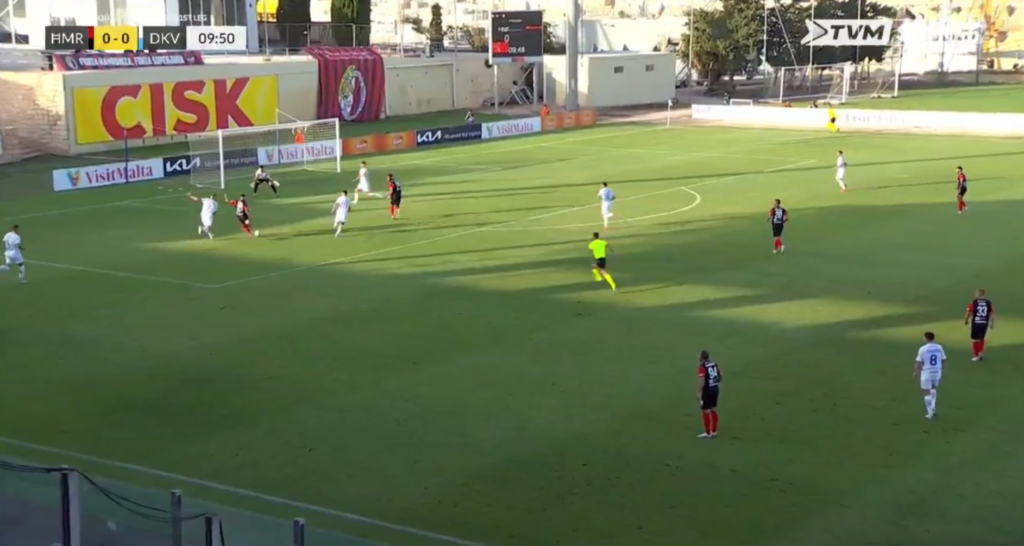
Dynamo eventually took the lead through a series of sharp passing combinations that drew Ħamrun out of their compact shape.
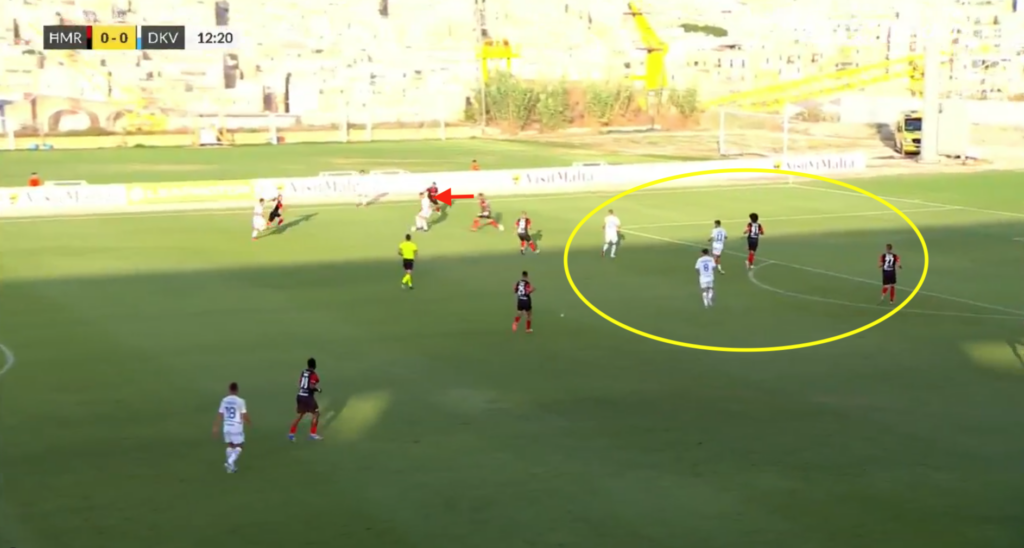
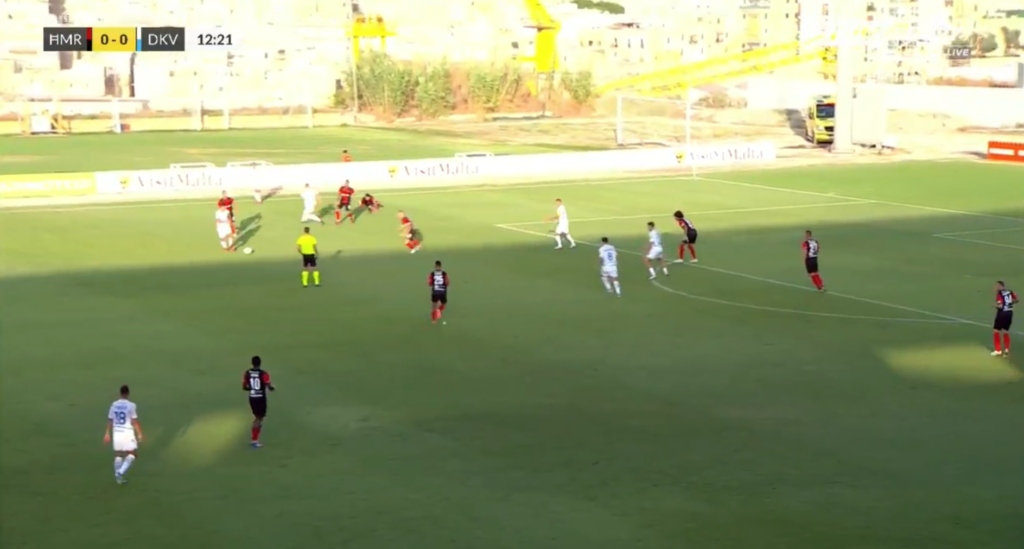
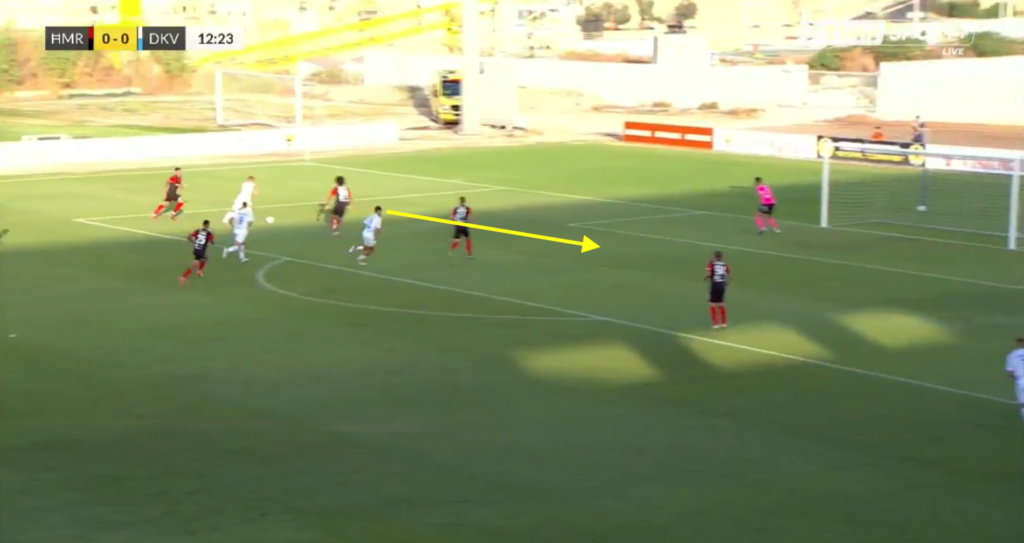
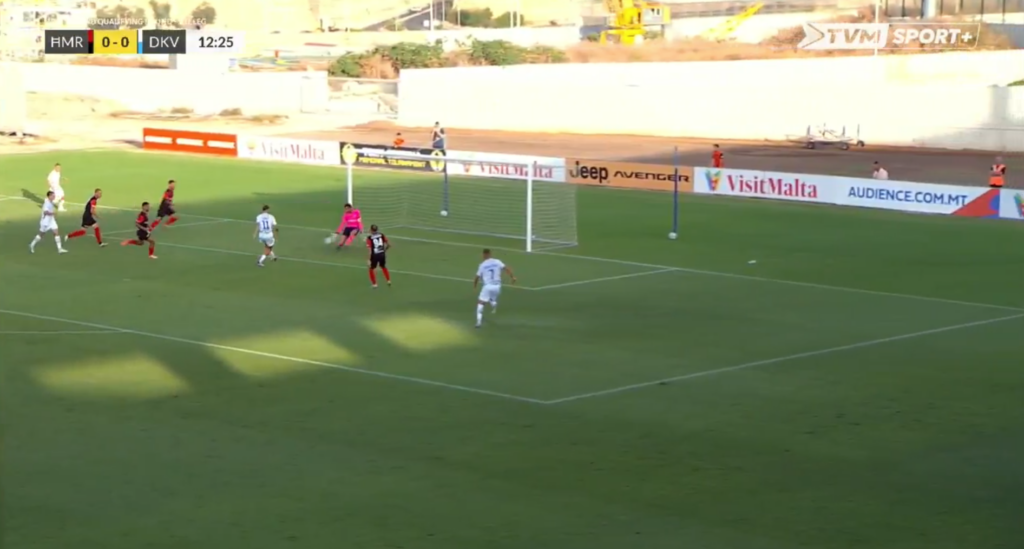
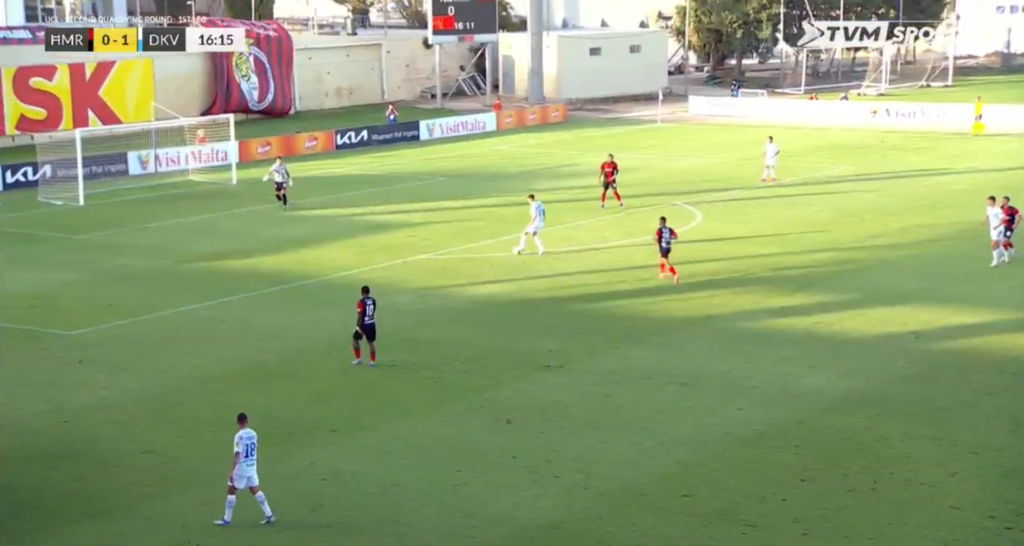
Despite the goal, the Spartans maintained their high press, continuing to chase the game bravely.
Dynamo remained a threat from set-pieces, particularly through centre-back Denys Popov. On 21 minutes, he went close with a header that narrowly missed, serving as a warning sign. He has a proven record, scoring seven of his ten club goals with his head.
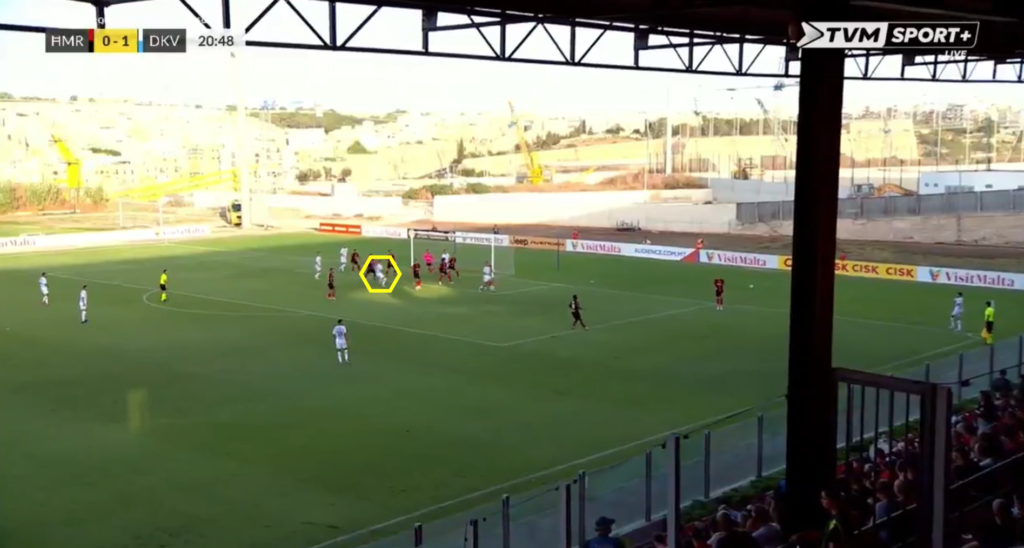
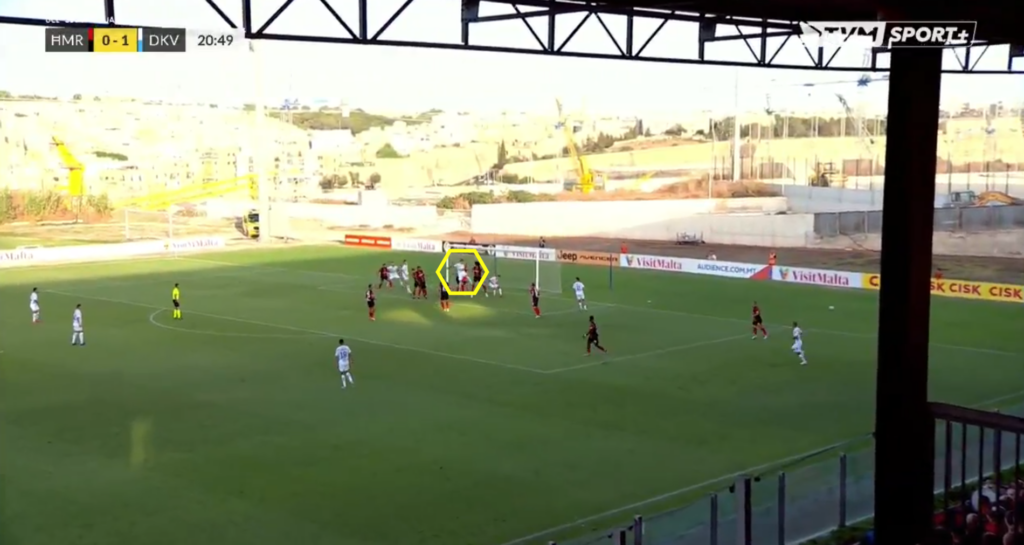
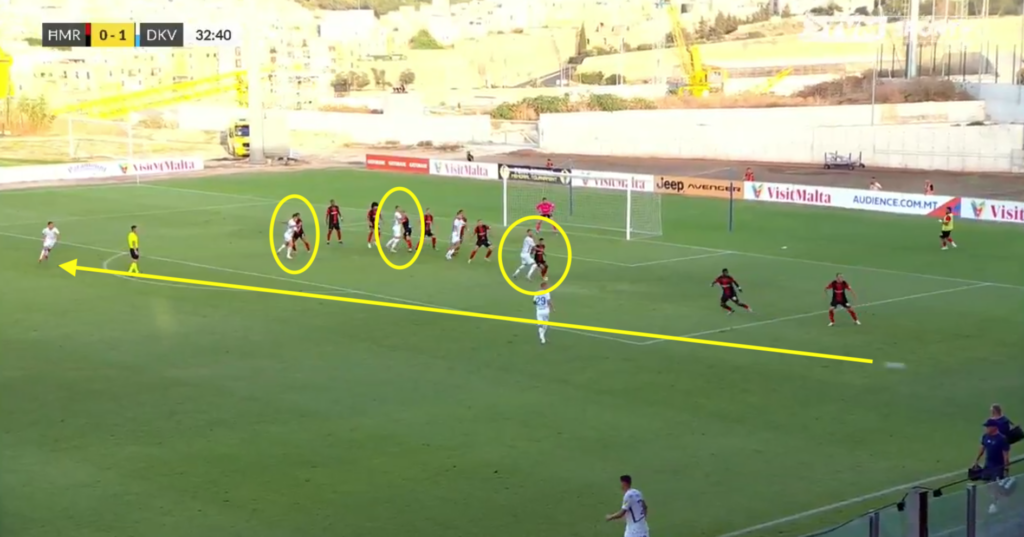
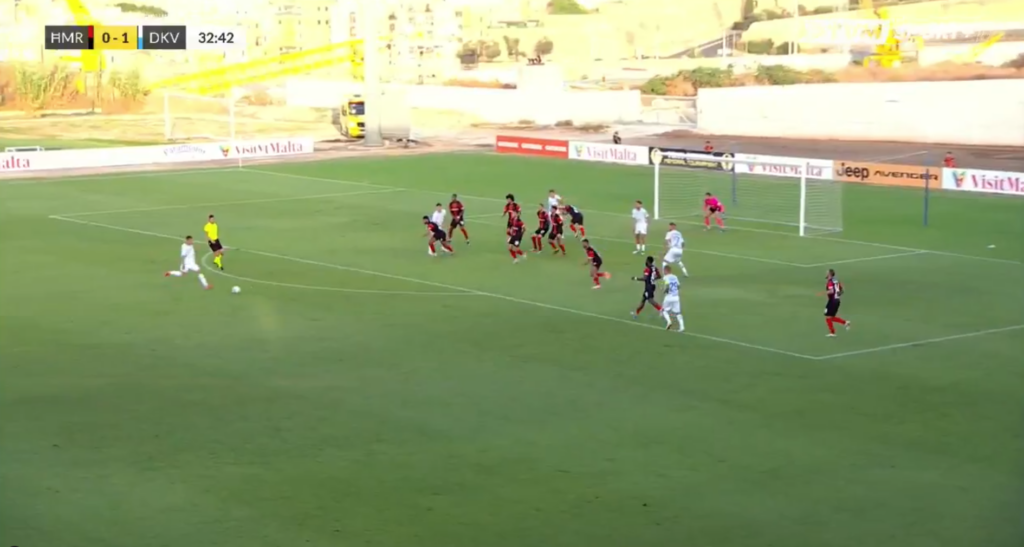
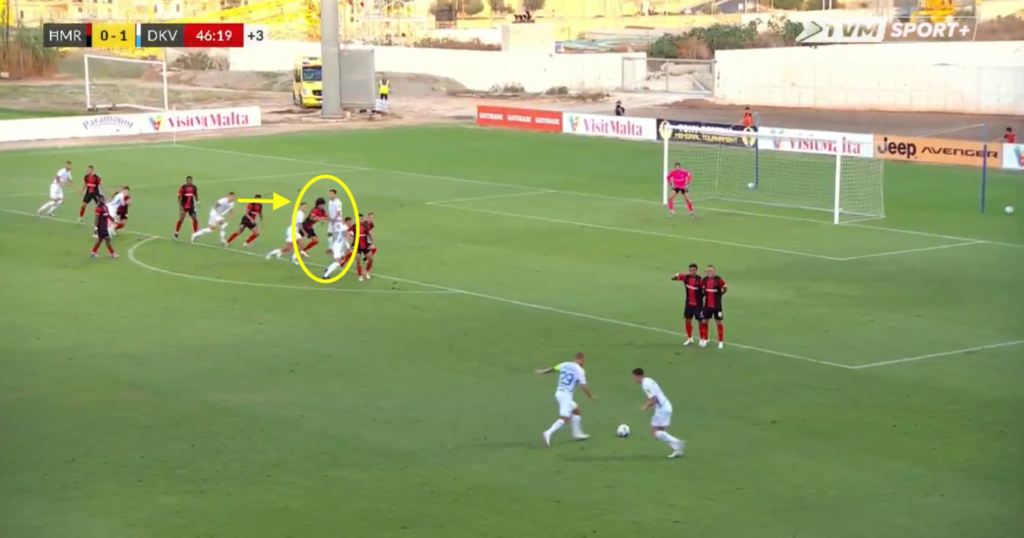
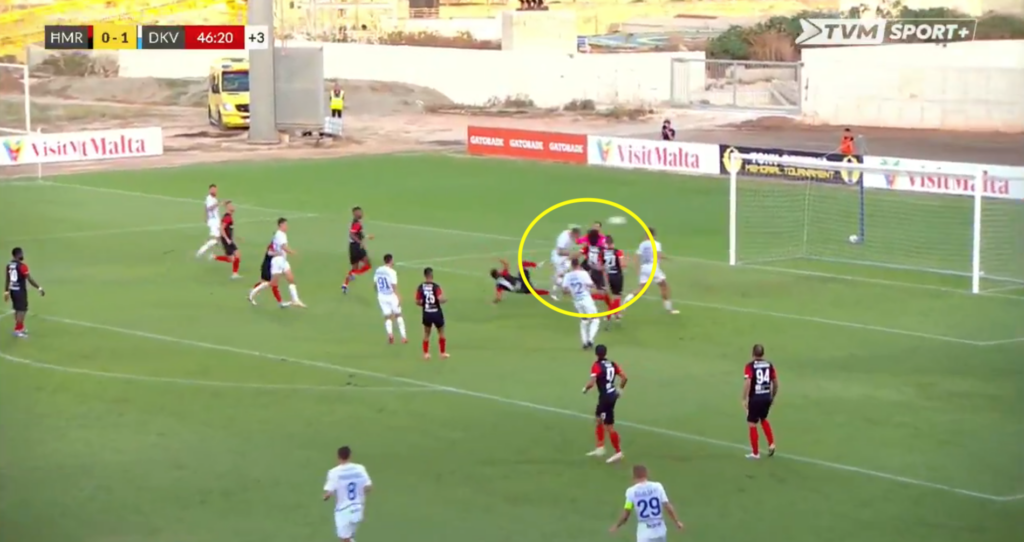
The Ukrainian side also employed clever blocking schemes on free-kicks, as seen around the half-hour mark.
Modica made an in-game adjustment on minute 37, bringing on Mouad El-Fannis and shifting Compri back to his natural right-back position. Mbong switched flanks, giving Ħamrun more width and pace out wide.
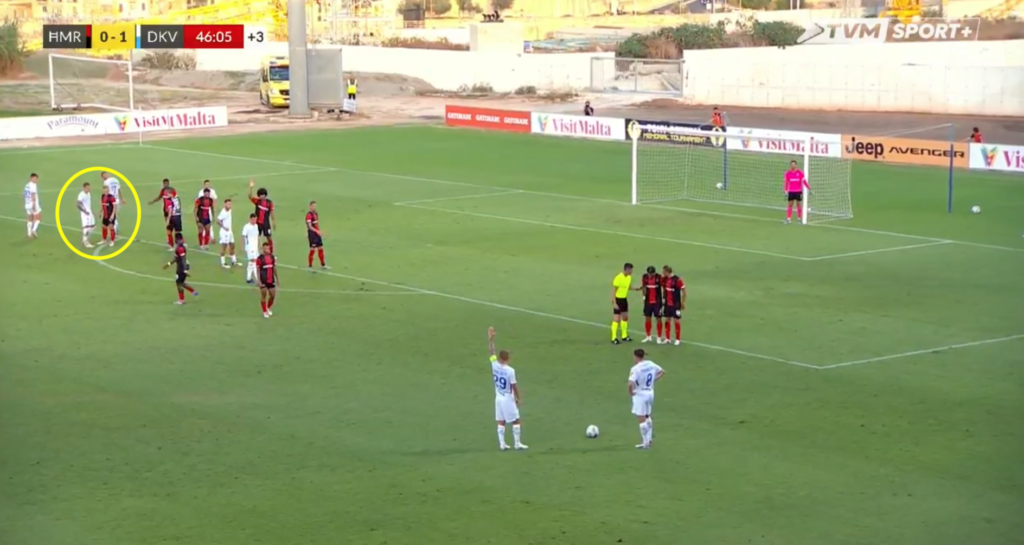
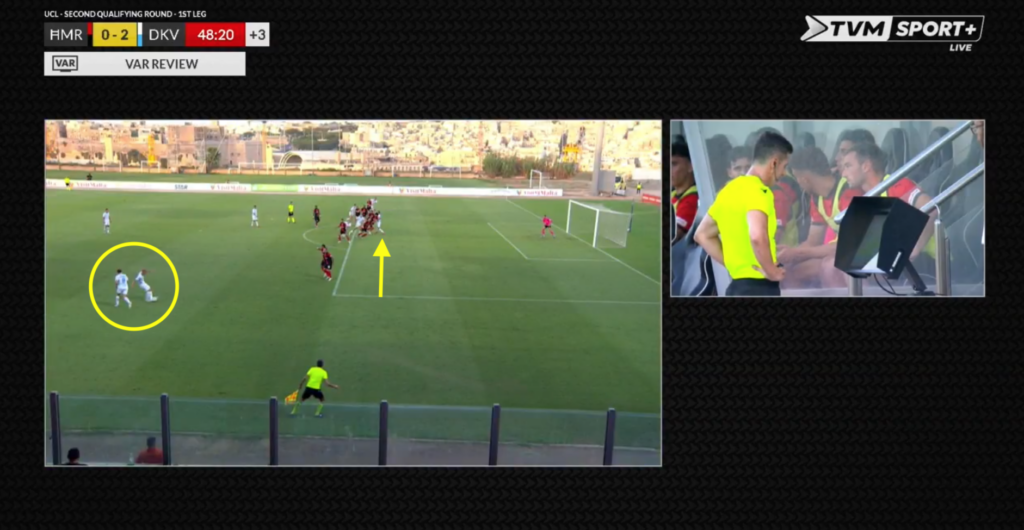
Just before the interval, Popov found the net again with another header, but the goal was disallowed, likely due to offside interference, as one of his teammates blocked Emerson Marcelina while in an offside position. Though not touching the ball, the player was deemed to have interfered with play, as per IFAB Law 11.
After the break, Dynamo Kyiv came out with a clear intent to wrap up the tie. They pinned Ħamrun deep and created multiple chances within the first ten minutes of the restart. While fatigue may have played a role for the Spartans, it was also a testament to Dynamo’s speed of play and tactical sharpness.
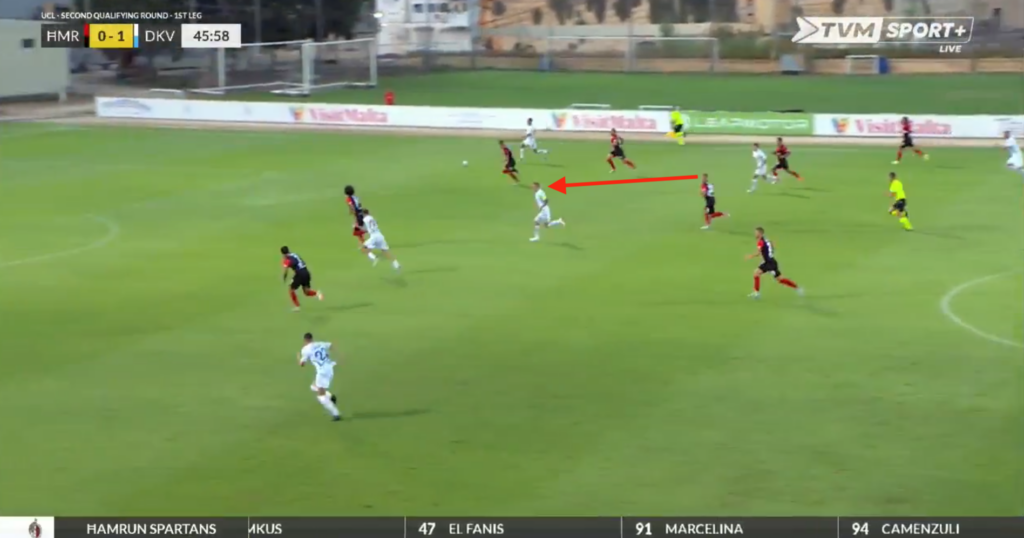
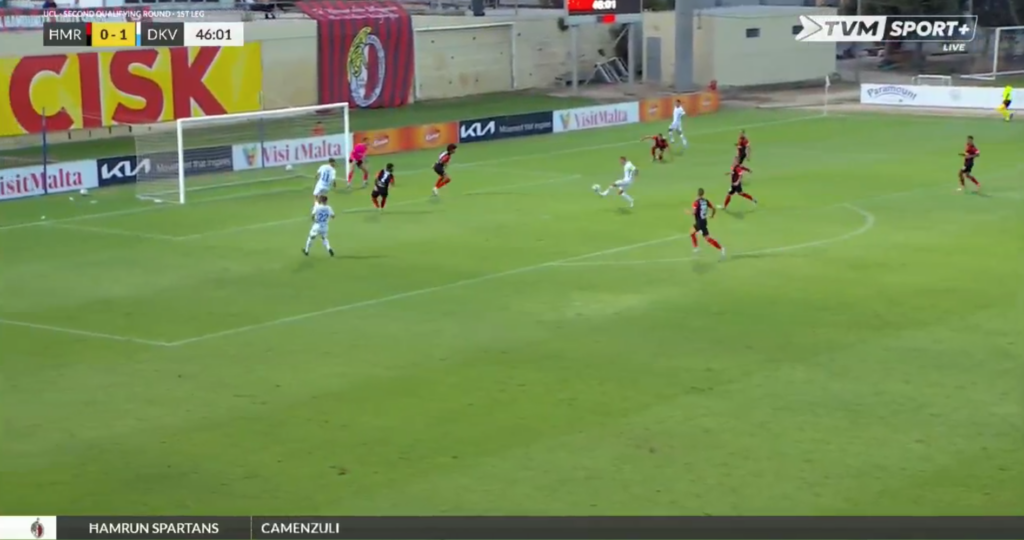
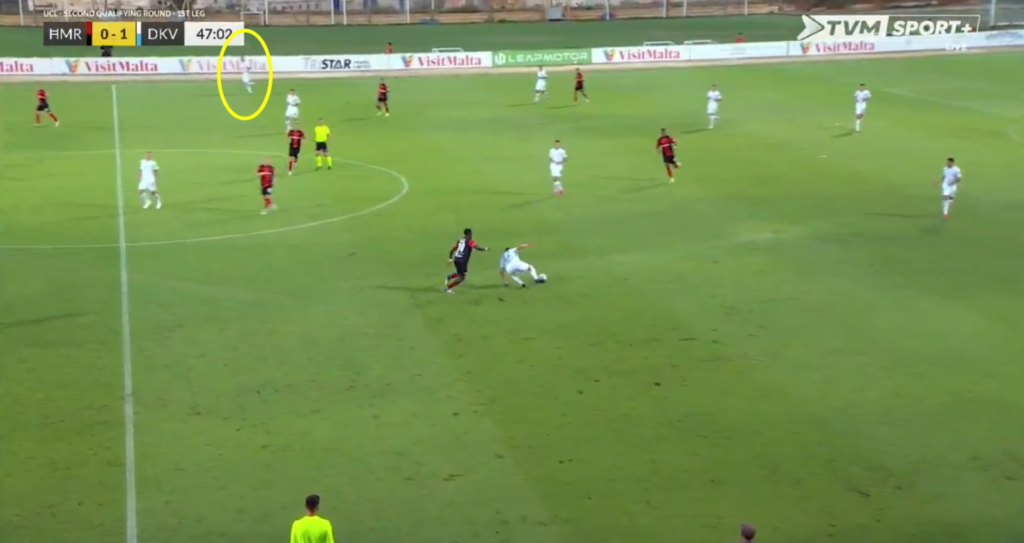
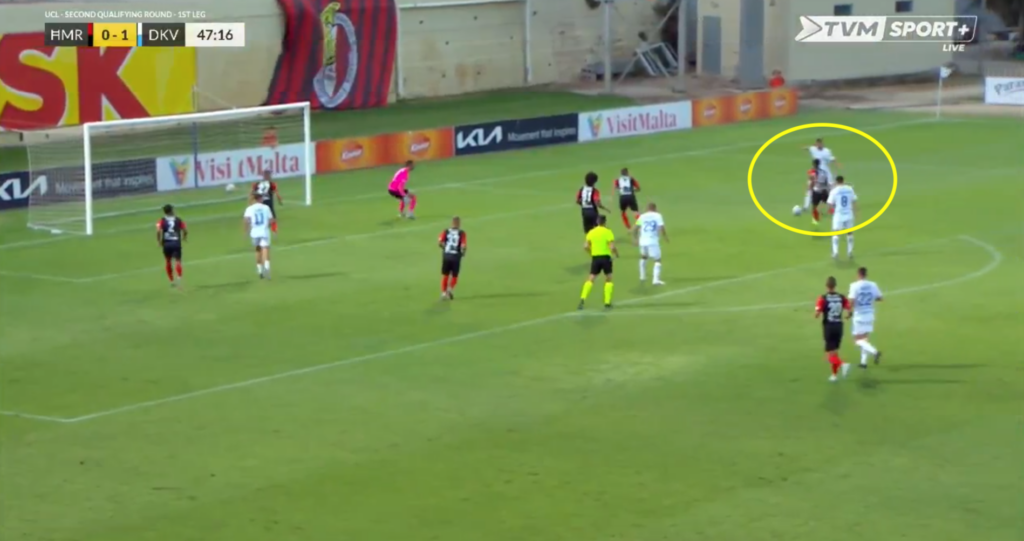
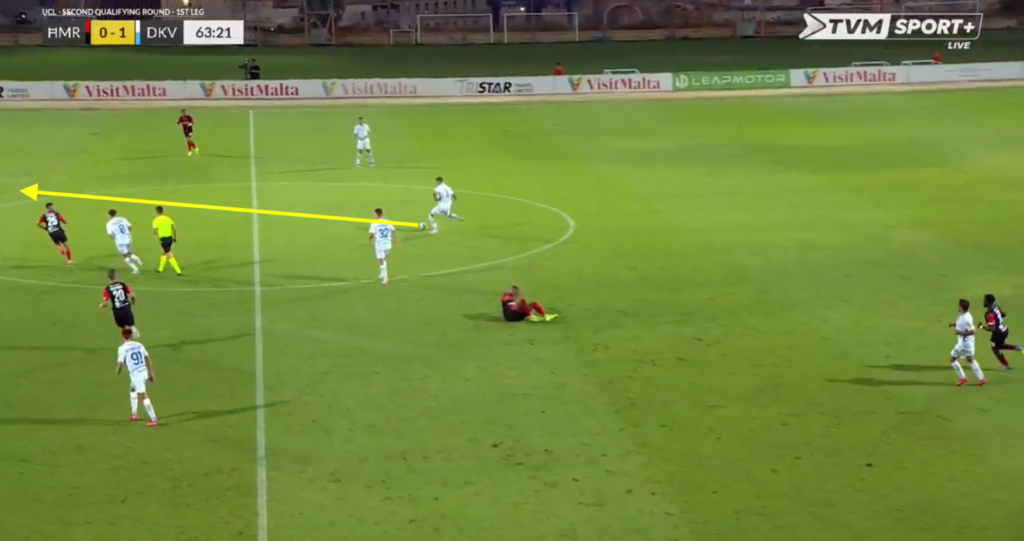
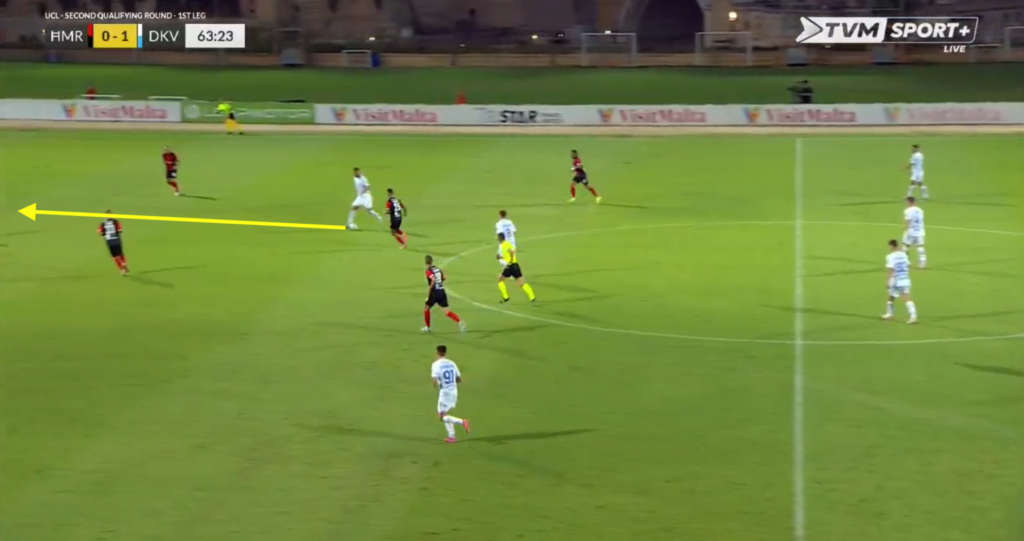
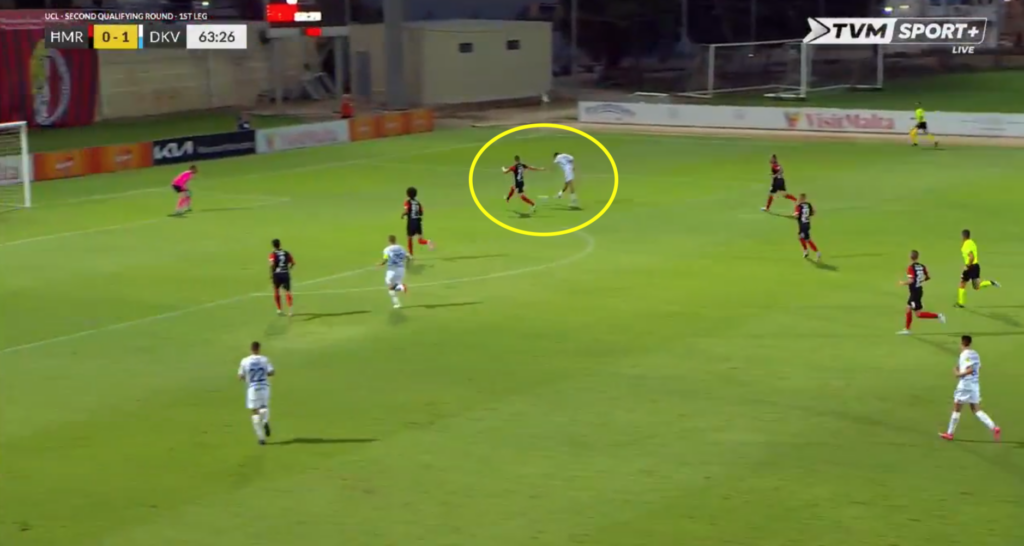
Ħamrun’s combination of loosened pressing, occasional lapses in defensive organisation, and the clear technical gap allowed Dynamo Kyiv to assert dominance and take a commanding lead into the second leg.
Author





















Charles Vassallo
July 23, 2025 at 2:00 pm
Have stated this before that the Spartans need to reorganise as their defensive strategy is full of ‘holes’…