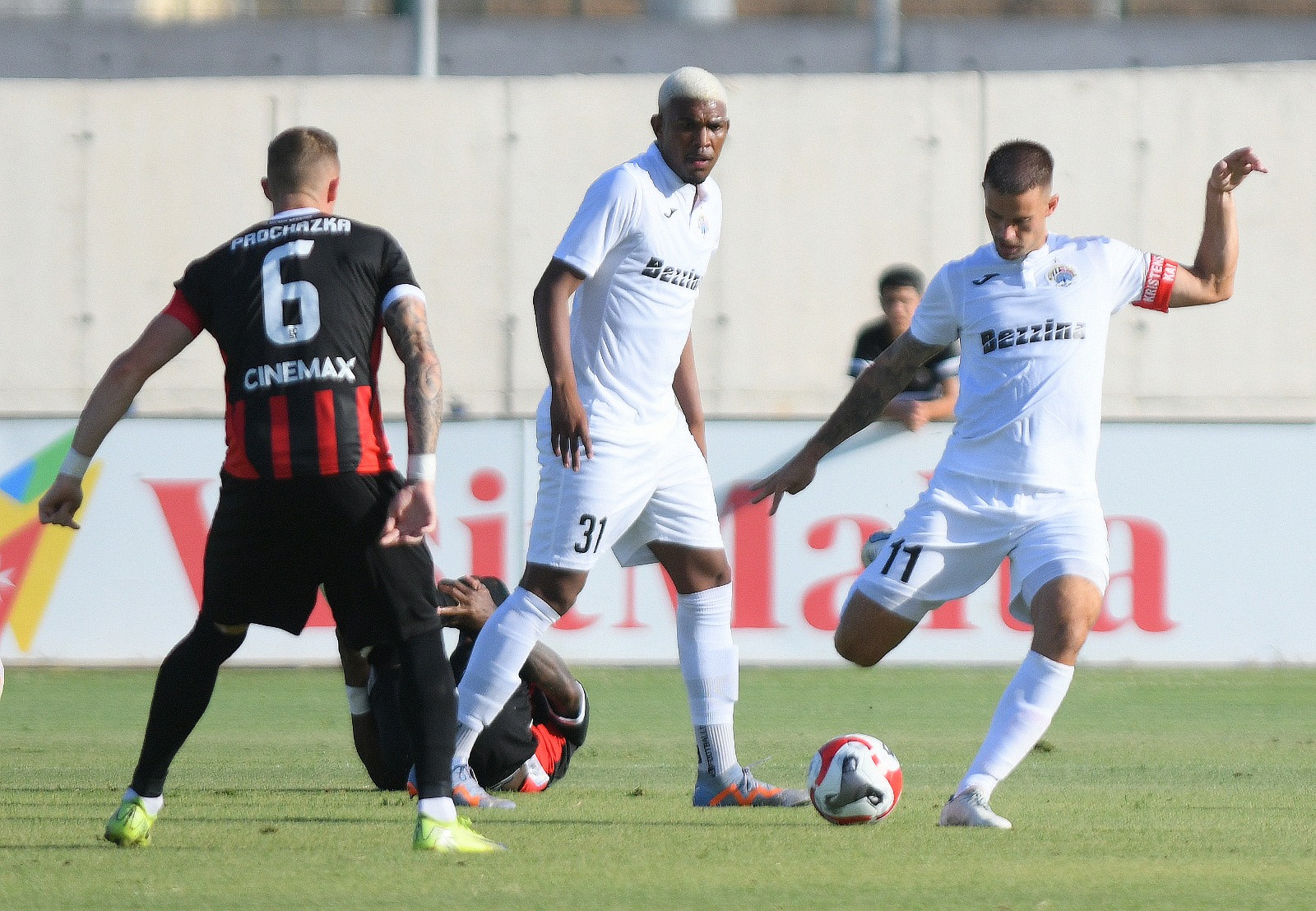
Hibernians faced an uphill battle in their UEFA Conference League second qualifying round tie against Slovakian outfit Spartak Trnava, a team boasting group stage experience in this competition.
The Slovak side had participated in the 2023/2024 edition, where they were grouped with FC Nordsjaelland, Fenerbahce, and Ludogorets, collecting just one point but gaining valuable experience at this level.
Given this pedigree, it was expected that Hibernians would struggle, and indeed Spartak Trnava could have scored more than the two goals they managed, especially in a dominant first half.
Yet, Hibernians demonstrated resilience and tactical intent, showing signs of competitiveness, particularly in the second half, and even scoring a goal.
Branko Nisevic’s tactical approach was clear – absorb pressure and hit on the break.
Despite their limited technical quality compared to their opponents, Hibernians created promising moments in transition.
However, like other Maltese clubs in Europe, they struggled with key technical aspects such as first touches, decision-making in the final third, and matching the tempo and intensity of more experienced sides.
The Maltese side entered the match with several debutants. Former Juventus goalkeeper Laurentiu Branescu was handed his first appearance, alongside 18-year-old Aiden Zammit, signed from Pietà Hotspurs, and summer recruits Pedro Cacho and Pablo Alves.
Zammit featured as a left centre-back in a back three, while Alves started as the left wing-back. Cacho partnered Bjorn Kristensen in midfield, offering progressive runs and launching long balls into the flanks during transitions.
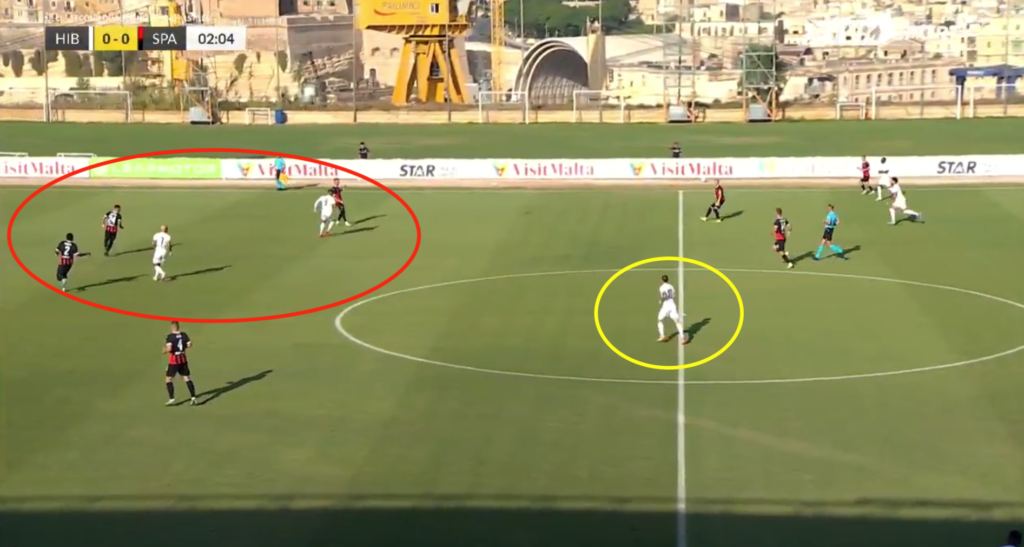
Right from kick-off, Hibernians signaled their intent by playing a long ball, but instead of sending it directly into the opponent’s box, they targeted the flanks and recycled possession to maintain control.
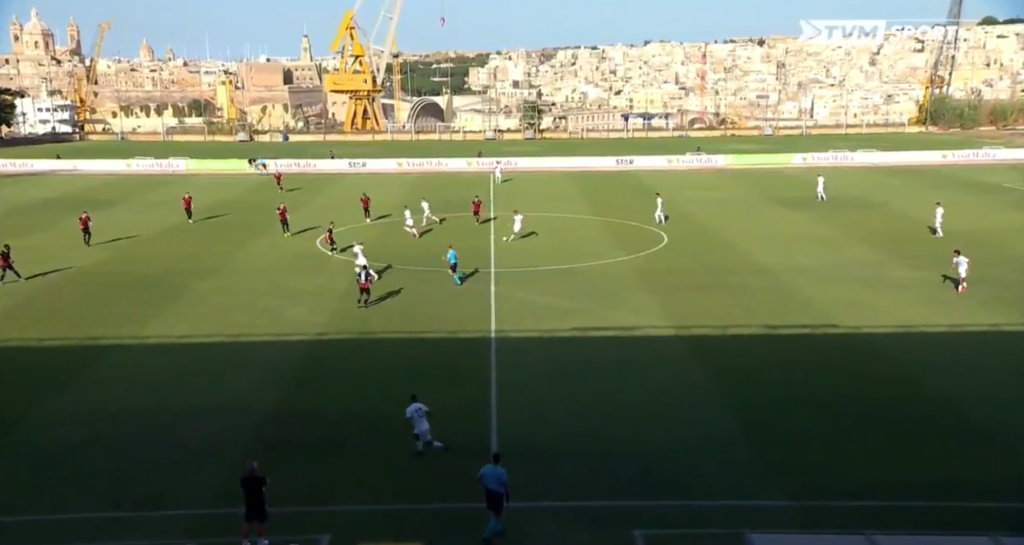
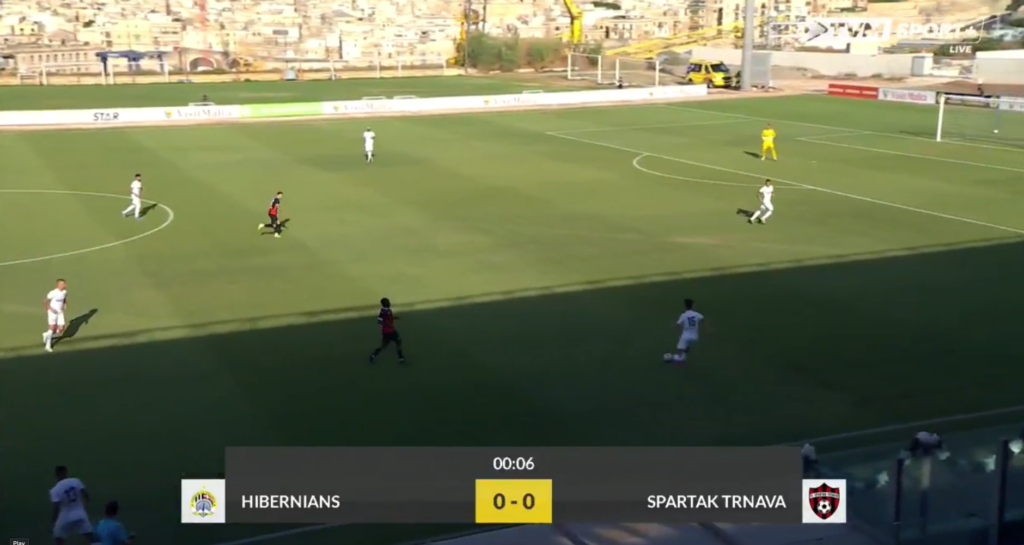
Both sides pursued vertical play, aiming to reach their attacking players quickly, leading to frequent turnovers and transition situations.
Nisevic’s bold approach included a high-press strategy, with man-marking across the pitch. This left a risky 3v3 situation at the back, as Spartak Trnava frequently targeted their front players directly from the goalkeeper.
The Paolites’ coaching staff aimed to force their opponents into long balls, trusting their defenders in aerial and physical duels.
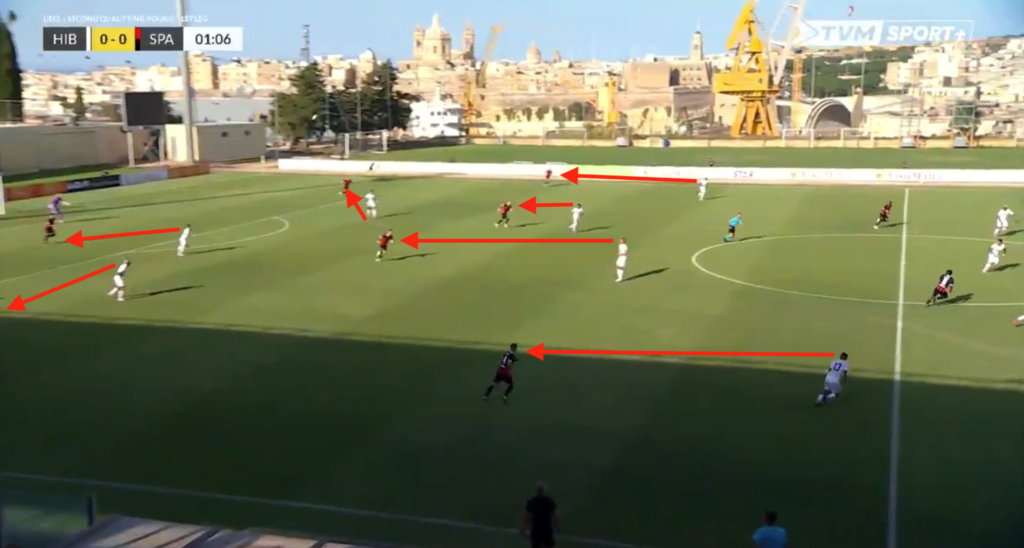
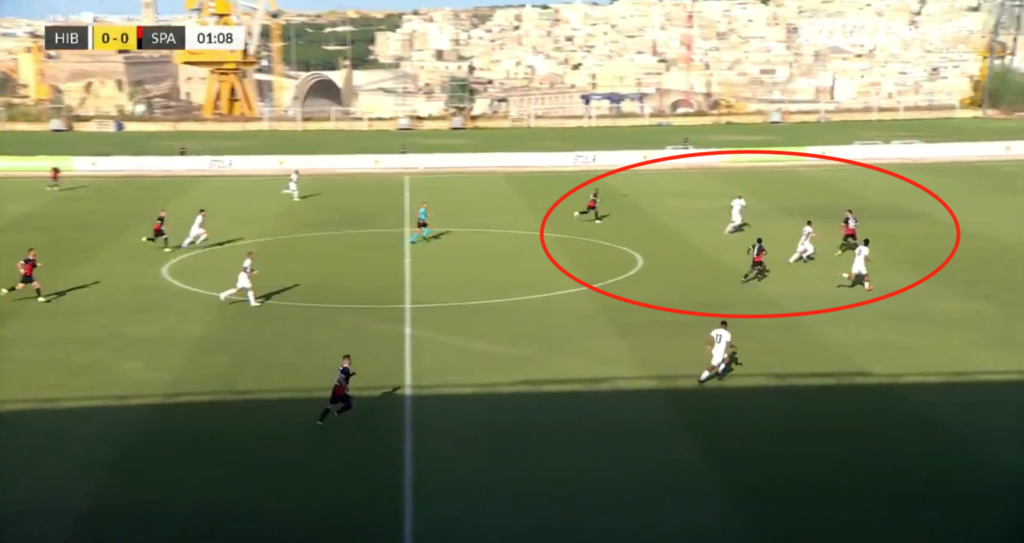

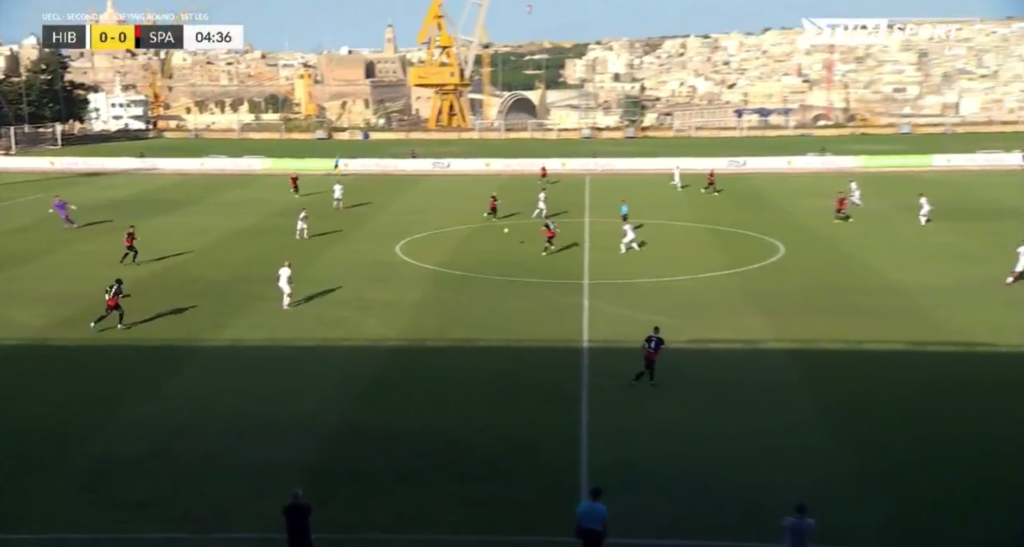
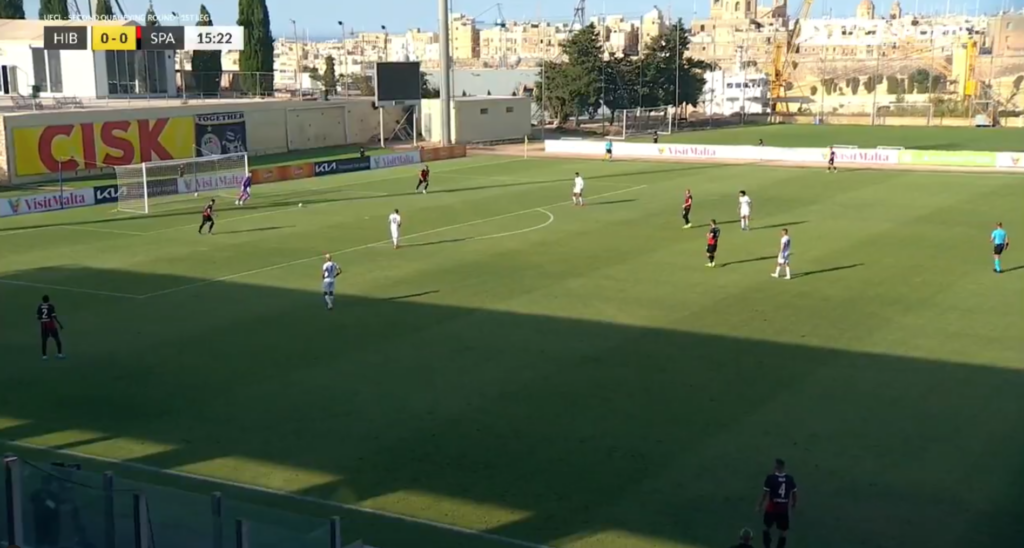
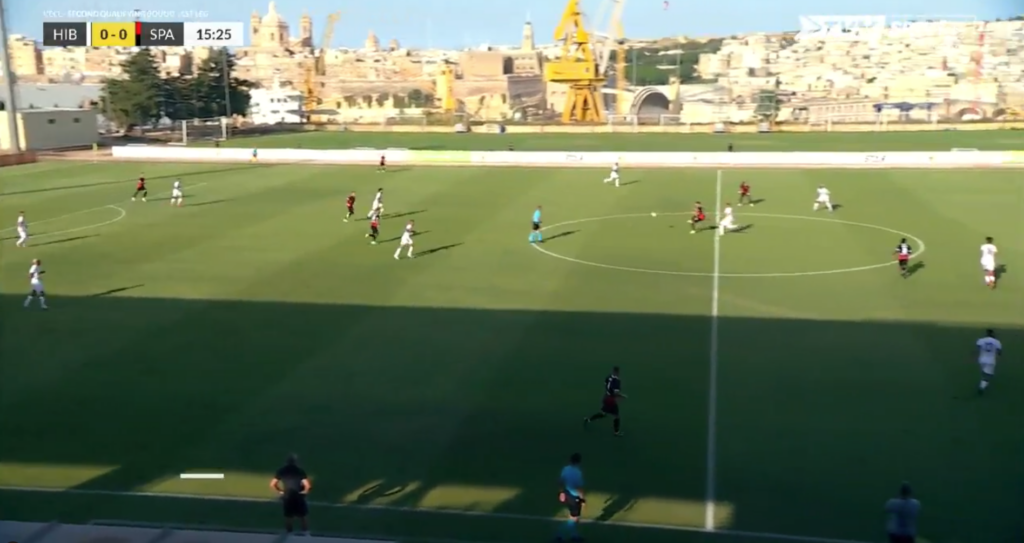
Spartak Trnava, meanwhile, pressed high as well, which meant Hibernians were often forced to bypass midfield.

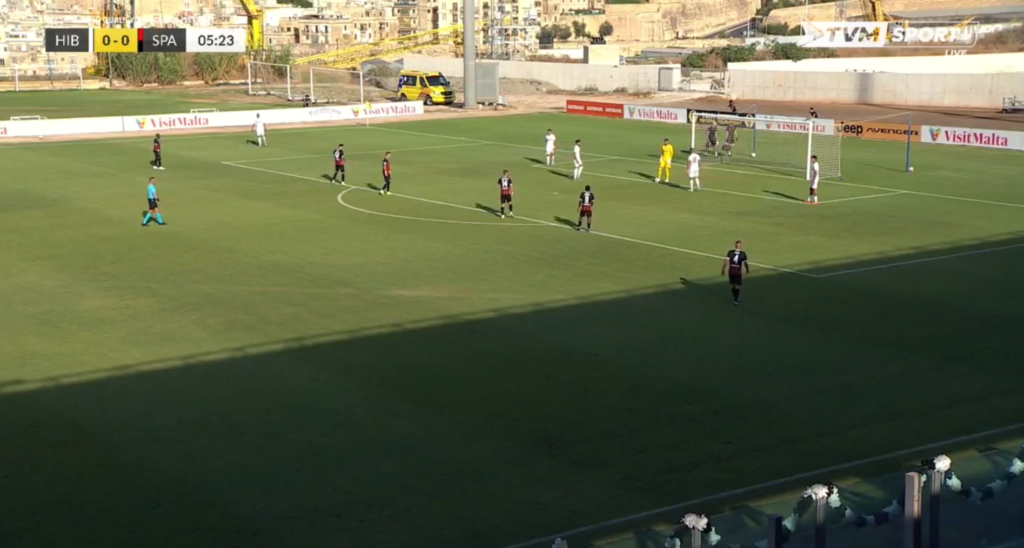
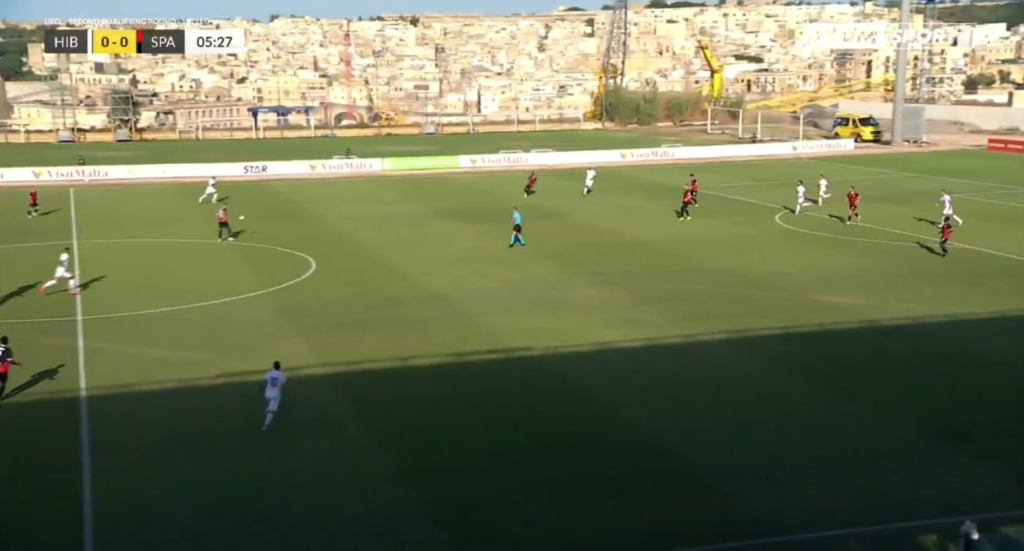
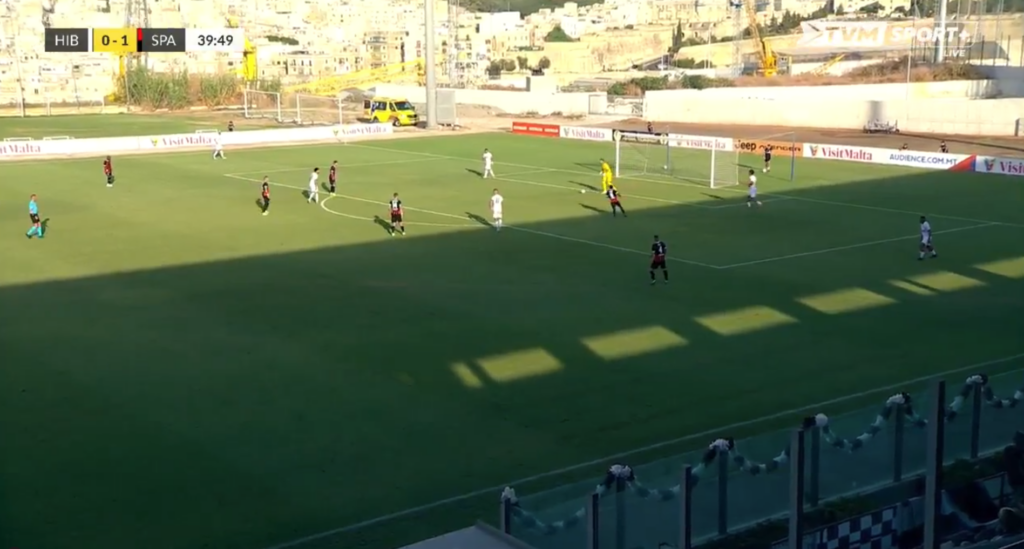
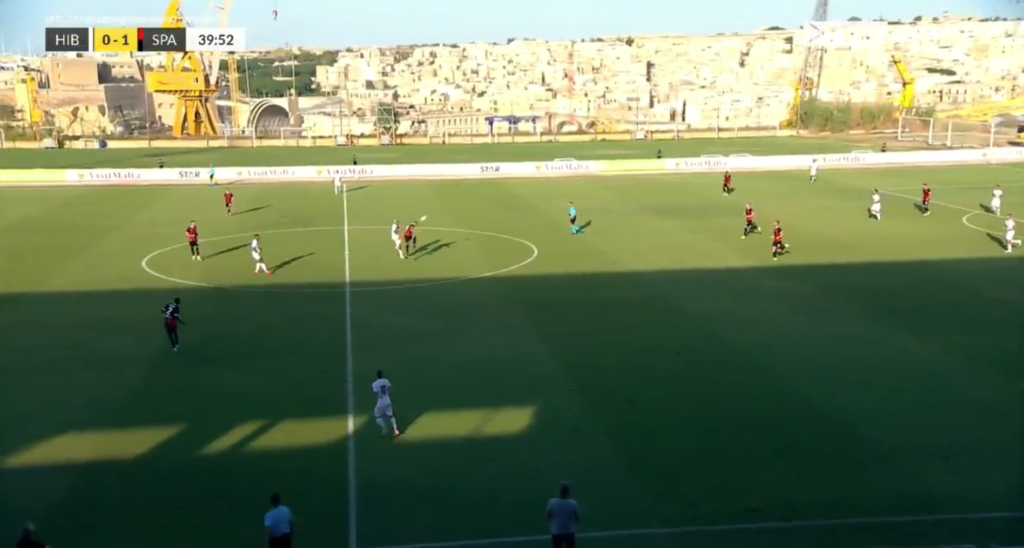
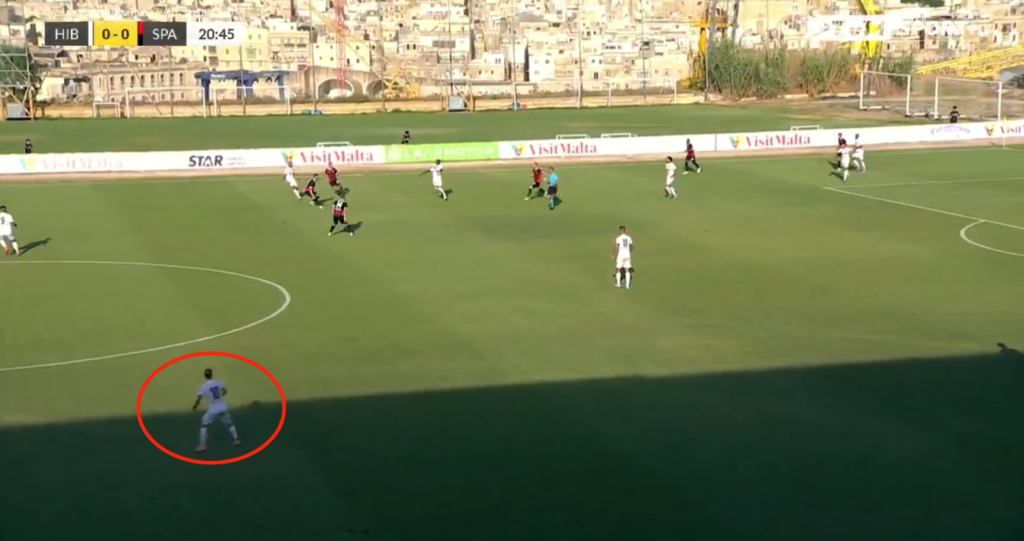
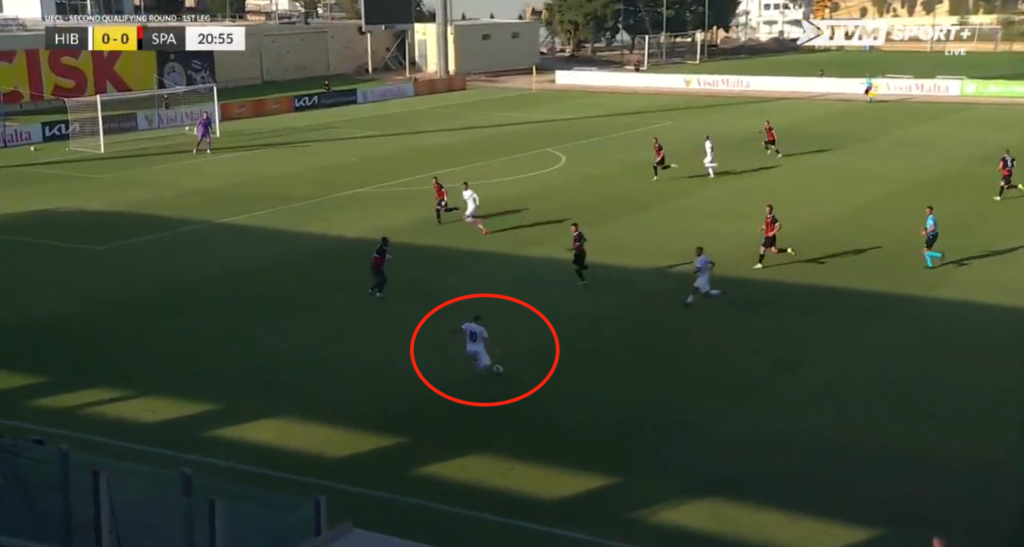
A key element in Hibernians’ build-up was Jurgen Degabriele, who roamed freely, exploiting space and avoiding becoming a fixed reference point for defenders.
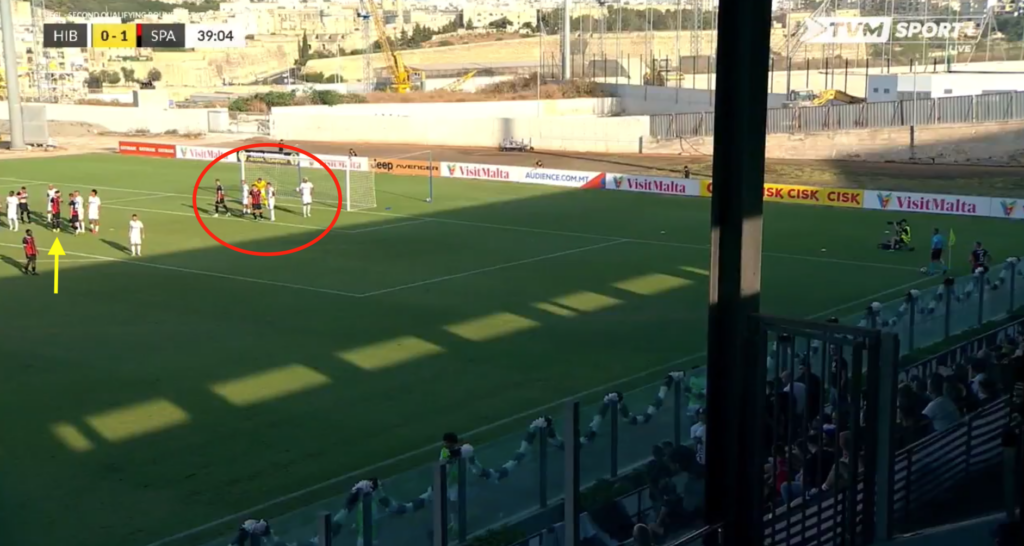
Set-piece routines were also integral to Spartak Trnava’s plan, particularly from corners, where they nearly broke the deadlock.
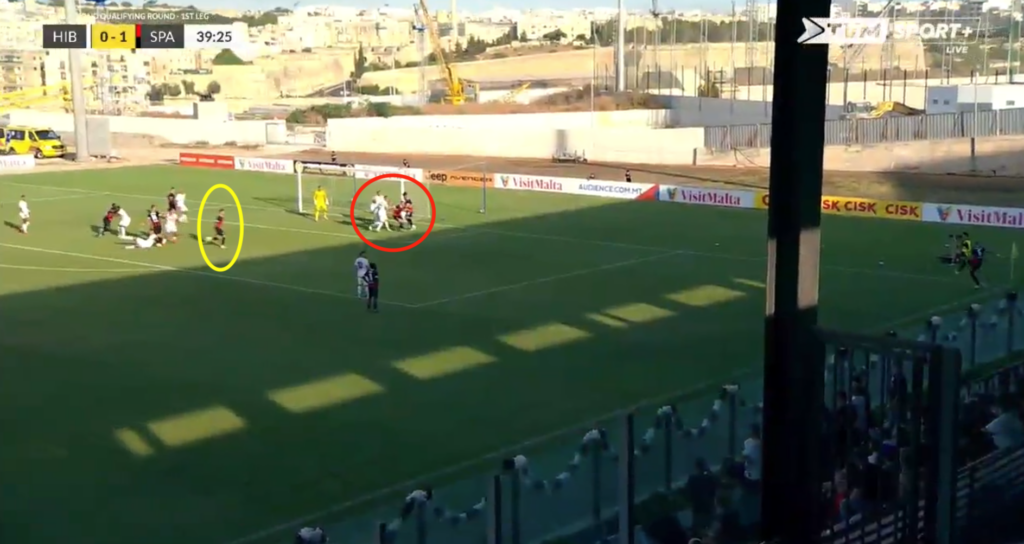
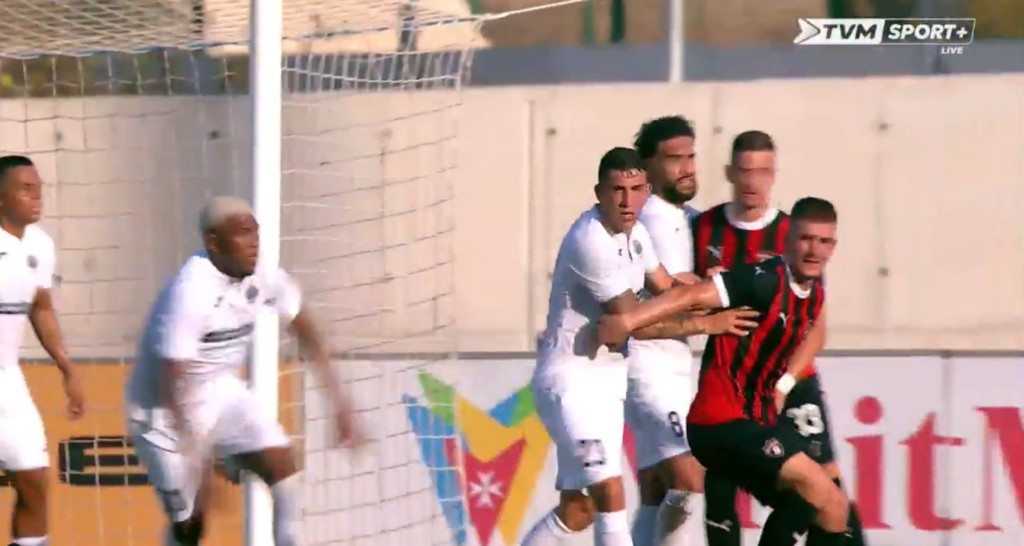
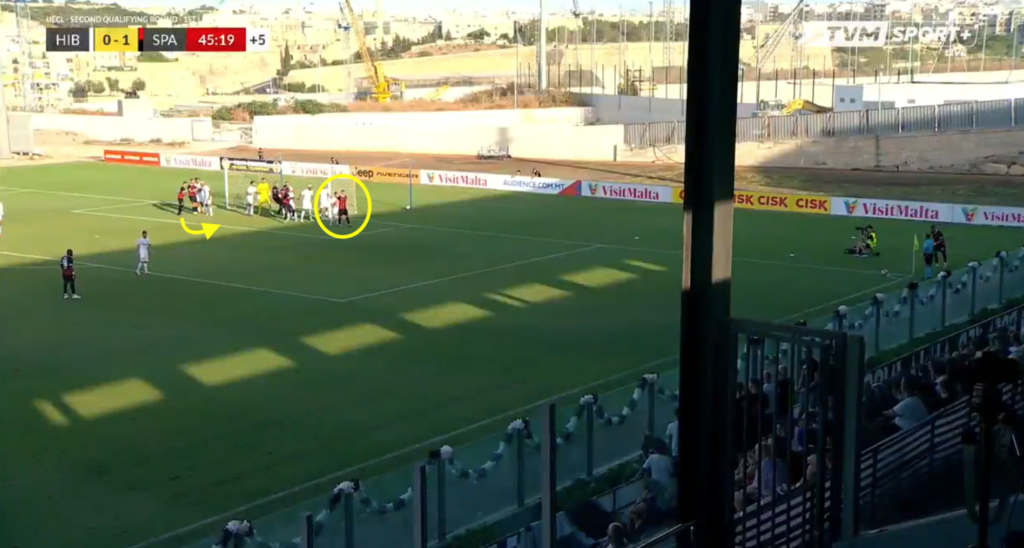

Pedro Cacho proved instrumental for Hibernians in transitions, frequently recovering the ball in deep areas and launching counter-attacks. However, these opportunities went unconverted, highlighting Hibernians’ struggles with execution.
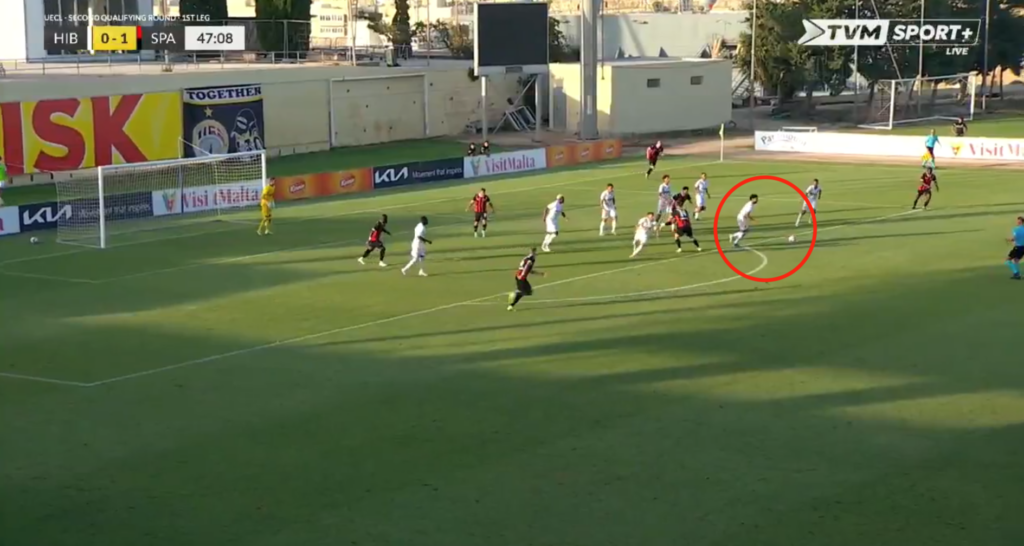
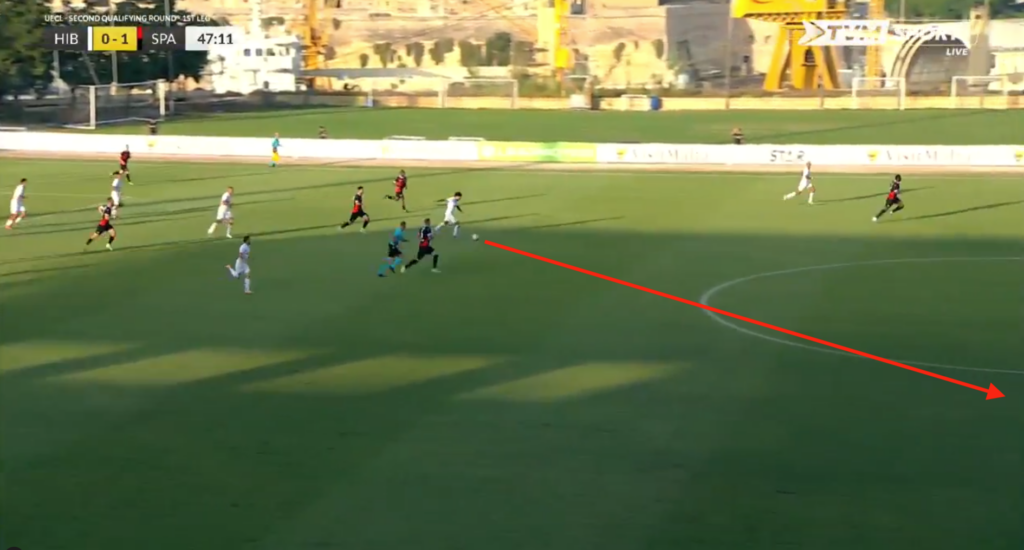
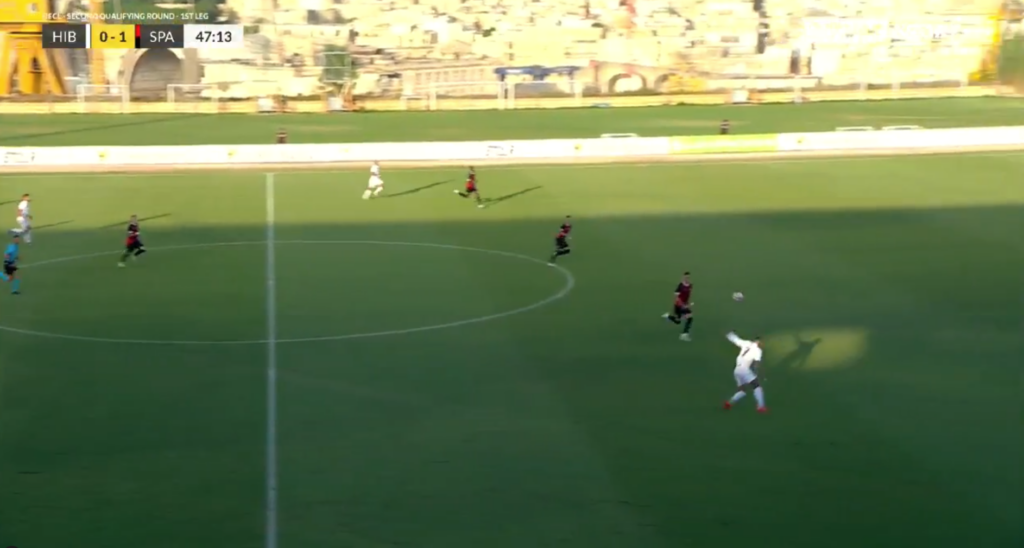
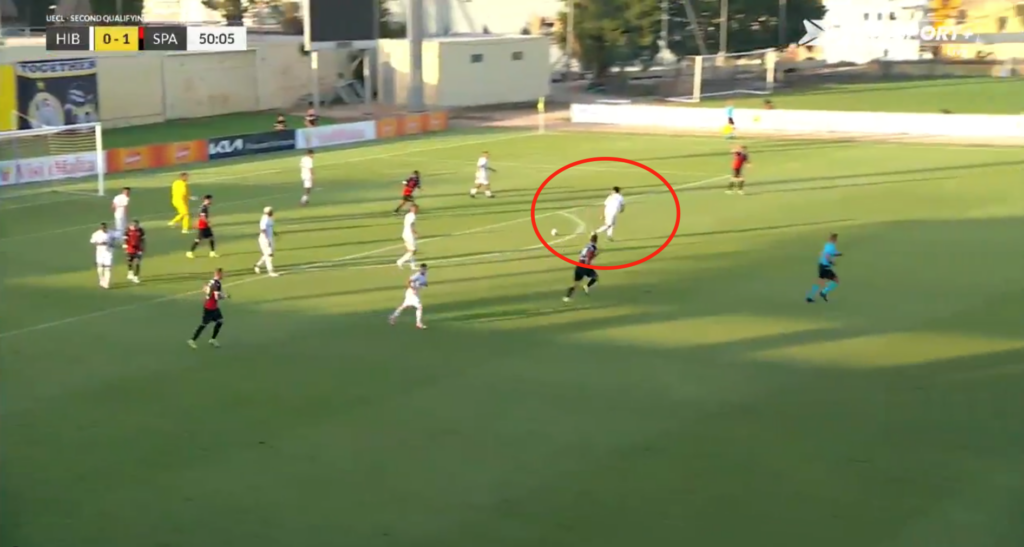
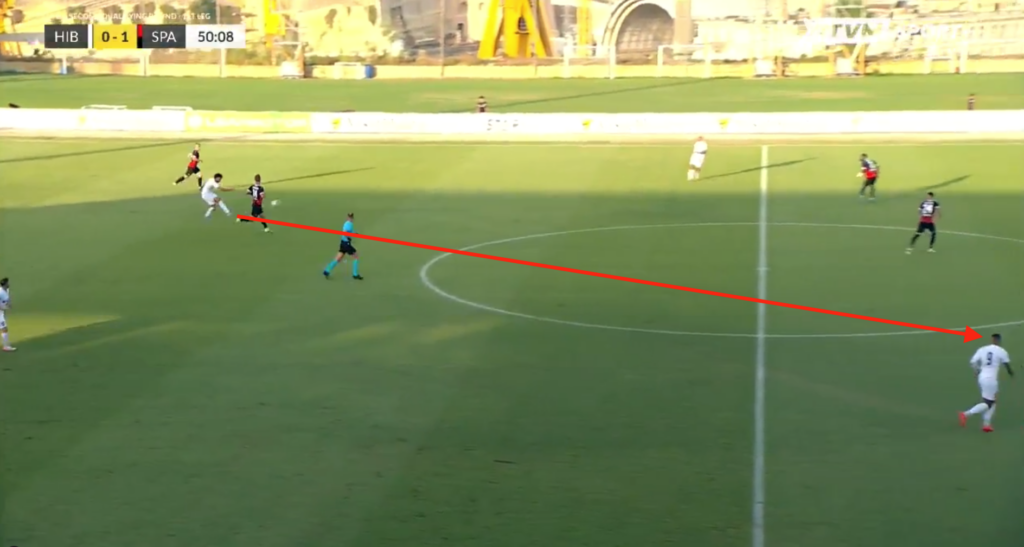
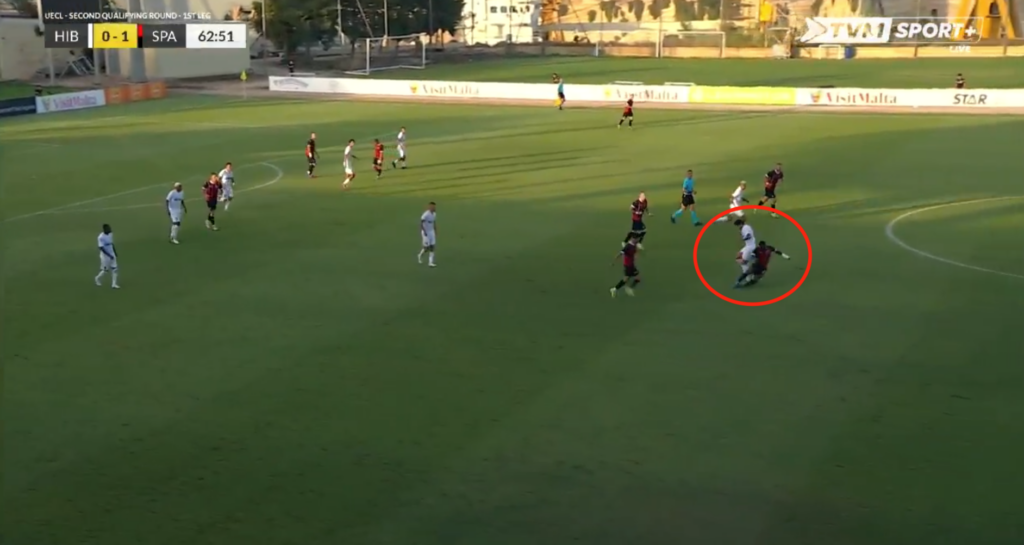
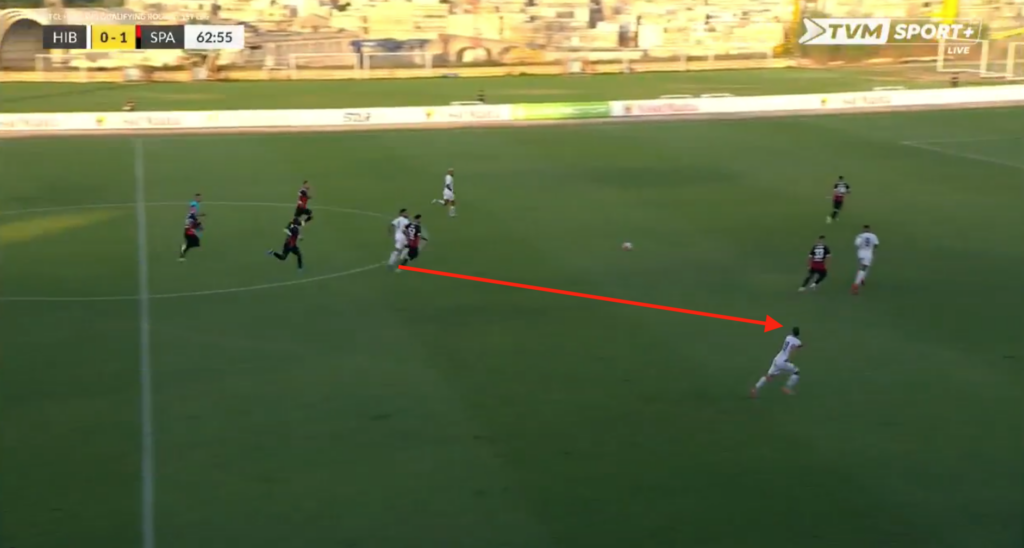
Hibernians themselves sought to capitalise on set-pieces, demonstrating creative schemes that could unsettle their opponents. In modern football, set-pieces have become a critical tool, and Hibernians showed intent in this phase of play.
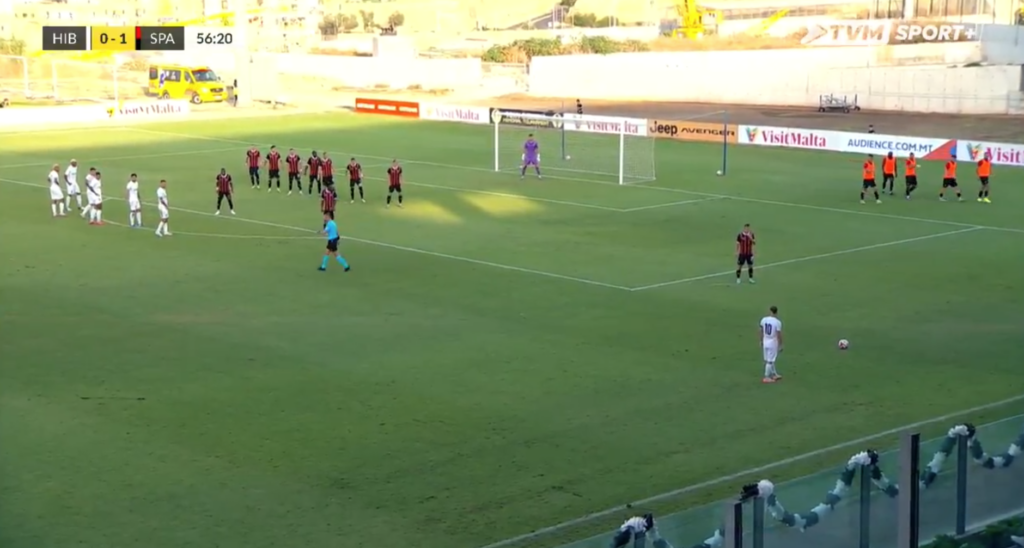
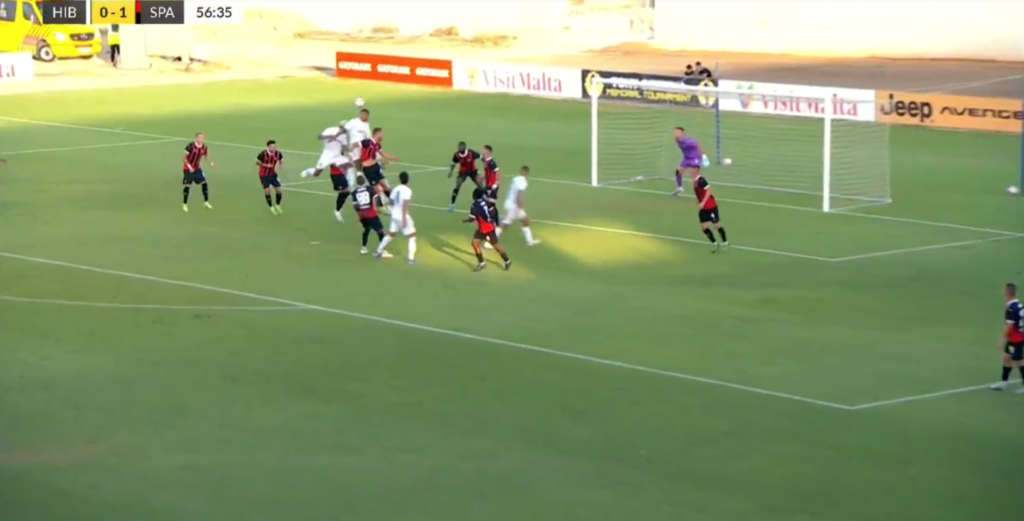
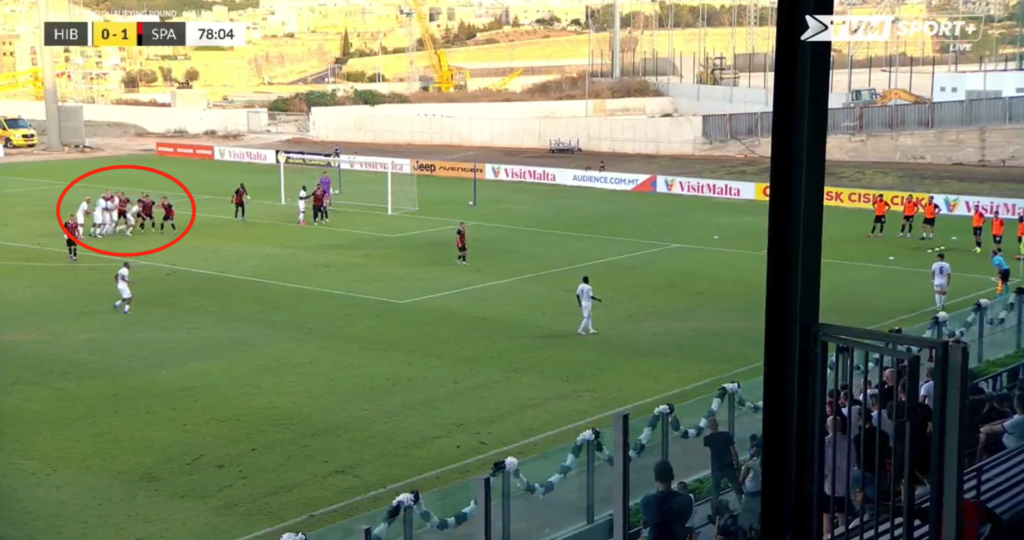

In the 61st minute, Spartak Trnava substituted both wingers, who had been effective against Hibernians’ defence. Whether due to these changes or natural momentum, Hibernians began to push higher up the field, and Spartak’s attacking threat diminished.
Hibernians made key substitutions too. Newly-signed defender Charleston had a mixed impact – scoring the equaliser from a set-piece but later conceding a penalty through a poor back pass.
Ultimately, Hibernians could not hold on for a draw, with Spartak Trnava converting a late penalty to secure a 2-1 win.
While the result was disappointing, Hibernians’ bravery and tactical discipline were evident, especially considering it was their first competitive game of the season. Spartak Trnava had already played two UEFA Europa League matches, narrowly losing to Sweden’s BK Hacken, giving them a competitive edge.
Despite the defeat, Hibernians can take heart from their performance and will aim to build on these positives in the return leg.
Author