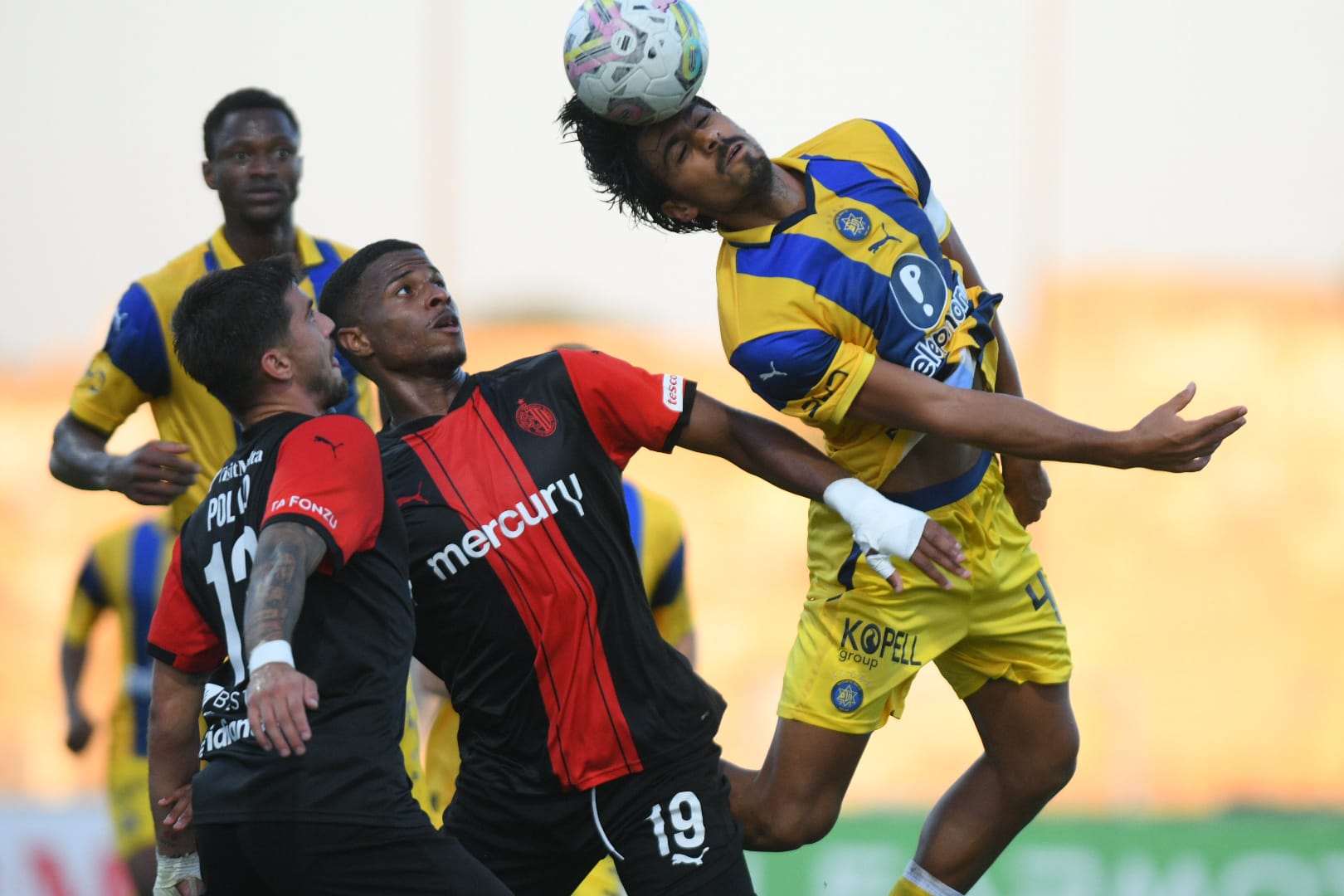
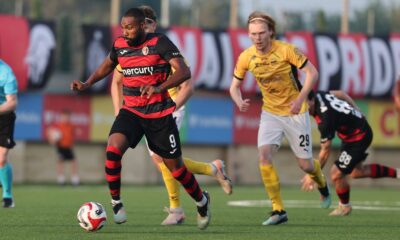
A different-looking Ħamrun Spartans side was seconds away from holding Israeli champions Maccabi Tel-Aviv to an impressive 1-1 draw in the UEFA Europa League third qualifying round first leg at the Tony Bezzina Stadium.
However, a stoppage-time goal handed Maccabi a narrow win, leaving Ħamrun with a one-goal deficit heading into the second leg of next week, to be played in Serbia.
So, what made this Ħamrun different?
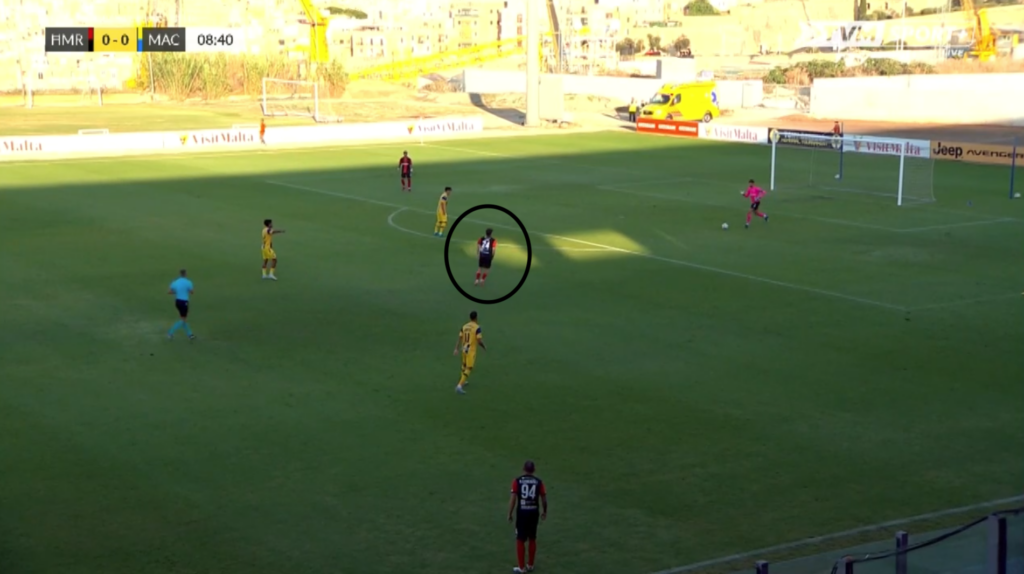
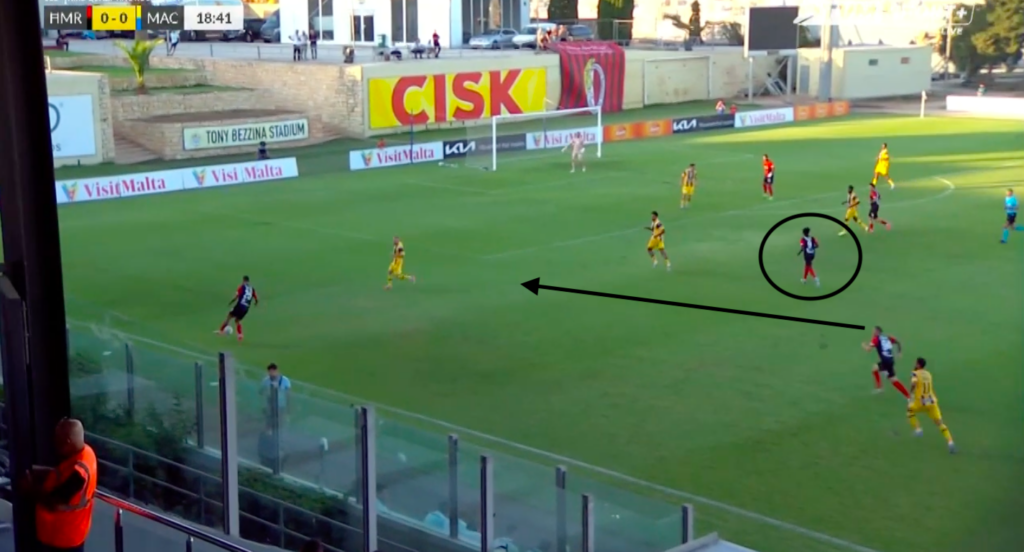
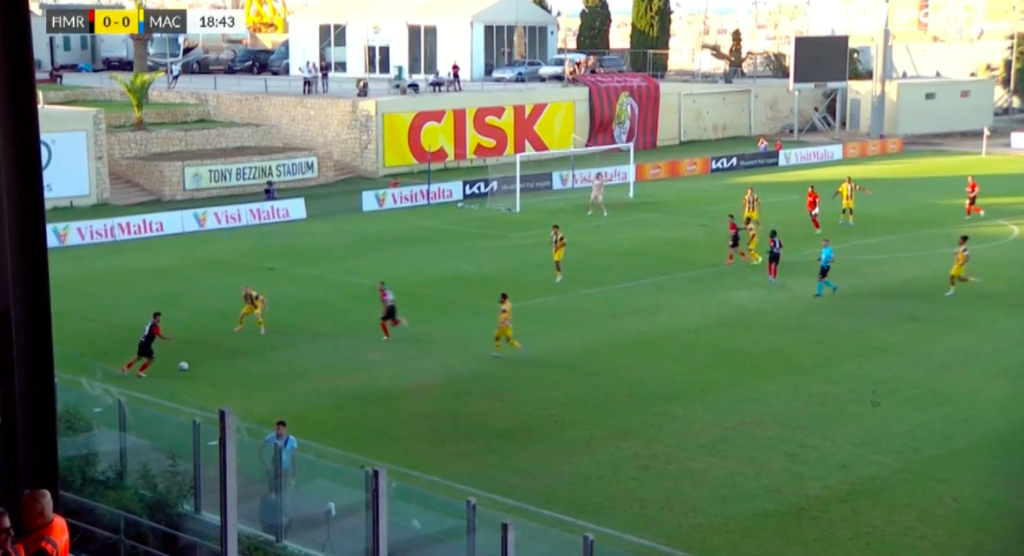
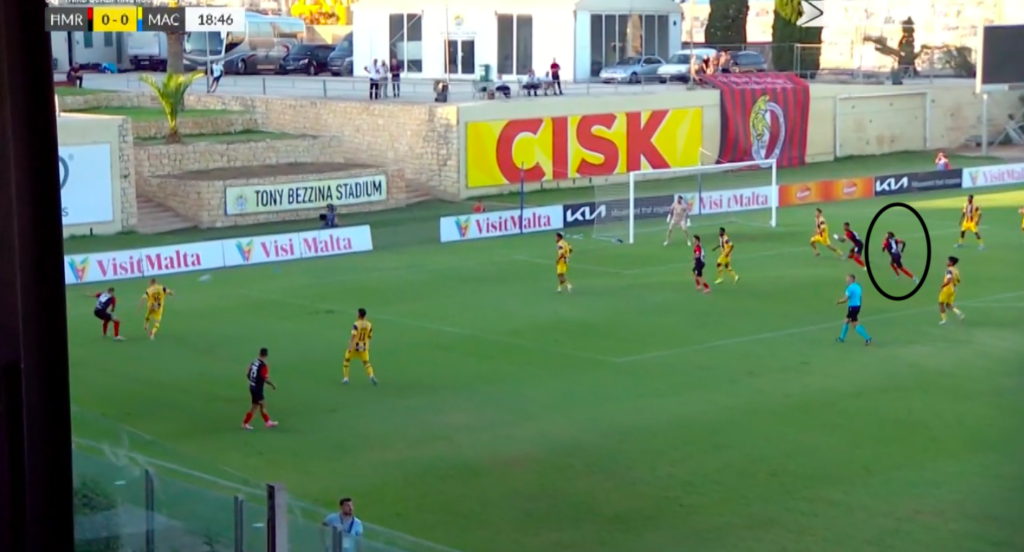
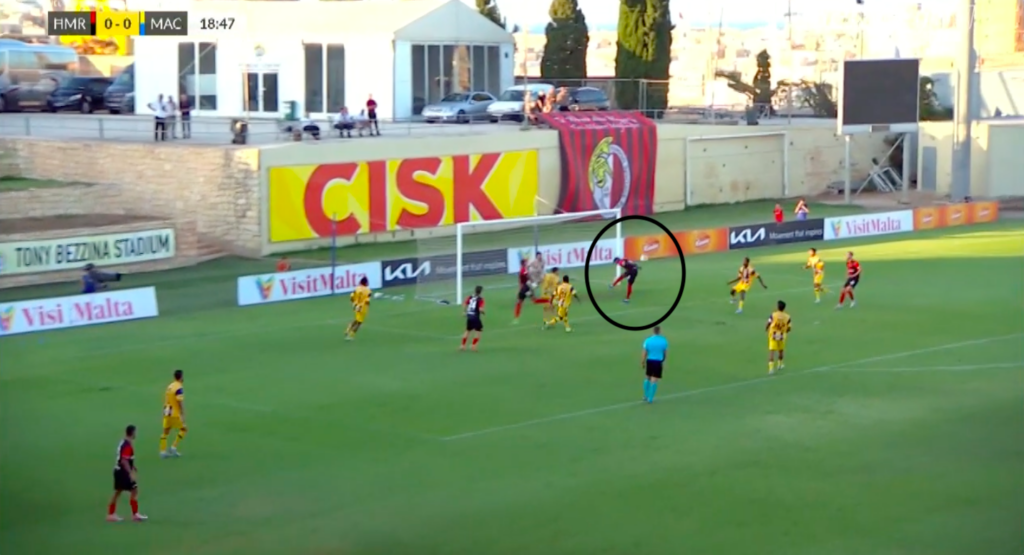
Firstly, Italian coach Giacomo Modica made key changes to the starting eleven. Most notably, newly signed Croatian midfielder Ante Ćorić, formerly of Dinamo Zagreb and Roma, replaced Domantas Šimkus in the midfield pivot role. Ćorić brought a different dynamic, especially through his creativity from deep, allowing Ħamrun to build play more patiently. Though still rusty after months of inactivity, Ćorić displayed flashes of quality with a few incisive passes.
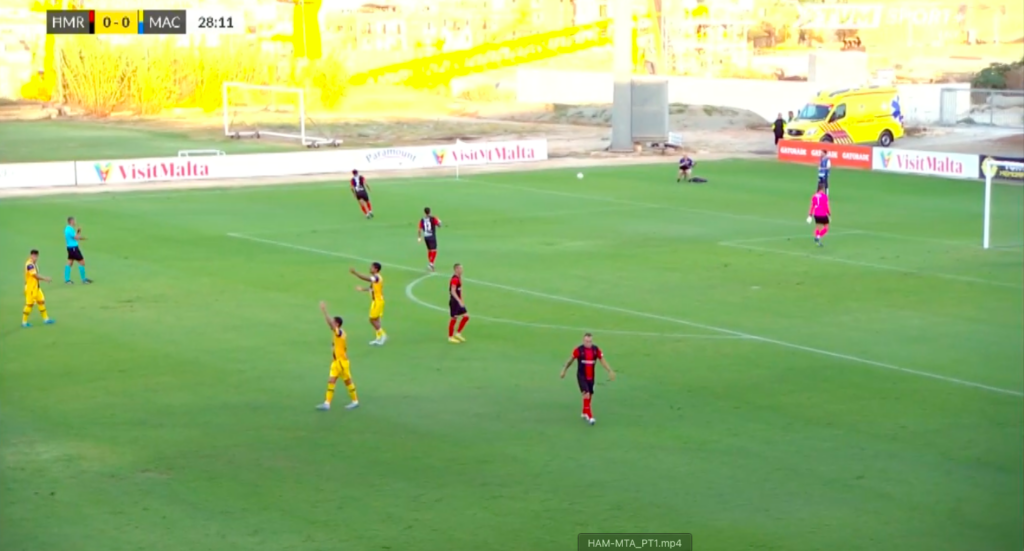
A) Ante Coric (black circle) dropping to receive in build-up, although man-marked (not aggressively) by Maccabi.B) After a one-touch pass to the left central defender, Coric makes an immediate run into space – drawing himself away from the marker while already making himself available for the next pass.
Another change saw Salio Thioune deployed on the left wing. Known for his tendency to cut inside and combine with the striker, Thioune’s positioning allowed full-back Ryan Camenzuli to advance into attacking areas with overlaps or underlaps, particularly effective in the first half but ultimately not capitalised upon.
Maccabi Tel-Aviv, meanwhile, shifted from their usual back four to a three-man defence. This allowed left-back Roy Revivo greater attacking freedom.
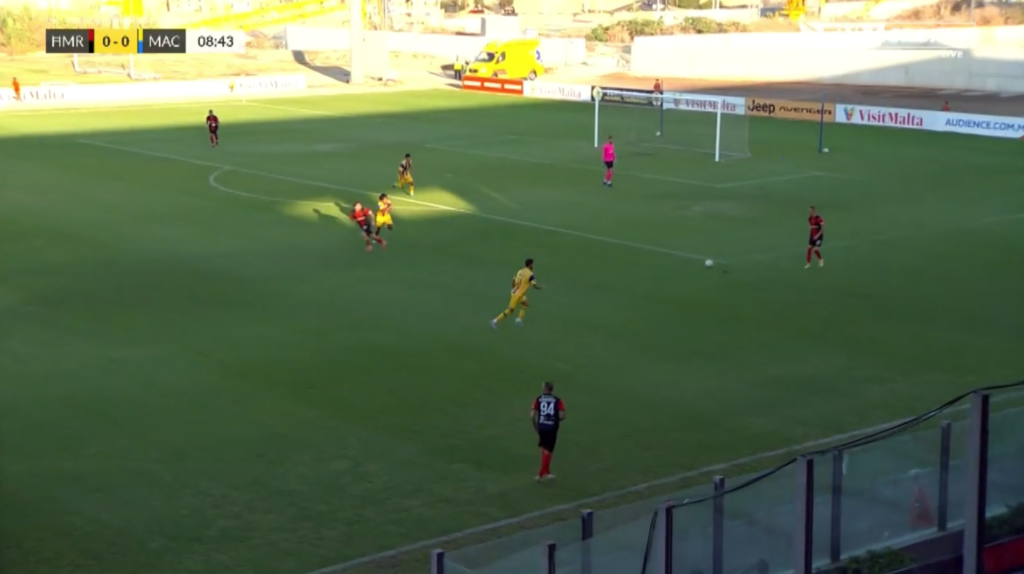
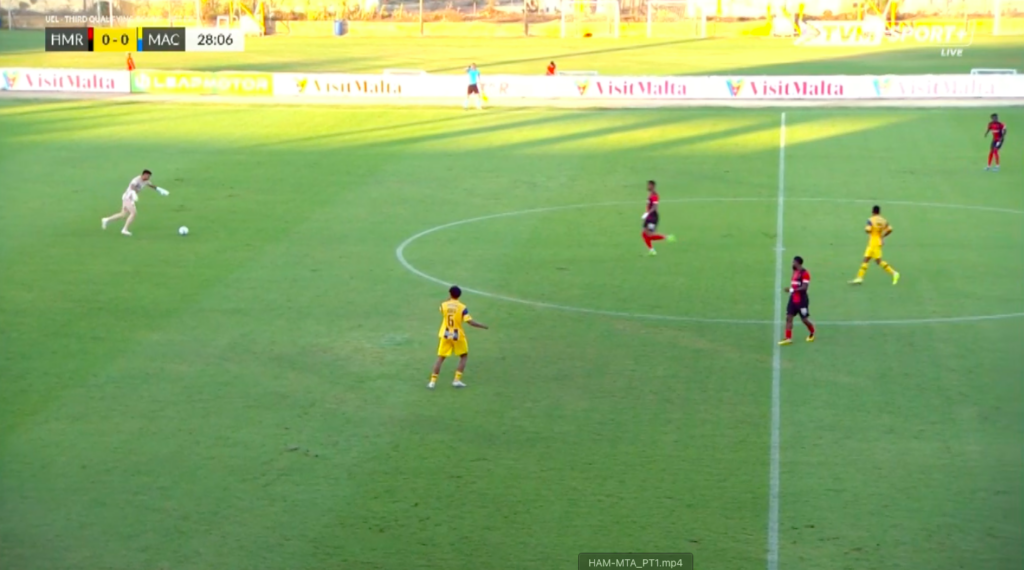
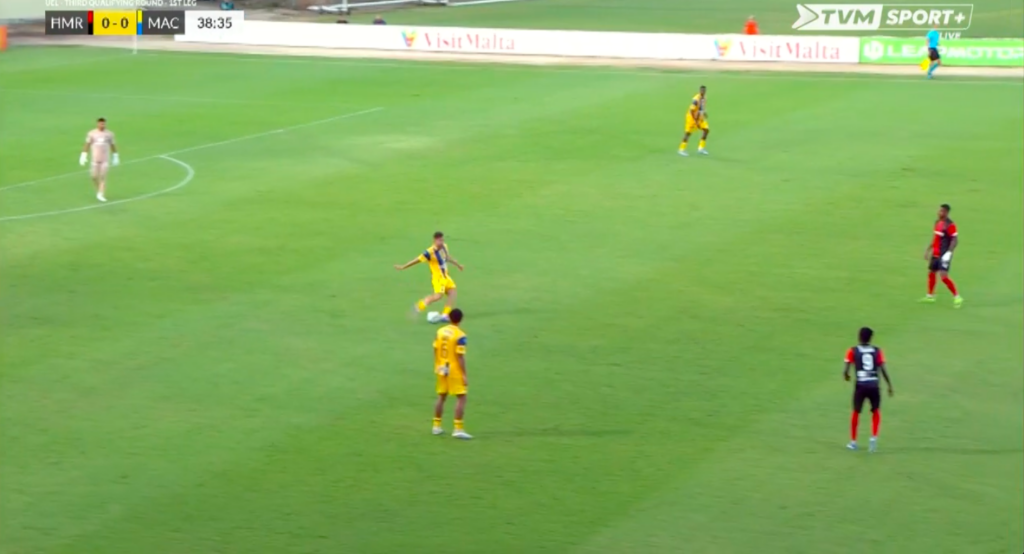
A key advantage for Ħamrun, however, was Maccabi’s forced use of a third-choice goalkeeper, an opportunity the Maltese side tried to exploit, in particular testing him when in possession inside the box.
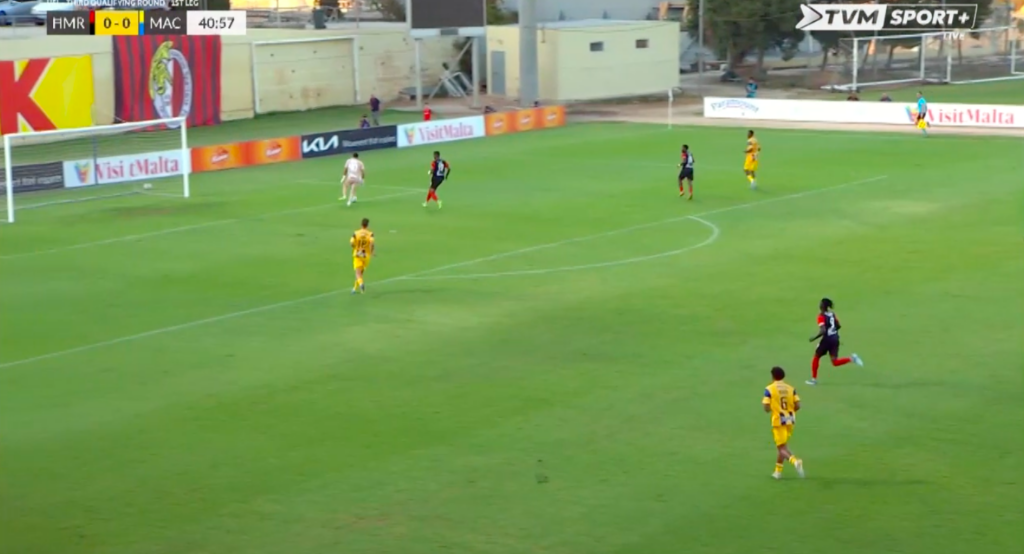
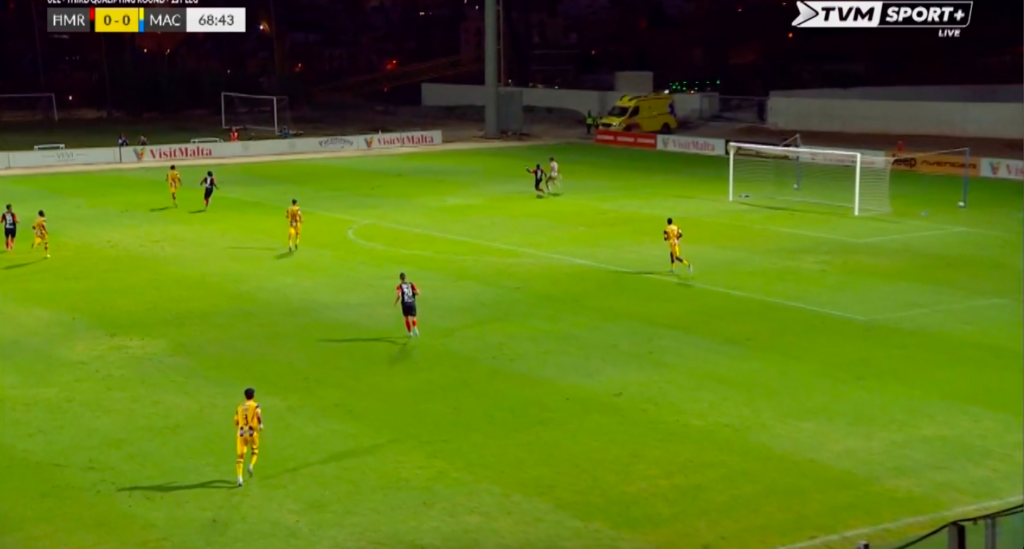
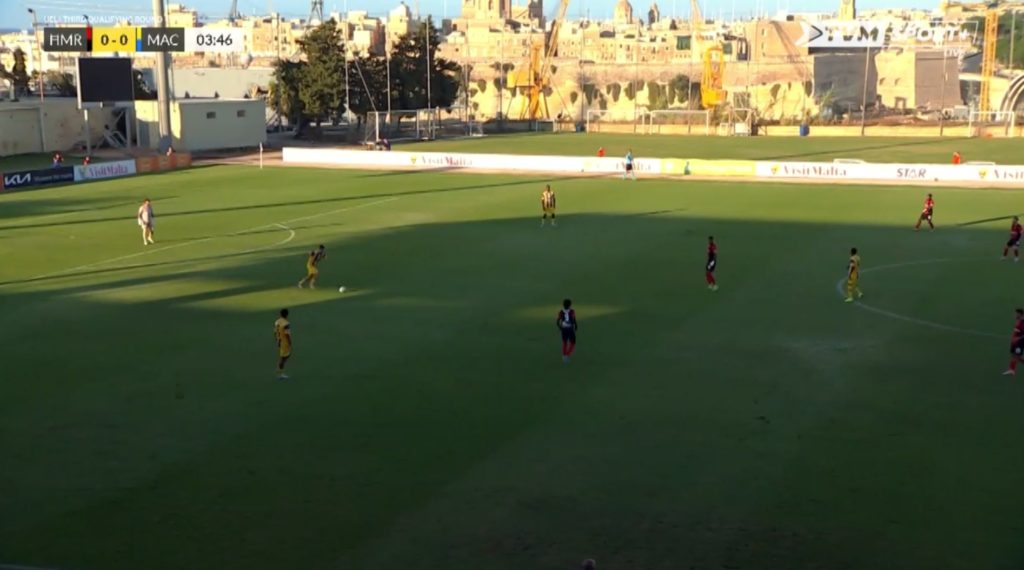
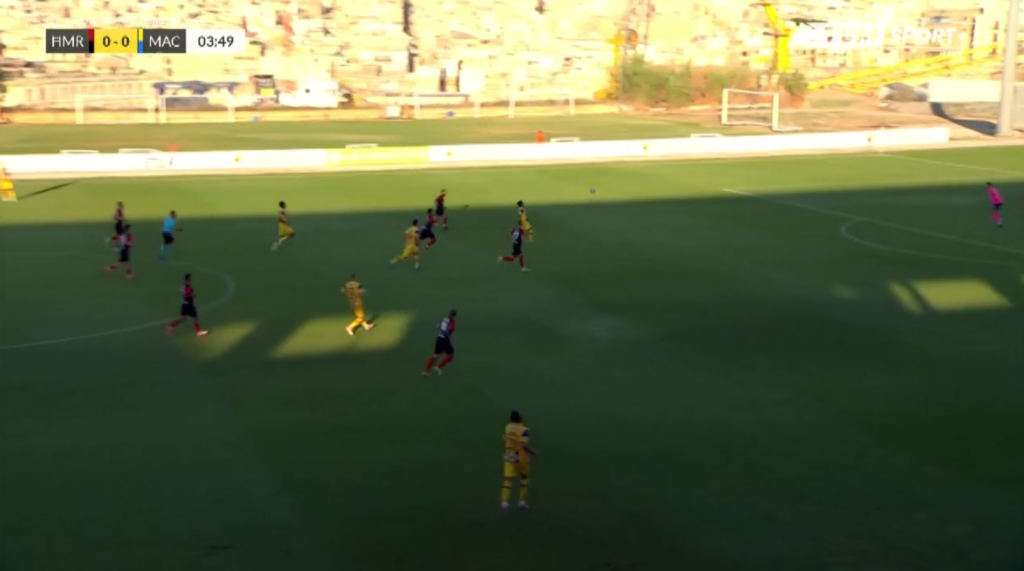
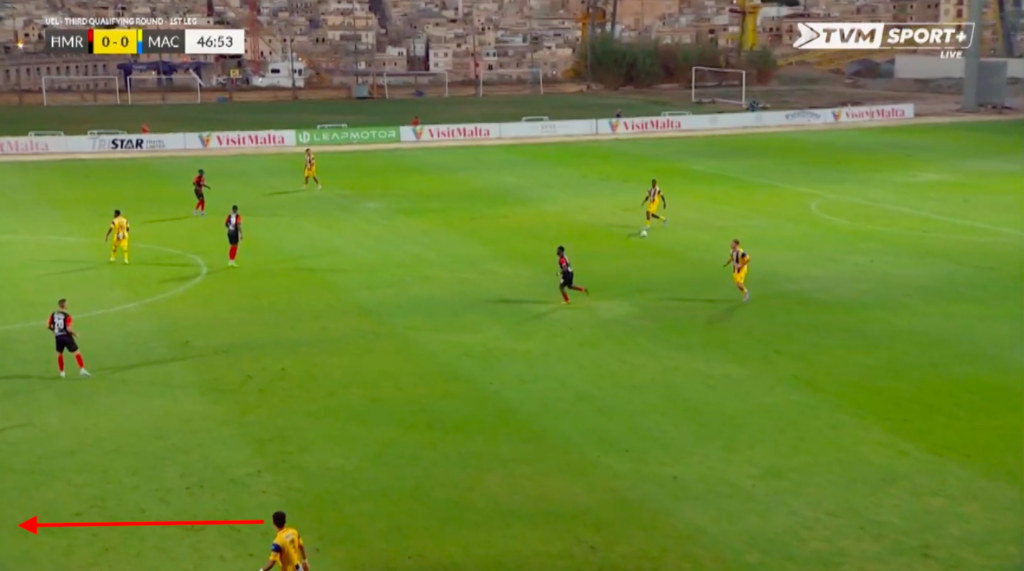
A) Maccabi’s goalkeeper launching a long-ball to beat Ħamrun’s press by playing above them. B) His long kick reaches no one, with the Maccabi players promptly calming him down – they were aware of his insecurities, especially with the ball at his feet. C) N’dri Koffi puts the Maccabi goalkeeper under pressure, winning a throw-in. D) Ħamrun’s penalty came from a throw-in won after Mbong’s aggressive pressure on the Maccabo goalkeeper.
From the outset, Maccabi’s shape was evident, but more eye-catching was Ħamrun’s cautious, mid-block press – a clear deviation from their more aggressive approach in previous European matches.
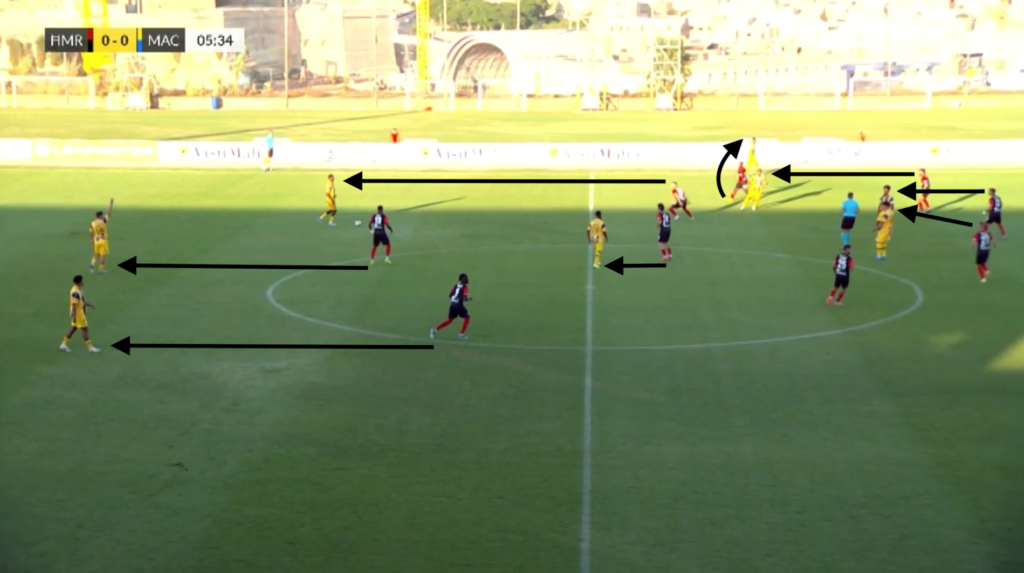
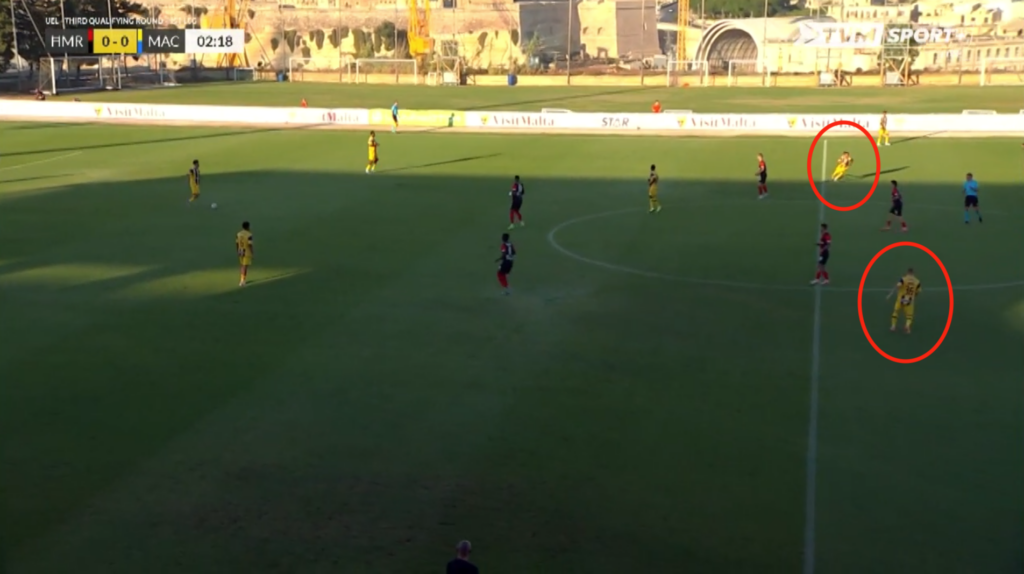
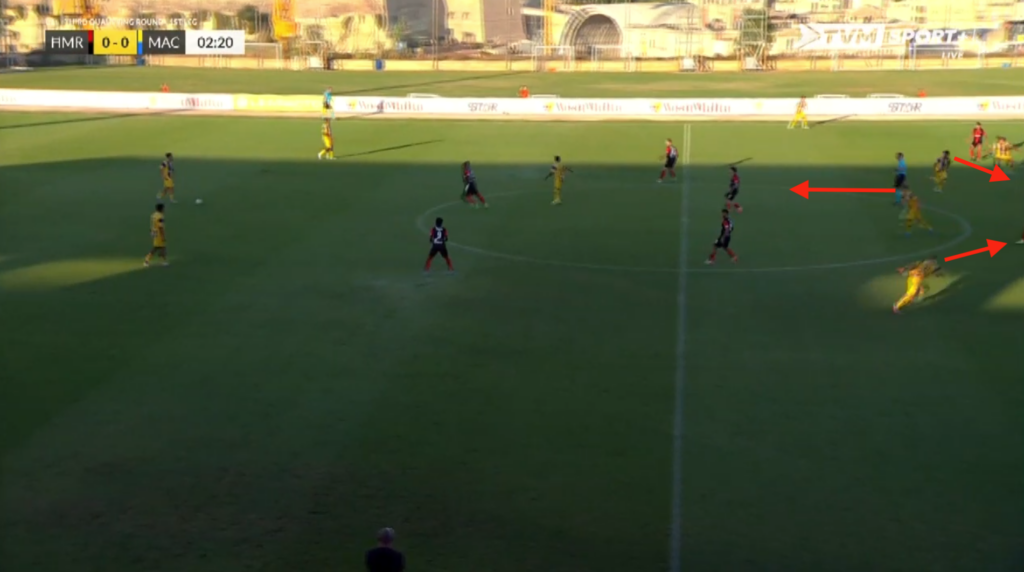
MACCABI TEL-AVIV BUILD-UP/ĦAMRUN SPARTANS PRESS:
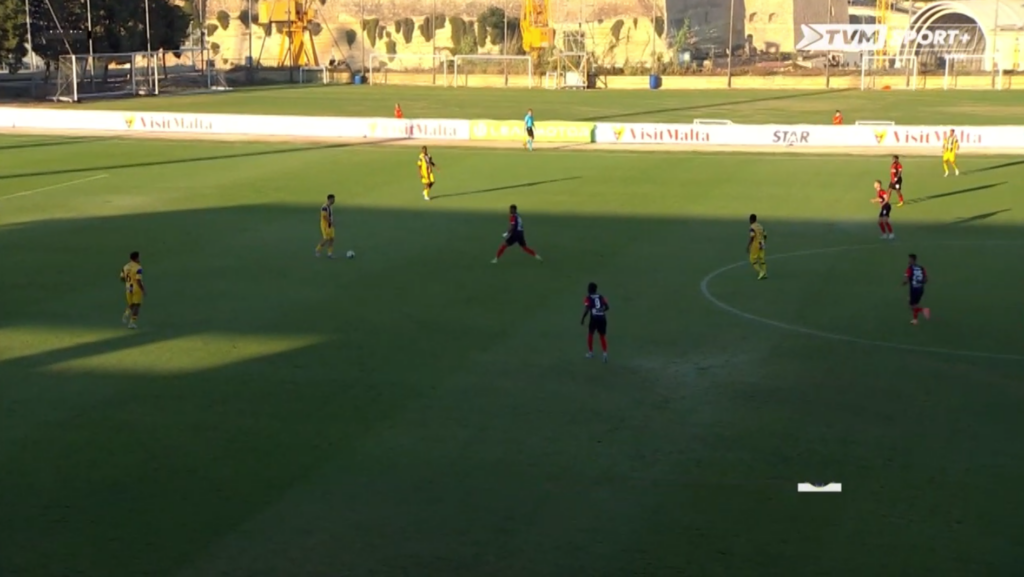
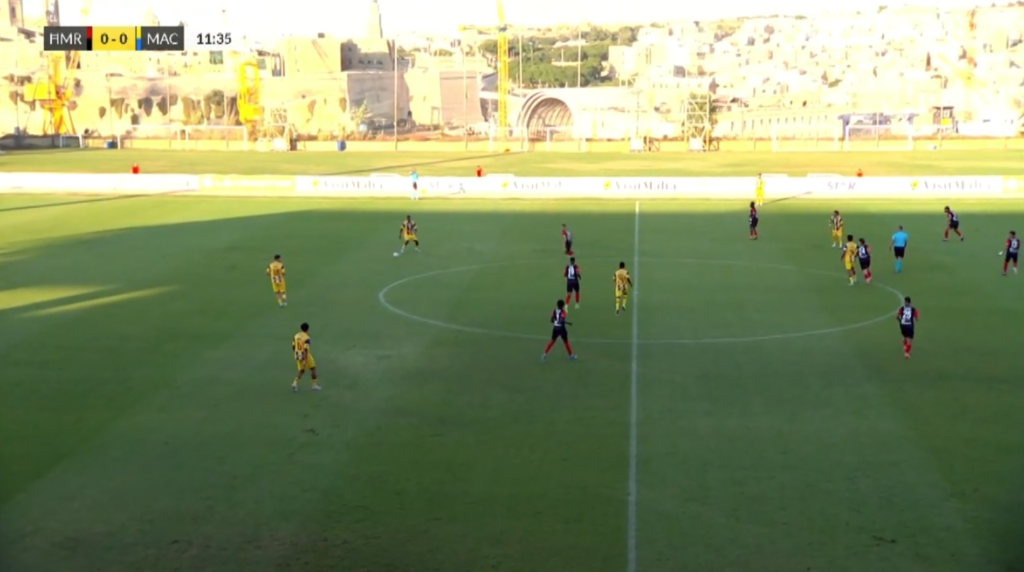
A) Maccabi’s three-man backline were staying narrow during the build-up, with Ħamrun opting for a mid-block pressing approach rather than a high and aggressive man-to-man marking.B) Ħamrun’s pressing – short and compact, with a mid-block pressing system.C) Part 1: Maccabi’s pattern in build-up was to have the two players playing in the left-half space and right-half space to run in the space left void by the forward that would drop and draw a defender with him.D) Part 2.E) Part 3. F) Part 4.
This compact defensive posture frustrated Maccabi’s efforts to play through the lines, especially when their forwards tried to create space through off-ball movement.
A) Part 1: One of the situations where Maccabi could not find any passing links centrally and banked on long balls, which reached no one.B) Part 2.
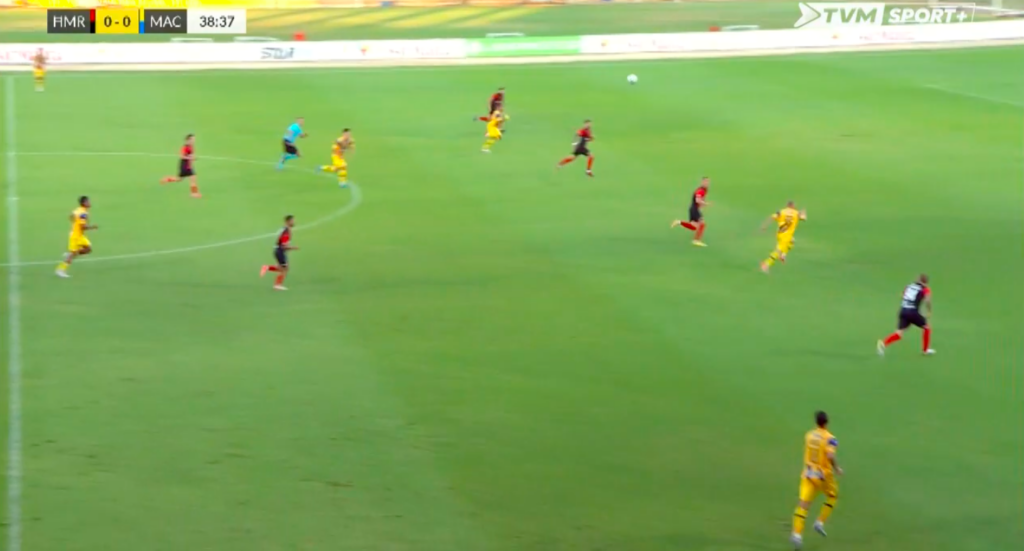
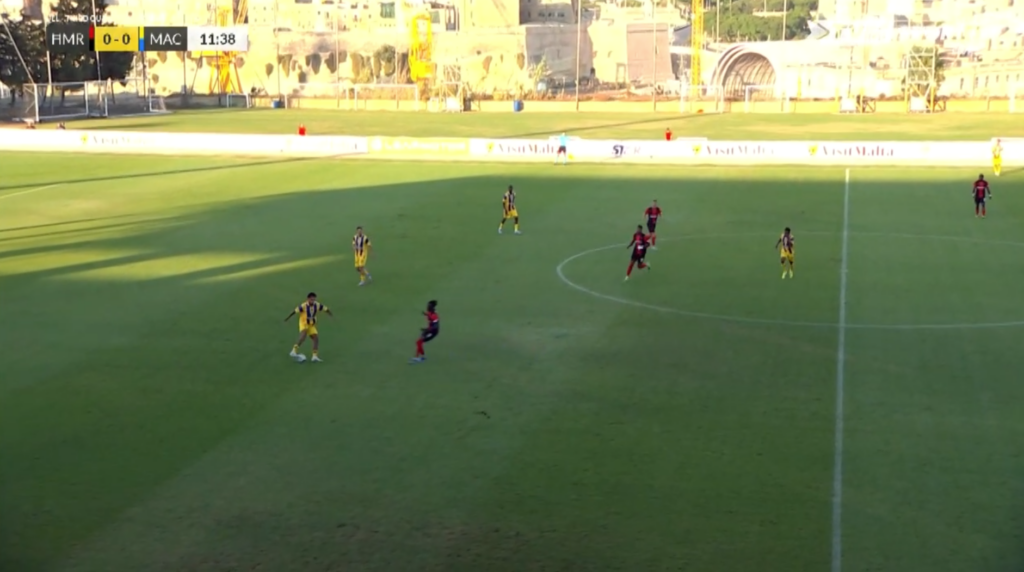
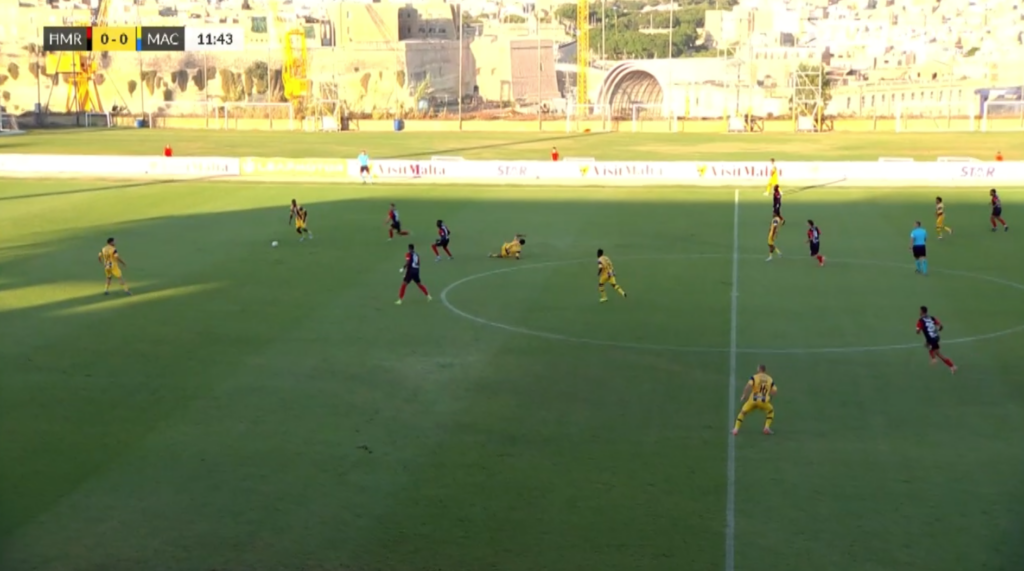
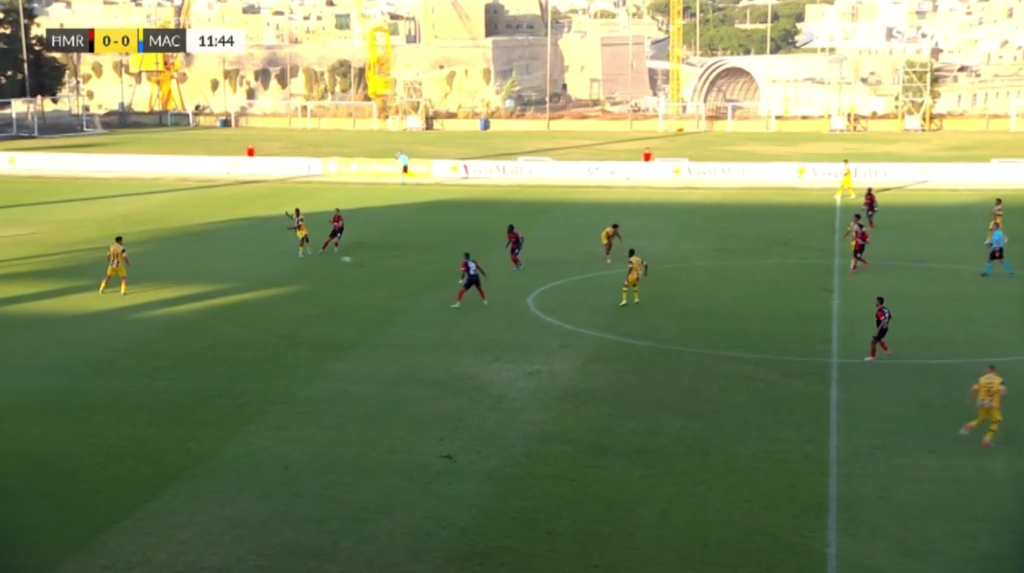
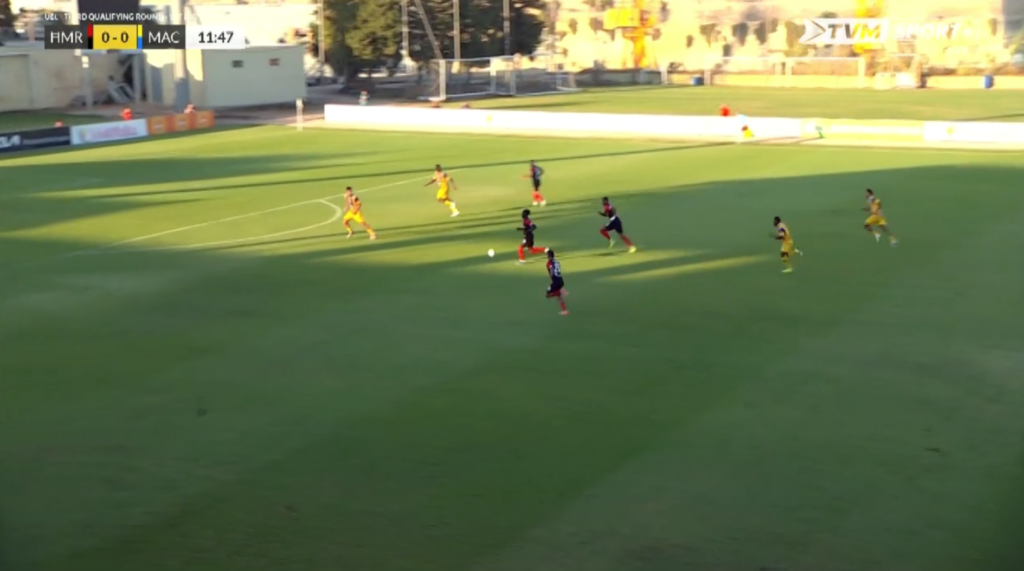
A missed opportunity on minute 12 summed up Ħamrun’s first half. Their front three pressed Maccabi’s narrow backline effectively, leading to a turnover and a counter-attack that nearly broke the deadlock.
A) Ħamrun’s press upfront, 3vs3. B) Ħamrun’s press growing in intensity and aggressiveness the more the Maccabi defenders hold on to the ball. C) One of the Maccabi’s players moved out of position but had to pass back, creating a numerical disadvantage for his side as they are now 2vs3.D) The Maccabi defender takes the wrong decision, trying to pass centrally but the ball is intercepted by Ħamrun – one of their 31 interceptions in 96 minutes – and launch a counter-attack.E) Ħamrun are now in a 4vs2 situation but could not make this counter-attack count, with Thioune eventually holding on to the ball and fires wide his curling effort.
ĦAMRUN’S CHANCES:
Seven minutes later, Thioune failed to convert a Camenzuli cross, missing the chance to replicate his goal against Žalgiris.
A) Thioune (black circle) cutting inside, allowing both Eder and Camenzuli (black arrow) to fill the left flank with Camenzuli set to make an underlap.B) Camenzuli drives forward, makes the underlap as he prepares to receive and whips in the cross into the box. C) Camenzuli whips in the cross with Thioune (black circle) unmarked, ready to meet the ball – like he did in his goal against FK Žalgiris in the UEFA Champions League Q1. D) Thioune meets the ball but fails to drive it into the back of the net.
SECOND-HALF:
At half-time, Maccabi introduced Elad Madmon, a young talent who added central quality and pushed Revivo further forward. This tactical tweak helped Maccabi inch upfield.
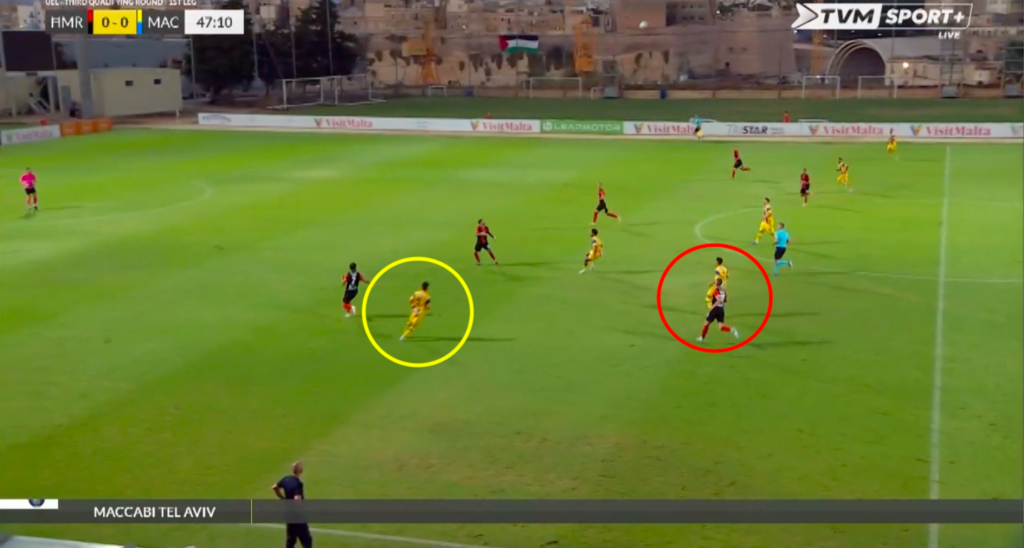
A) Maccabi’s left-back given license to push forward in possession. B) Substitute Madmon (red circle) tucking inside and the left-back (yellow circle) filling his space.
Meanwhile, Ħamrun lost defender Vincenzo Polito to injury, replaced by Emerson Marcelina – another deep-lying playmaker with accurate long passes from deep.
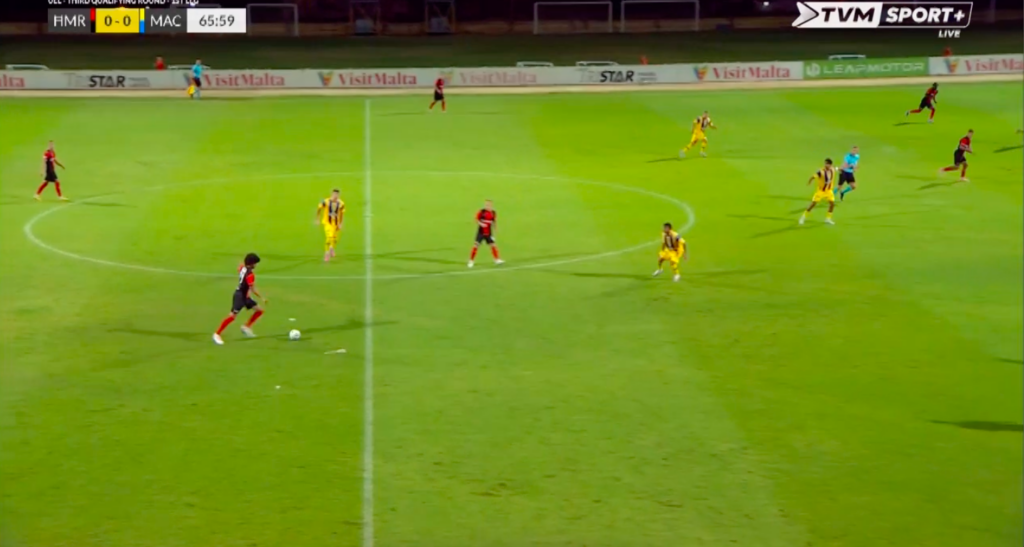
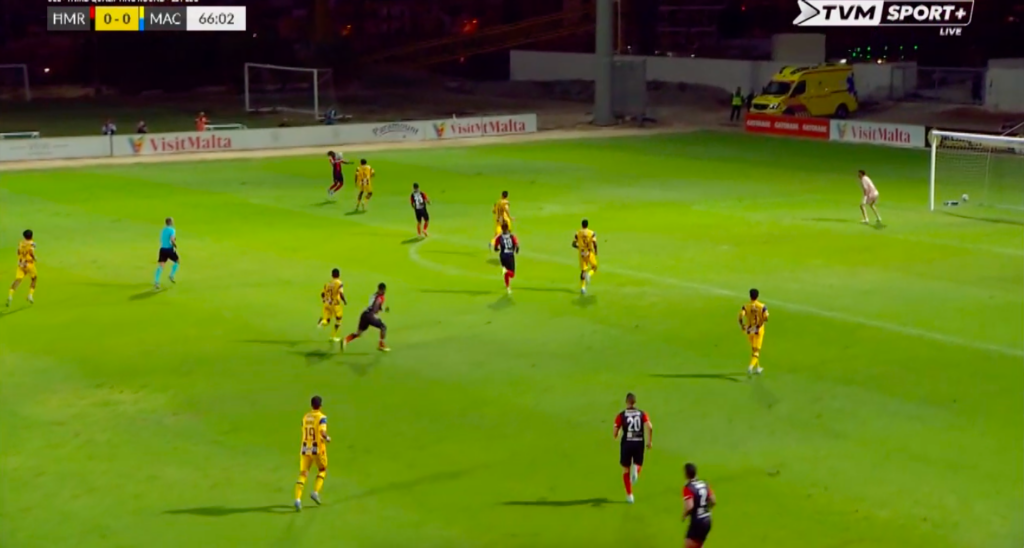
A) Part 1: One of Marcelina’s first touches – a perfectly-delivered long ball, switching play onto the left flank.B) Thioune receives the ball before making a drive into the box, winning a corner.
Ħamrun’s breakthrough came on 69 minutes via a N’dri Koffi penalty. The goal injected confidence, but Maccabi equalised from their first real chance of the second half – a corner in the 79th minute.
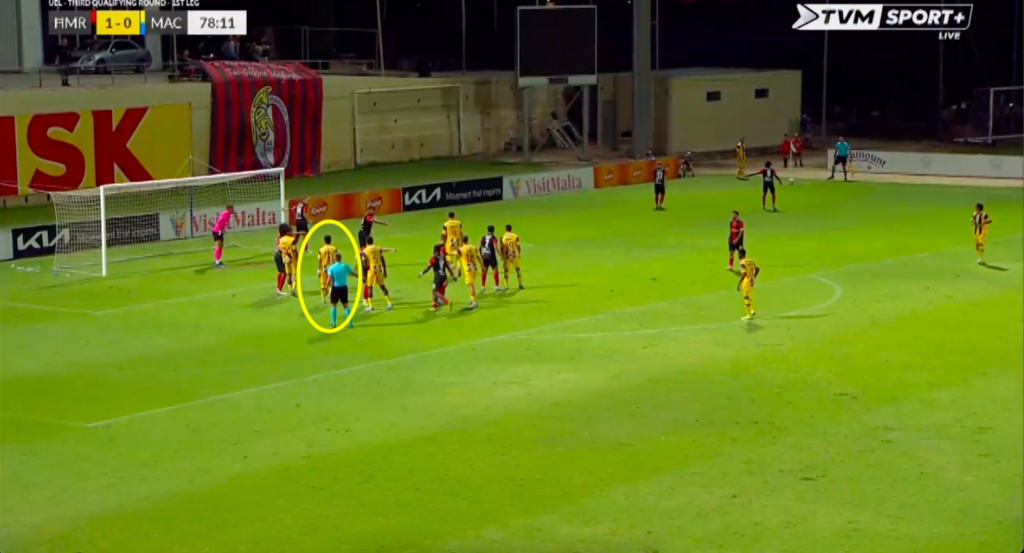
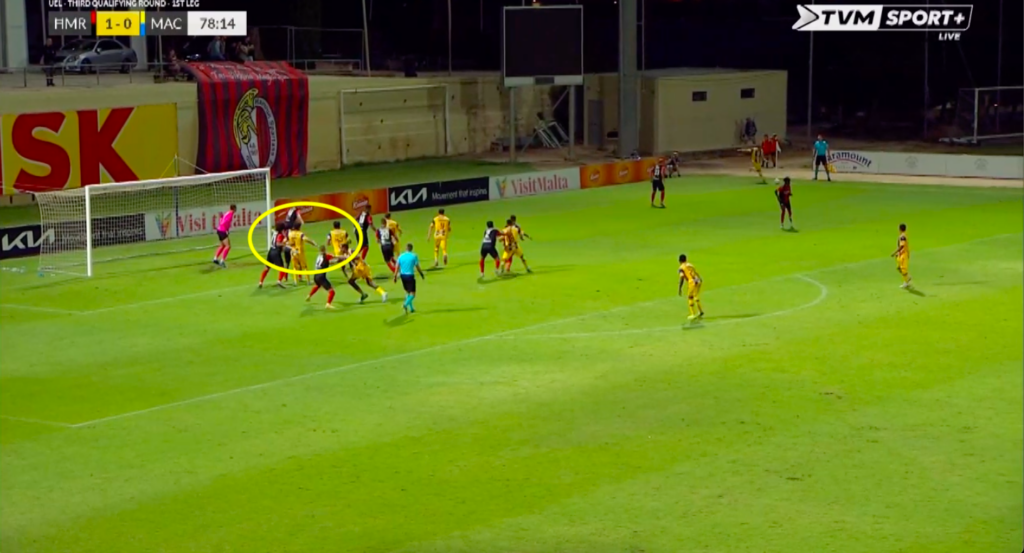
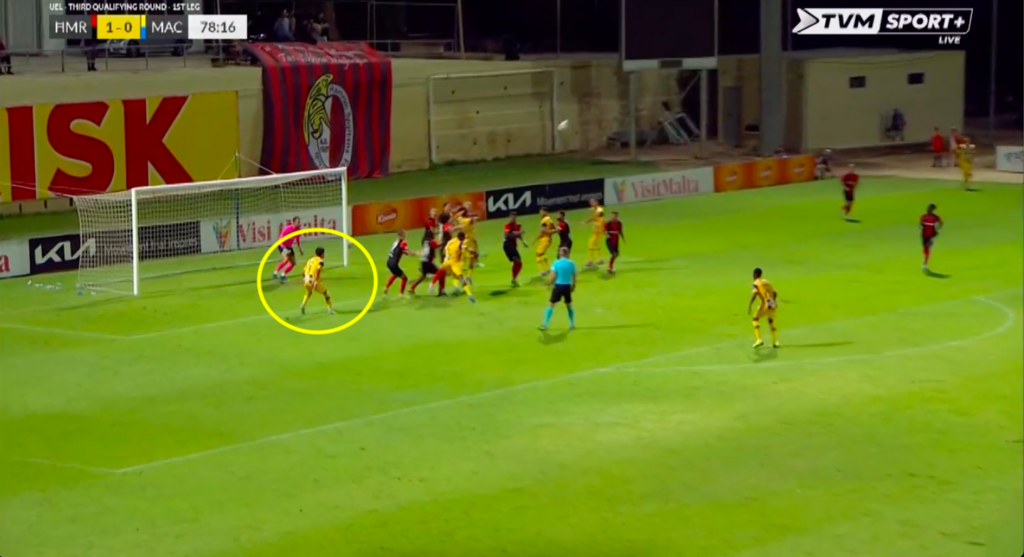
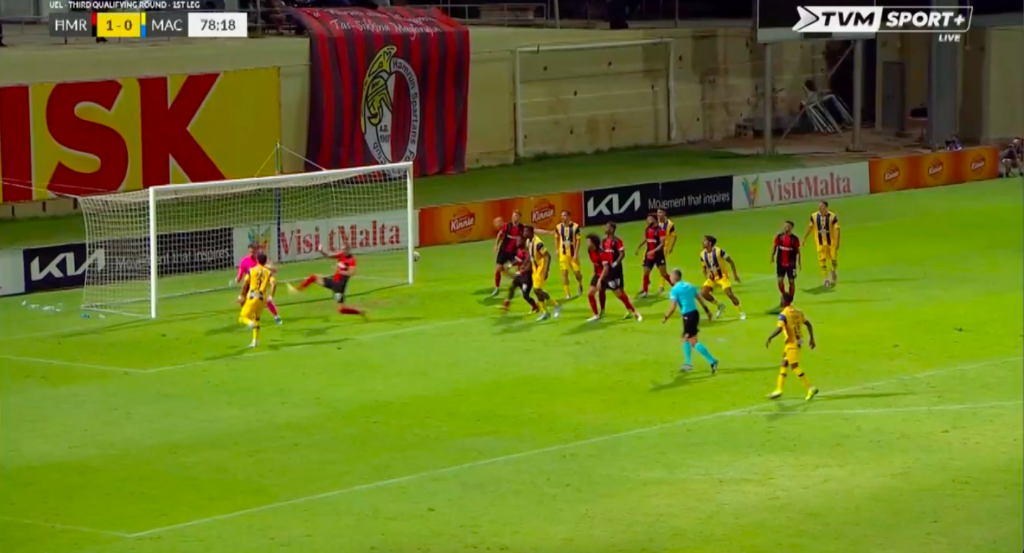
A) Revivo (yellow circle) will score for Maccabi. He is inside the box, near a team-mate and two Ħamrun players (Marcelina and Mbong)B) Part 2: Revivo has now joined his team-mate and is currently marked by Marcelina, with his team-mate running ahead of him and set to be picked up by Mbong.C) Part 3: Marcelina does not follow Revivo as he is more focused on clearing the ball, with the Maccabi player moving further back, unmarked and waiting for an opportunity.D) Part 4: Revivo, still unmarked, controls the ball down and manages to beat Bonello before Bjelicic can tackle the danger away.
The equaliser shifted momentum as Maccabi pressed for a winner. Ħamrun, now under pressure, looked for tall striker Stijn Meijer with long balls to retain possession consistently or at least draw fouls.
Just as it seemed the game would end level, a late defensive lapse handed Maccabi a last-gasp goal and a 2-1 win.
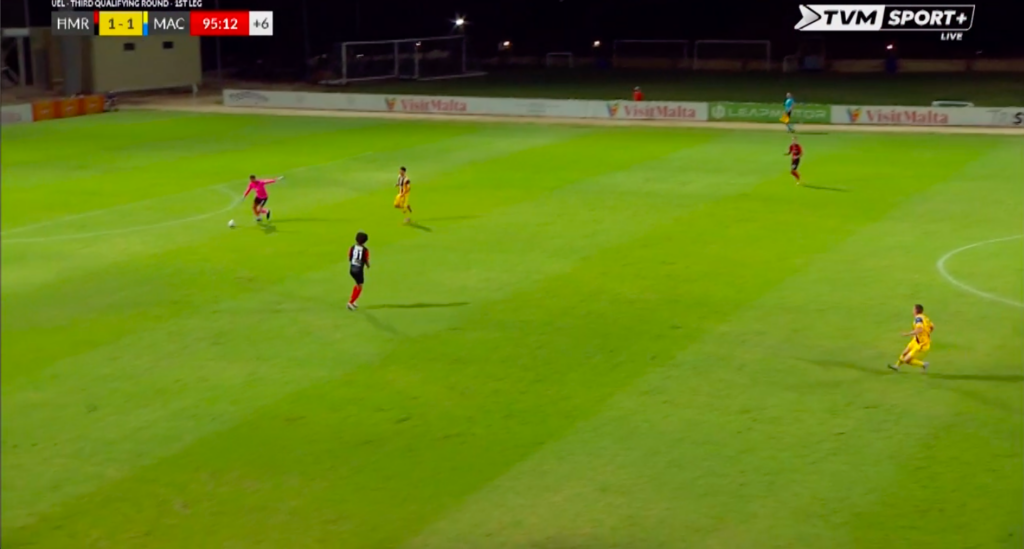
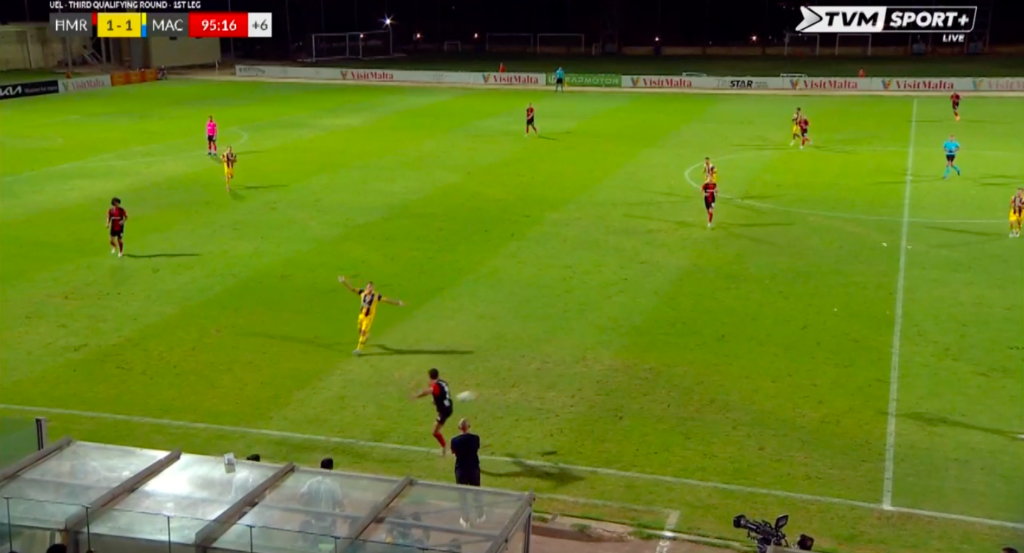
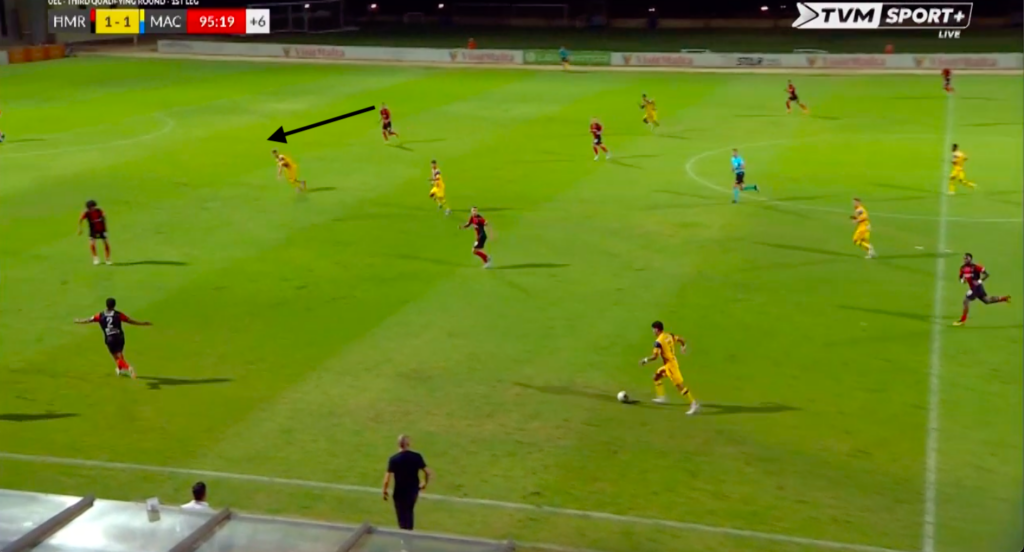
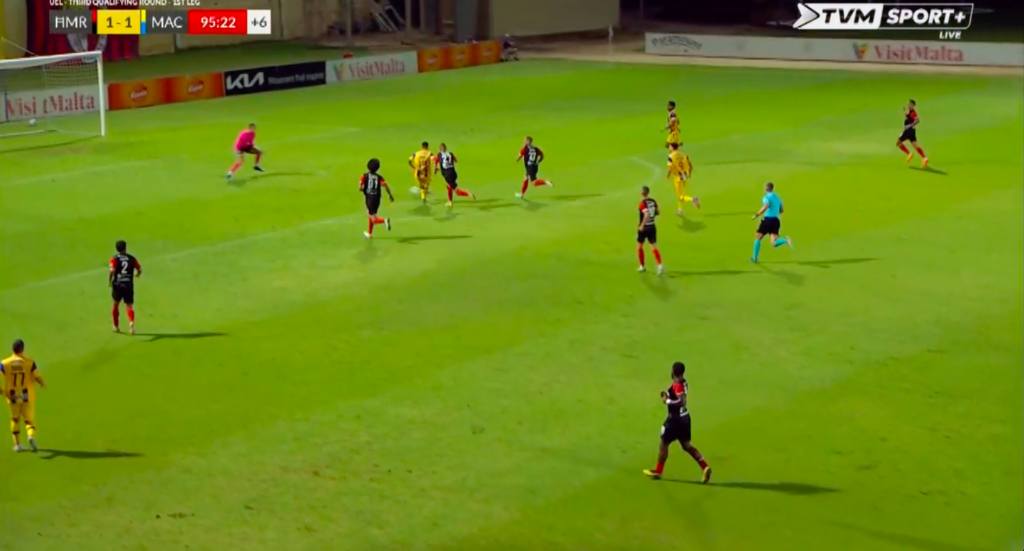
A) Part 1: With less than 50 seconds on the clock, goalkeeper Bonello opts to play a long-ball on Compri on the right flank. In hindsight, he could have passed it to Marcelina but maybe he preferred to relieve pressure from his backline.B) Part 2: Compri, hugging the touchline, plays the ball with his heel rather than trying to control it or leave it for a throw-in. C) Part 3: The ball ends up at Maccabi as they prepare a last-gasp assault in search of the winning goal. At the back, Marcelina is awaiting the opponent while Bjelicic (black arrow) does not intervene immediately to close the gap as the Maccabi forward is upfront, providing a dangerous passing lane.D) Part 4: Eventually, Maccabi managed to combine with Madmon arriving in front of Bonello and slots the ball into the back of the net.
Despite the disappointment, Modica’s cautious game plan had nearly paid off. Maccabi had more possession (57%), but Ħamrun created 14 chances, showing they could threaten through set-pieces and counters.
The tie remains alive. With at least the Conference League group stage still within reach, Ħamrun’s approach in the second leg will be telling – Modica could stick with pragmatism or opt for a bolder strategy.
Either way, the Spartans are not out of Europe yet.