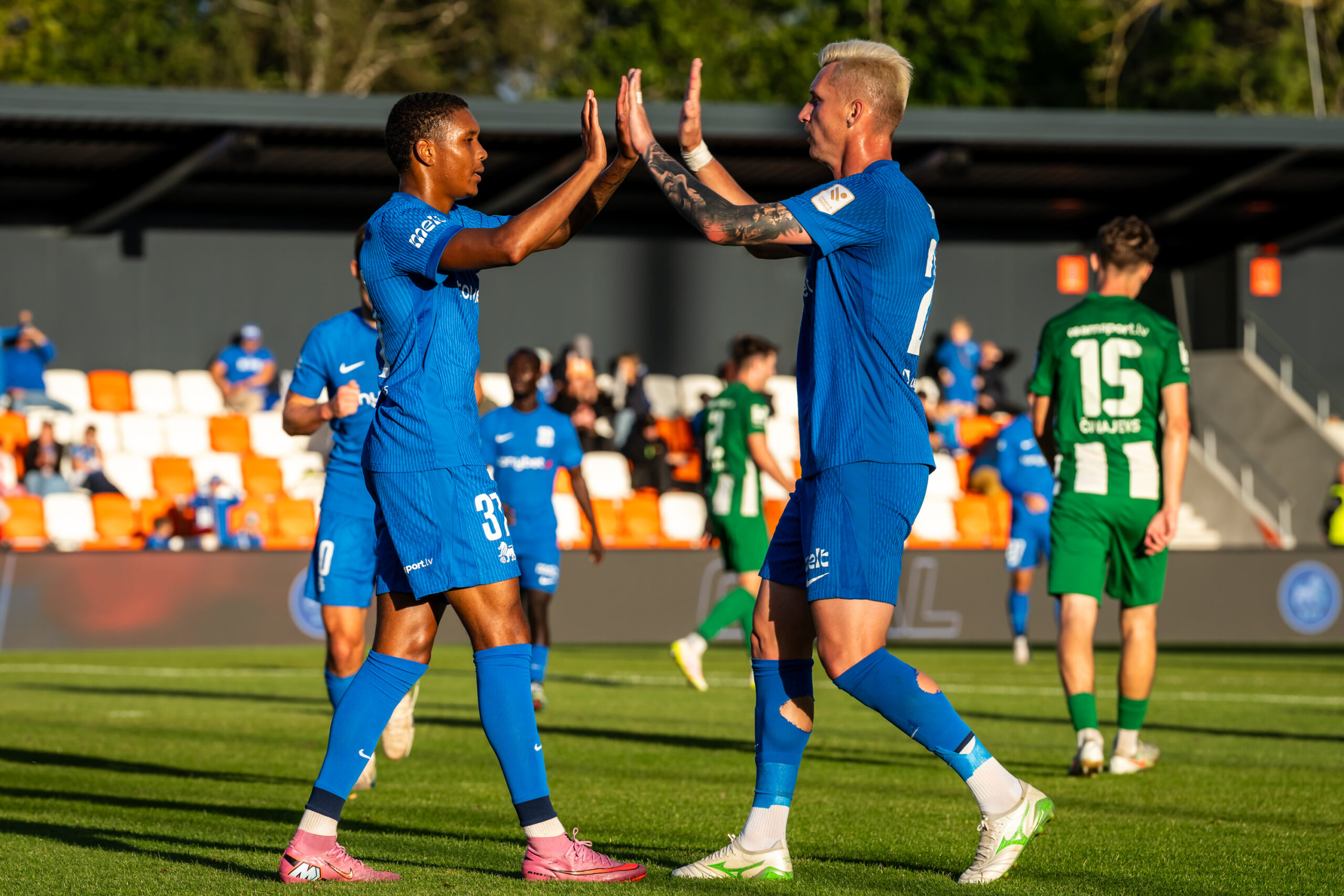
RFS made it to the Latvian cup semi-finals, last weekend. Photo: RFS
The UEFA Conference League play-off is a pivotal encounter not only for Ħamrun Spartans but also for their opponents, Latvian champions, RFS, on Thursday.
RFS dropped into the Conference League after defeats to Sweden’s Malmö in the Champions League qualifiers and Finland’s KuPS in the Europa League.
Now, they are looking to secure European group stage football for a third season, having already featured in both the Europa League and the Conference League in recent years.
Baltic Football News journalist Dmitrijs Kravčenko told the Times of Malta, the tie holds special significance for the Latvian side.
“It (qualifying again) would be a signal of maturity,” Kravčenko said.
“Until last year, it took a Latvian club 13 years to proceed past the first qualifying round of the Champions League, and now RFS have done it twice in a row.
“They are the only Baltic club to play in the main stages of a European competition more than once and only the fourth to qualify at all.
“Still, the prevailing feeling is that, given the quality of the Latvian top-flight, there should be at least one club in the Conference league if not every year.
“RFS living this idea would not only show that this is not an unreasonable expectation but also that it is something that large regional clubs should strive towards as a given.”
Kravčenko hailed RFS’s consistency in recent years.
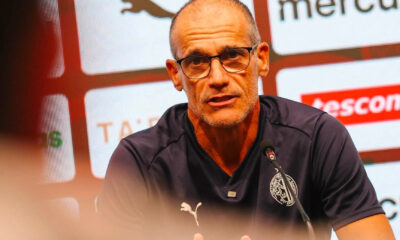
“RFS are a remarkably consistent side under Viktors Morozs, who has been in charge since 2020,” he said.
“They play methodical, possession-focused football with emphasis on set pieces and crosses. Their formation of choice is 4-2-3-1 with a double-6 in the midfield, although they have been known to play 5-3-2, especially against much stronger opponents.
“That being said, the squad is plagued by injuries this season to the point where they ran out both of central defenders and strikers.”
The club did bring in an experienced defender before their KuPS match.
Serbian Aleksandars Filipović, a 30-year-old central defender, has played 171 games for BATE in Belarus and 88 times for Partizan.
“In terms of identity, RFS are cool-headed and patient, reflecting their overall club ethos of slow but consistent and sustainable growth,” Kravčenko said.
“On the pitch, this can manifest as either a gradual python-like choking of the opponents by keeping the ball or by utter lack of imagination in the attack when things don’t go their way. RFS are a tall and physically strong side but not a quick side, despite having quick players.”
The Riga-based club first broke through to the group stages in 2022/23, eliminating Maltese side Hibernians on their way to the Europa Conference League.
“My personal standout memory (from the Hibernians match) is all the on-the-pitch theatrics by Hibernians players at even the slightest contact,” Kravčenko said.
“Football is a lot more physical up north, so that’s a given, but it is always frustrating when the opposites collide,” he said.
“Jokes aside, this was not a particularly memorable match as qualification for Conference League overshadowed much that came before.
“More generally speaking, Hibernians were not an easy opponent and, a year before playing RFS they almost knocked out Riga FC, with Riga FC sacking their head coach shortly thereafter.
“Knowing RFS, they will just do their thing regardless of that experience, so it could prove to be just as difficult against Spartans as it was against Hibernians.”
In that campaign, they made headlines with resilient performances, holding Fiorentina to a 1-1 draw and keeping a clean sheet in a goalless draw with İstanbul Başakşehir.
After missing out on the group stages of a UEFA competition in 2023/24, RFS bounced back last season by eliminating APOEL of Cyprus to qualify for the Europa League.
They went on to record some remarkable results in the league phase, including a stunning 1-0 home win against Ajax. They also earned draws against Galatasaray (2-2) and Anderlecht (1-1), underlining their growth and competitiveness on the European stage.
“It is difficult to say how exactly but qualification for these competitions did help. Qualifying for the Conference League helped them accelerate some infrastructure projects and set up their academy system, whereas the Europa League added prestige and seems to be helping with attracting better international prospects at more reasonable prices that, perhaps, they would be asked to pay otherwise.
“Financially, the club still maintains their €5 million annual budget, so there’s not been a dramatic increase there,” Kravčenko said.
Given the valuable experience the club gained from participating in these competitions and from confronting themselves with some of Europe’s best teams, RFS are understandably considered as favourites to progress at the expense of Ħamrun.
“Primarily because of this Europa League experience just last season,” he said.
“But RFS were favourites coming into all but one clashes this European season and see how that turned out! A very laboured win over Levadia (of Estonia) and an embarrassing performance against KuPS just now.
“The squad lost some key players after last season and, compounded by the injury epidemic, there is something very much lacking. Because of this, it is difficult to say definitively, but RFS should be slight favourites, yes.”
Domestically, RFS are in the thick of the Latvian league title race.
They currently sit second, three points behind leaders and city rivals Riga FC, with 64 points from 26 matches.
The much-anticipated derby between the two sides was originally scheduled for next weekend but has been postponed due to their European commitments, with Riga facing Sparta Prague of Czechia in their own play-off tie.
FK RFS are also at the back of a hard-fought 3-2 win over FK Metta in the Latvian Cup quarter-finals as they are now in the final four of the competition.
Highlights from FK RFS’s 3-2 win over FK Metta.
“One of the key players – Jānis Ikaunieks – will only be available in the return leg as he is still serving out three-match ban for elbowing a Malmö player,” Kravčenko said.
“He is the creative engine in the midfield and always a threat in front of goal. Dmitrijs Zelenkovs is a midfield workhorse and is very technical, and has a powerful and accurate long shot.
“Senegalese Barthélemy Diedhiou is a quick and technical right attacking winger and Mor Talla is the same, just on the left side. Both can create and convert chances but are still recent to the club, having only joined this season,” Kravčenko added.
In addition, RFS will also be banking on Serbian forward Darko Lemajic – the leading scorer in the domestic championship with 22 goals – as Kravčenko sheds light on the team’s strengths and weaknesses.
“Discussing RFS’s strengths in light of their European performances thus far is a tricky proposition. Probably experience and persistence are the ones to single out. There are certainly more vulnerabilities to talk about – they are slow, vulnerable at the back due to all the injuries, unconvincing in the midfield after having sold their ‘other 6’ and lack imagination in the attack, still favouring crosses to their lone, tall centre-forward Lemajič,” he said.
“Most crucially, however, they seem to have lost their mojo somehow and the team does not display the same ferocious attitude that helped them qualify for Europe on the previous two occasions.
“They lack leadership and seem tired. Due to the Europa League, they did not have an off-season and have been playing competitive matches since last March, pretty much non-stop since Latvia is a summer league.”
“That being said, they certainly have what it takes to pull themselves together and challenge anybody, as they have proven in previous years and most notably against Ajax, Galatasaray and Fiorentina.”
On top of the sporting prestige, qualification to the league phase also carries a significant financial boost.
Clubs are guaranteed a fixed payment of €3.17 million, in addition to the €1.71 million already secured through the qualification rounds. This figure does not include potential matchday revenues, TV rights income, or performance-related bonuses for wins, draws, and league positioning.