Valletta FC president Claudio Grech described his team’s success in the Jubilee Cup as a clear sign of the club’s resilience and ability to bounce back from adversity, as the capital club laid down a marker that they are back among the big boys of Maltese football.
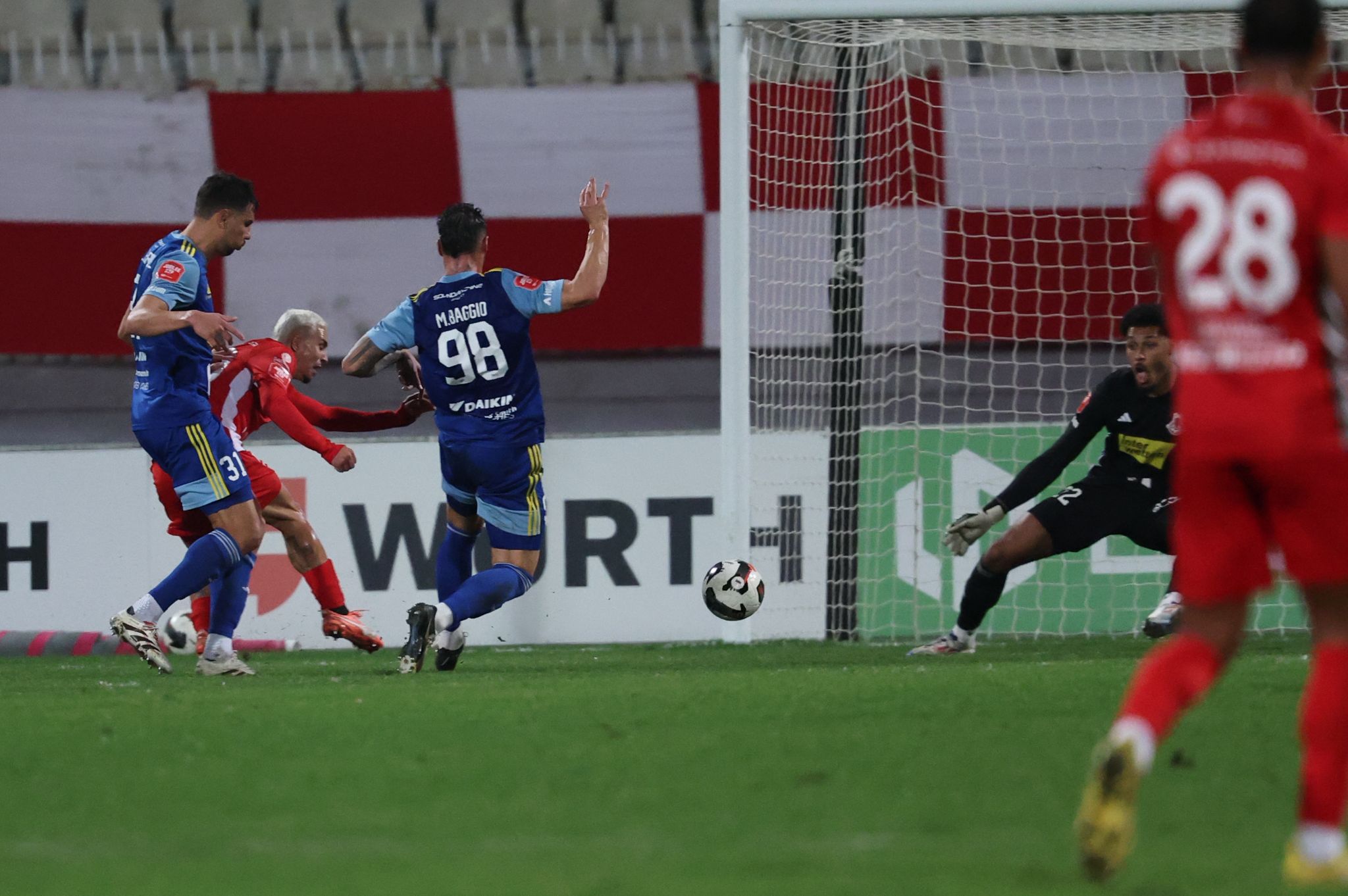
The City fans woke up basking in delight on Tuesday morning after watching their heroes brush aside Sliema Wanderers 3-1 and secure the prestigious Jubilee Cup.
Monday’s success takes further significance when one remembers that the Citizens have only returned to the top flight last May after winning promotion from the Challenge League.
However, the Valletta administration, spearheaded by president Grech, had worked diligently this summer to bolster their squad and ensure they can challenge for the top positions in this year’s championship. This success indicates that they have taken the right direction.
“The Jubilee Cup is far more than a trophy for Valletta FC,” Grech told the Times of Malta.
“It is a symbol of how we bounced back. Today, we are building something stronger than a winning team – we are building a football operation based on sports science, integrity, youth development, and long-term vision.
“This success validates the direction of the project we embarked on: returning Valletta among the elite not by shortcuts, but by creating a sustainable model rooted in Maltese talent, modern operations, and a strong football culture.”
Valletta’s route to the Jubilee Cup success was not short of challenges as the team needed to show all their character to see off Malta champions Ħamrun Spartans in the quarter-finals and then overcome Tarxien Rainbows in the semis despite being reduced to ten men.
Grech emphasised that the Jubilee Cup success was a clear example of the great resilience and character of his players.
“Our biggest qualities were resilience, unity, and clarity of purpose,” Grech said when asked which were Valletta’s biggest virtues behind this success.
“This group has been through adversity and came out hungrier. We saw players who understood exactly what this badge represents to thousands of people.
“The discipline, the tactical maturity, and the togetherness shown on the pitch reflect the work being carried out behind the scenes – from the technical project to the Gen-V philosophy that has raised overall standards across our football pyramid.
“This was not just a victory of talent; it was a victory of character.”
The Jubilee Cup was a competition that, according to its regulations, forced the clubs to field six homegrown talents in their starting formation, contrary to the Malta Premier League.
Grech said that Valletta FC had put investment in Maltese talent as one of the major pillars of their technical project, and this played in their favour on their way to success in the Jubilee Cup.
“Valletta has been very clear: the future of Maltese football must include a stronger, braver investment in homegrown talent,” Grech said.
“The Jubilee Cup’s format allowed everyone to see what we already believe internally – that Maltese players, when given trust and the right environment, can deliver at the highest level.
“Our Gen-V project is being evolved precisely for this purpose: to create a pathway, to accelerate development, and to ensure Valletta becomes a club that produces – not just imports – quality. This competition allowed that philosophy to shine.”
Valletta’s stance is set to face a bigger challenge in the Malta Premier League as top-flight clubs are discussing the possibility of increasing the quota of foreign players who can play concurrently in the championship from eight to 11, and the City president said that his club can never be in favour of this idea, as it weakens Maltese football.
“We will always disagree with anything that weakens the future of Maltese football. A league where all 11 players can be foreign makes the national ecosystem poorer, not stronger,” Grech said.
“The Jubilee Cup is living proof that when Maltese players are trusted, they perform. Allowing space for homegrown talent is not a burden; it is a responsibility.
“Valletta FC will continue advocating for balanced regulations that protect competitiveness but also safeguard talent development.
“Our success in the Jubilee Cup is a clear case study: development and results are not mutually exclusive – they reinforce each other.”
Turning his sights to the rest of the season, Grech said that following this success everyone at the club must remain humble and hungrier to win more trophies.
“Of course, everything should be placed in a context, and definitely we need to stay humble,” the Valletta FC president said.
“A success should never make us complacent – it should make us hungrier. The Jubilee Cup showed the potential of this squad, but also the importance of depth, continuity, and strategic investment.
“We will continue strengthening the team, but always within the framework of our long-term project.
“Our priority is to build a competitive Valletta FC not just for one season, but for a generation. This is what Valletta FC deserves; this is what our fantastic supporters are owed back for their unwavering loyalty.”