Germany has long stood as a global powerhouse in women’s football, boasting two World Cup triumphs, eight European Championship titles and an Olympic gold medal.
Even in recent years, despite rebuilding phases, the national team has remained competitive at elite level, reaching the UEFA Women’s Euro 2025 semi-finals and finishing runners-up in the UEFA Women’s Nations League – both times falling only to a resurgent Spain.
Yet within Germany, there is a strong acknowledgement that the women’s game must evolve structurally to reclaim past authority and better compete with rapidly growing markets such as England and Spain.
Hosting UEFA Women’s EURO 2029 is expected to be a defining catalyst in that project, not only to drive attendance and visibility but to re-energise development pathways and long-term investment.
“We are very happy that Germany will host EURO 2029, and especially that Wolfsburg has been chosen as a host city,” says Ralf Kellermann, Director of Women’s Football at VfL Wolfsburg, told the Times of Malta.
“We are a small city compared to many others in Germany, so it was not guaranteed that we would host matches, and that makes us even happier. With stadiums like Dortmund and Munich involved, this tournament gives Germany a great opportunity to take the next step – especially with attendances. I think we can expect more than one million fans.”
That ambition aligns with recent shifts in governance. Last month, former player Katharina Kiel was elected president of the newly formed Women’s Bundesliga Association, after all 14 top-flight clubs collectively agreed to split organisationally from the German Football Federation (DFB).
The aim is to independently drive commercial growth, strengthen the league model and ensure clubs themselves control strategic direction, with a targeted launch timeframe around the 2027-28 season.
The move reflects a frank acceptance that Germany did not maximise the momentum generated by previous triumphs, including back-to-back World Cup wins and multiple continental successes.
Failure to consolidate those victories, coupled with a disappointing group-stage exit at the 2023 World Cup, accelerated calls for reform.
Players, club leaders, and industry stakeholders now view autonomy as an opportunity to professionalise competition structures, improve stadium standards, and secure stronger broadcast and commercial agreements.
“Stadium standards must improve, and clubs need better facilities,” Kellermann said.
“Another key point is the TV contracts. If you look, for example, at England, they are far ahead, so we also have to develop in this area. A strong league is important to build a strong national team – they belong together. We want to develop the game together with the German Football Federation.”
For players, meanwhile, the evolution of the game has brought a dual narrative. Remarkable professional progress, but also greater physical demands.
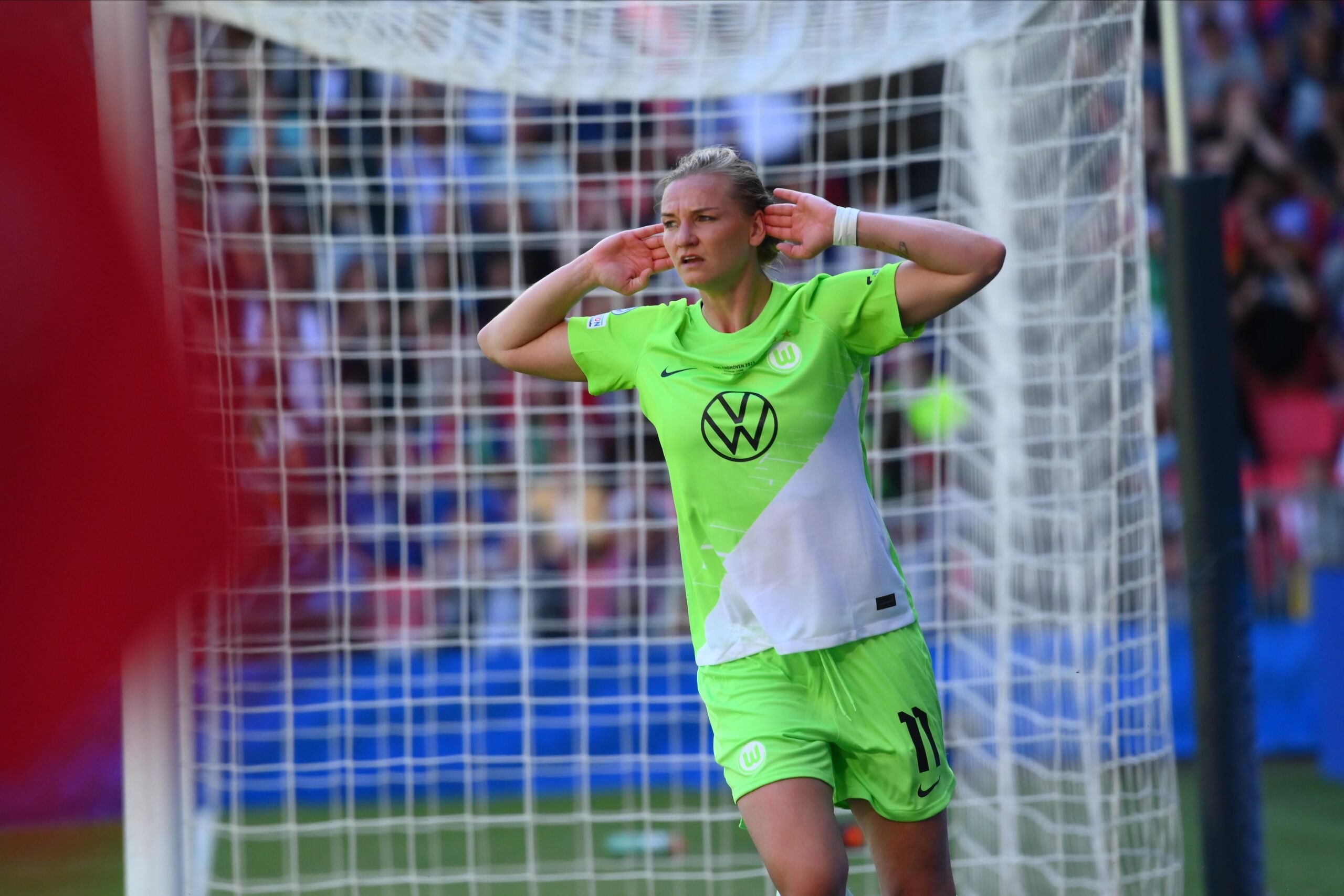
Few careers reflect that tension as clearly as Alexandra Popp, Wolfsburg captain and one of Germany’s most recognisable figures, who retired from the national team last October after a highly-successful career.
Popp’s journey has included periods of devastating injury interruption, missing both Euro 2013 and Euro 2017 due to ankle and knee problems, enduring another major setback ahead of Euro 2022, and suffering further knee damage earlier in her career.
Looking at today’s landscape, she recognises both how far the sport has advanced and how much care is needed in managing player welfare.
“There are so many topics, but one of the biggest things we see is that we are playing more matches than before,” she reflects.
“Women’s football has become more dynamic and more tactical, and the intensity has increased a lot. Players need more time to adapt physically to this level of the game – but they often do not get that time. I think that is a big factor behind many of the injuries we see today.”
Despite challenges, both Kellermann and Popp believe Germany remains well placed to shape the next era of elite women’s football.
That belief is reinforced by Wolfsburg’s continued presence as one of Europe’s most respected clubs – something demonstrated again as they train in Malta ahead of key phases of their season.
“Of course, VfL Wolfsburg is really a brand in women’s football,” Kellermann says.
“One important reason is that we always signed young, talented players and developed them into world-class players, like Ewa Pajor (now at Barcelona). That is why we have become such a strong brand, and we try to maintain that.
“But it is getting more and more difficult, because European competition is stronger than ever. It is not as easy as it may have been a few years ago to stay at this level. We are a small club from a small city in Germany, but we fight to remain at the top.”
Popp praises Malta’s facilities
This month’s VisitMalta Women Club Trophy reflects that competitive environment. Wolfsburg are joined by fellow Frauen-Bundesliga side Hoffenheim, PSV Vrouwen from the Netherlands and FC Basel of Switzerland in what has been positioned as a high-level preparation tournament between ambitious clubs.
“We are very happy to be here in Malta,” Kellermann added.
“We have very good conditions at the training camp, especially on the pitch, and the hotel is excellent. Everything is perfect.
“The people here are very friendly, very welcoming, and we are also very happy about the two test matches, because the tournament offers us games on a very high level.”
Alexandra Popp echoes the sentiment from a player’s perspective.
“It is very nice here,” she said. “We have good pitches, and we have two to train on, which is great.
“The hotel is also very nice. It is a little bit windy, so training free-kicks or corners can be a bit difficult, but overall it is very good for us, and we are very happy to be here.”
Looking ahead, both believe Germany’s next steps – from EURO 2029 to league independence – will be decisive not
only for domestic football but for continued European relevance.
“When we look at the last few years, we are definitely on the right path,” Popp says.
“We have better infrastructure, better financial conditions for players, so things are moving in the right direction. But we are not finished yet.
“Media coverage can still improve. I think we also need stronger marketing in Germany. Hopefully, with the new organisational structures and people involved, it will continue to get better.”