Maltese sport needs a complete overhaul, both at an administrative strategic level as well in terms of technical preparation if we are going to help our upcoming athletes to reach a high level of performance at major championships like the Olympic Games, former Maltese Olympic Committee Director of Sport Pippo Psaila said.
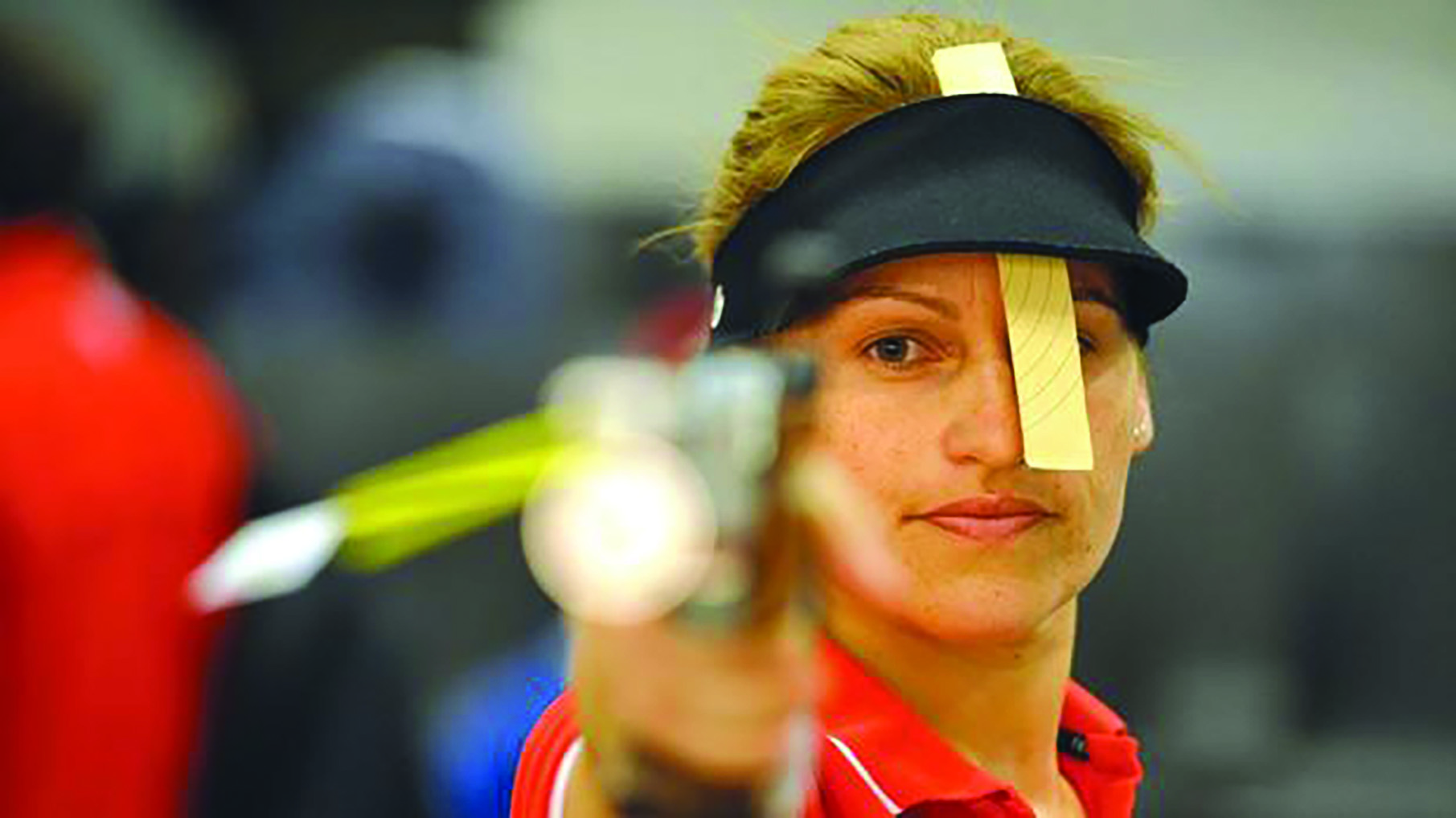
Team Malta struggled for results at the 2020 Tokyo Games. Weightlifter Yazmin Zammit Stevens was the only member of the team to set a national record while target shooter Eleonor Bezzina achieved the best result from our selection when placing 22nd in the 10m Air Pistol event.
Swimmers Sasha Gatt and Andrew Chetcuti and sprinter Carla Scicluna missed out on setting a personal best or a national record while badminton player Matthew Abela was eliminated in the first phase of the singles competition.
While many can argue that the level of Olympics is too high for our athletes, however, San Marino has shown in this edition that with a well-planned strategy and long-term investment towards their elite athletes an Olympic medal is not only a dream.
In fact, at Tokyo 2020, San Marino won three medals with shooter Alessandra Perilli taking bronze in the women’s trap and then teamed up with Gian Marco Berti to secure silver in the team event.
In the Greco-Roman competition, Myles Amine won an historic bronze medal in the 86kg category.
Psaila believes that the problem for Malta is deep rooted.
“The problems in Maltese sport have been there for several years,” Psaila told The Sunday Times of Malta.
“We look at sport in the wrong manner. There is no distinction between elite and non-elite athletes and therefore sports funding is not bearing the desired dividends. Unless we get our act together, we will never solve our problems.
“All continental competitions are evolving very fast and the standard of competitions is improving continuously. The onus is on us to get out of this poor situation. We need to follow the pathway of real elitism and not amateur standards. We need to wipe away the amateur mentality with which we are administering sport.”
Psaila said that the whole setup needs to be overhauled and the first step is to reintroduce a talent identification system.
“It’s clear that we need to revise the whole set-up,” Psaila said, “There has to be a clear talent identification process to see who the real talented athletes in our country are and ensure that the biggest amount of funds is channelled to them. It is useless to say that we are developing athletes if the talent is not there.
“Talent takes different facets – physical and technical ability, mental approach, knowledge of the sport he practices and most importantly his willingness to commit himself to sport.
“Sport is a choice of life and an athlete cannot be considered elite if he is not ready to put sport at the top of his lifestyle. You can’t have athletes who train after work only.
“I am sorry to say this but at the moment we are putting our money and resources in the wrong persons.”
The former MOC Director of Sport said that many times associations propose an athlete and the authorities try to develop him but that is not the way to do it, he argued. It’s important to see if the athlete proposed ticks all the right boxes and then you invest all the money in him.
“To develop athletes into elite level it takes time and as a nation we need to be patient,” Psaila said.
“The government is investing a lot of money in sport and we must make sure that we are reaping the right results. But to achieve that it’s a long process, it can’t happen overnight. To develop an Olympic champion, you need between 12 to 16 years and there is no guarantee of success.
“One has to remember that 65 per cent of world champions do not win a medal at the Olympics, that is how hard it is.
“It is important that when the athlete is chosen, we are at his service and not having the athlete dependant on the federation providing him with what he wants.”
Psaila also questioned whether local federations are operating in the right way to provide athletes an ideal preparation.
“Athletes need to be trained by professional people,” Psaila argued.
“In Malta we don’t have a licensing system for our coaches to ensure they have the knowledge to develop talent.
“How many of them have the scientific knowledge to bring the best out of our talent. Sports science has taken a major role in sport and we have to make use of it.
“How many associations have a grassroot programme? Identifying natural talent and try and groom them into future champions. We need to catch our future champions young or else it’s too late. An athlete cannot start training at the age of 16 if he is to become an elite champion.
“The reason is that we have to make sure that these youngsters have the right motor skills and co-ordination.”
During his time at the MOC, Psaila was the mastermind behind the huge investment that the authorities put on shooter William Chetcuti in a bid to help him win an Olympic medal in double trap.
Thousands of euros were invested in Chetcuti and the Manikata-born shooter went on to achieve Malta’s best result at the Olympic Games when he placed eighth at the Beijing Olympics in 2008.
Financial support
“For me, William remains Malta’s best hope of claiming Olympic medal success,” Psaila said, “But did we support him enough? For four years, we put a lot of money in him but why didn’t we continue to back him financially after four years?
“Besides, at a certain stage, our athletes need to change their gear and I think that after Beijing, William needed to have more professional coaches around him to help him make that leap in quality.
“In Malta we have competent coaches, but I think there isn’t a coach that is good for everything. And if you don’t have the expertise to take the athlete to the next level then you are in trouble. And that is what happened to William.”
Psaila said that Malta should follow the examples of countries like Italy who target sport that do not have huge participation in an Olympic Games such as swimming and athletics where all countries compete.
“We need to be wise and selective and target sport that has a range of competitors smaller than other disciplines,” he said.
“Take Italy, they win a lot of medals in sport like fencing, canoeing, cycling, and shooting. These are sport that don’t have more than 40 to 42 countries that compete in them and your margin of success is much higher than other disciplines like athletics and swimming where all countries compete.
“We should be very selective and try and target sport where we have a better chance of success.
“At the end of the day, it all comes to make sure you have the expertise and resources to ensure we give our athletes the best chance to maximise their potential.
“If we don’t have enough expertise here we should try and bring foreign coaches.
“In Malta we do have a potential but it’s up to the authorities to change the trend and make sure we give our athletes the best possible platform to be successful.”















Alfed Debono
August 8, 2021 at 10:59 am
Important suggestions by a well known knowledgable ex coach.sports admin.
Re football organisation I would add that we need to bring back the kids back to the game, back to grassroots so the base is increased again. Then mfa needs to create a football academy relating ofcourse only to football and player development . Nurseries need to be open to all just for fun and enjoy playing the game then selection is made of the most promising kids.
Ivan Curmi
August 8, 2021 at 11:15 am
So true in my opinion all national sports lacks qualified administrators ,I my self together with twelve other spend nearly a year and a half studying at the University of Malta at the Institute of Physical education and Sports to obtain a certification in Sport admin and management. But none of us got employed by Sports Malta or even none of us even got the chance to speak about future job opportunities with Sport Malta .A group of us together with few other that pursued this course after have already applied for the Diploma top up. But the only qualification needed to pursue a Job with Sports Malta is to be a “nephew” of someone in politics ,as from what I have seen Sports Malta prefers to employ person with experience than qualified personnel.
Stephan
August 8, 2021 at 1:57 pm
The only athlete who has a professional mentality and the will to sacrifice herself for it is yazmin. she is our best shot and deserves to have maximum resources put at her disposition
Mr X
August 8, 2021 at 4:14 pm
I think the problem is far more reaching. Talent should be identified at a young age and nurtured all the way.
Achieve Olympic standards requires both athletes, coaches and scientific assistance such as nutrition, physiotherapy, massage etc. Without the presence of well trained and experiences coaches (at Olympic level) results might also be challenging to materialise.
Last but not least, I agree that the right conditions (rest, nutrition, training facilities etc.) need to be present to achieve success at international level.
George Camilleri
August 8, 2021 at 8:55 pm
It’s great to have your country win medals at the Olympics, but first things first. The issue is whether funds available for sports development should be focused on individuals or the community. Is it wise and just to support talented individuals achieve olympic glory at the expense of providing facilities and supporting the sports needs of the wider population? Unless we can we afford both, that is.
Edwin Vella
August 10, 2021 at 4:14 pm
I agree 100% with Mr. Psaila. William Chetcuti was and still is the biggest hope for an Olympic medal. William managed a 123/125 score in trap in his last ISSF World Cup just before these Olympics. With that score he could have easily qualified for the finals for an Olympic medal. Someone must shoulder the responsibility for the wrong decisions.