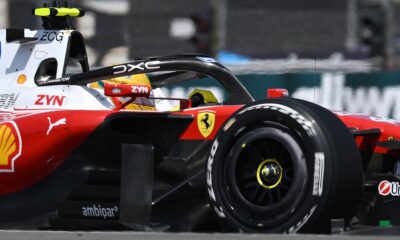
A scientific study held recently revealed how race car driving reflects human brain function.
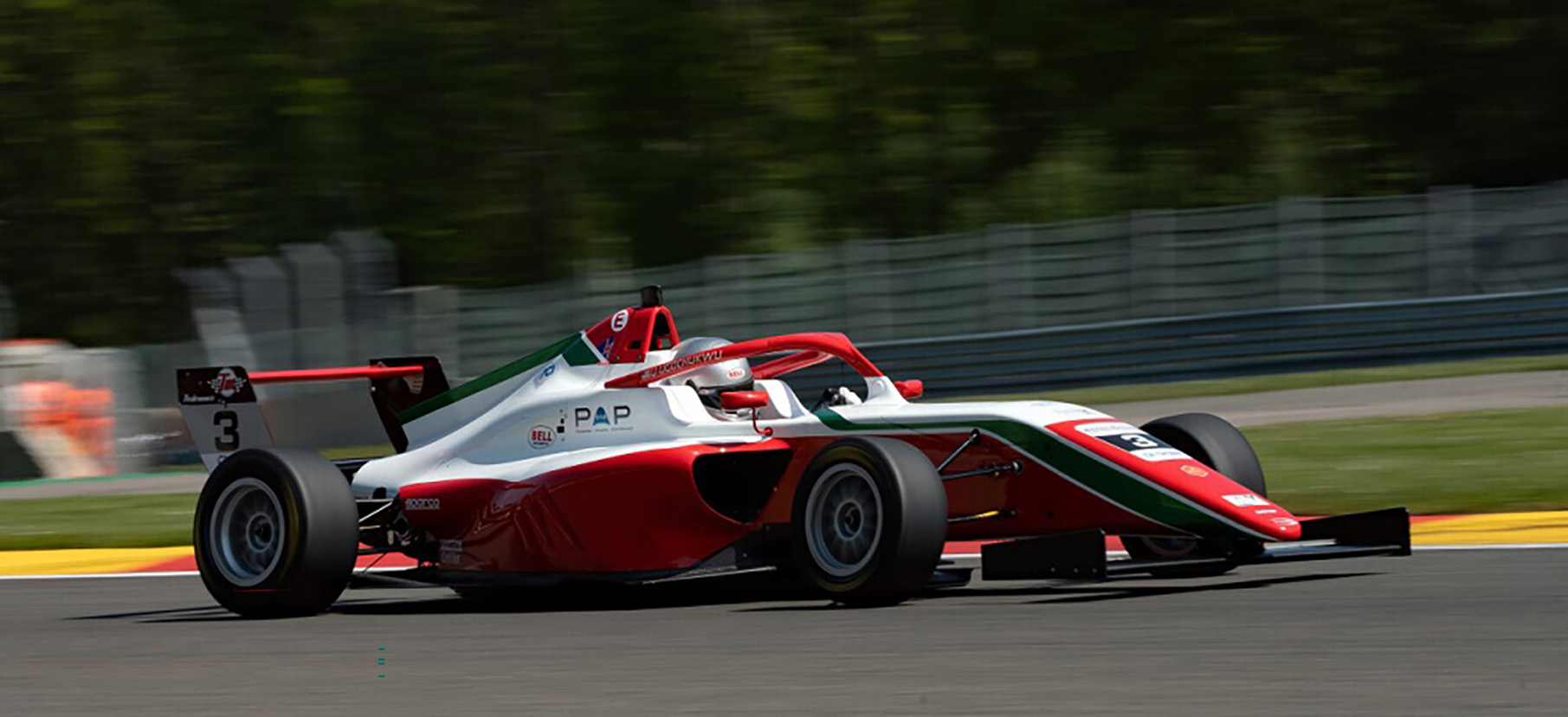
The article, entitled “Engine Sounds Reflect a Racecar Driver’s Cognition”, introduces an original and innovative approach to the study of brain function by analysing the engine sound of Formula 4 race cars.
The research was developed through the synergy between ACI Sport, GIOYA, a Further and Higher Education Institution licensed in Malta, and the Center for Nonlinear Science at the University of North Texas, as well as other important institutions.
The research shows that driving behaviour can be understood as a structured cognitive process, in which decision-making, motor control, and individual driving style are reflected in the way a driver accelerates, brakes, and changes gears.
Drawing an analogy with musical performance, the study shows that just as musicians convey intention, expertise, and emotional state through sound, racecar drivers translate their internal cognitive organisation into acoustic signals through gear changes, braking, acceleration, and speed modulation on track.
In this sense, the race circuit becomes a “score”, the car becomes a musical instrument, and the engine sound a medium through which cognition is expressed.
The research is based on experimental data collected during events of the Italian Formula 4 Championship, including the E4 Championship, and other professional motorsport activities, as well as the ACI Sport Federal “Supercorso”.
Through advanced analytical methods, the study enables the development of predictive models capable of identifying individual driving styles and cognitive patterns, offering new perspectives on performance analysis in high-level motorsport.
Beyond its relevance in competitive racing, the findings open promising avenues for broader scientific applications.
In particular, the methodology developed in this study may contribute to future research in areas such as motor control, rehabilitation processes, and, in the longer term, the study of neurodegenerative conditions, including Parkinson’s and Alzheimer’s disease.
This was the first scientific study to analyse human cognition through racecar engine sound.
It was based on real-world data from the Italian Formula 4 Championship and E4 Championship collected in professional motorsport environments.
The project represents a long-term interdisciplinary collaboration integrating expertise from motorsport training, physics, neuroscience, pedagogy, and complex systems analysis.
The research combines on-track experimental activity with advanced laboratory-based theoretical and analytical work.
The experimental phase was coordinated by the Research and Training Department of the Scuola Federale ACI Sport, under the aegis of the Automobile Club d’Italia, in collaboration with the GIOYA Higher Education Institution.
Key contributors included instructors Raffaele Giammaria – also Director of the Scuola Federale – Glenda Cappello, and Lucio Tonello, long-standing references for the Federation’s research activities as well as professors at Gioya HEI.
Data collection took place during tests and races of the Italian Formula 4 Championship, E4 Championship and other ACI Sport activities, with contributions from Federal Instructors, professional drivers, and leading Formula 4 teams.
The analytical phase was conducted by an international group of scientists from the Centre for Nonlinear Science at the University of North Texas, together with researchers from other prominent US institutions.
The scientific team included Paolo Grigolini, Bruce J. West, Scott Kerick, Jaskeerat Singh, and Yawer Shah. Special recognition is given to Dr. Jaskeerat “Jace” Singh, who earned his Ph.D. in Physics at the University of North Texas based on this research.