Before the Champions League final, I want to spare a thought for one of the eliminated semifinalists.
Diego Simeone impresses me. For fifteen years, he has had to push the boulder up the mountain again and again with Atlético Madrid.
We at Bayern Munich were knocked out by him during our peak phase in 2016.
Now I read somewhere that Simeone should question himself. Yet he asserts himself time and again with inferior means.
It is a pity, Sisyphus Simeone has long deserved a Champions League title.
Two other clubs remain whose coaches take a similar approach.
Resembling conductors, they pedantically practice distances, sequences, passes, choreograph their defence, and orchestrate their attack.
Their operating system, ball-oriented zonal marking, is state-of-the-art. Their team behaves like a swarm.
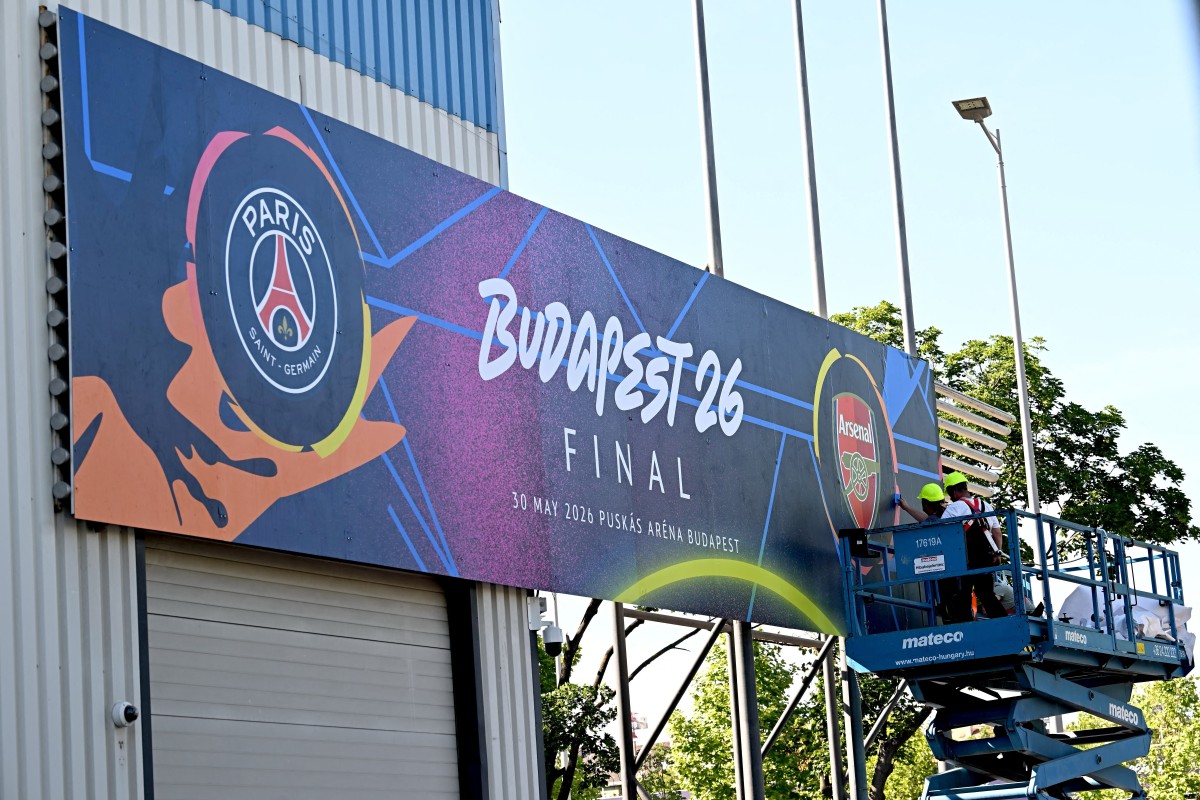
Last year, PSG against Arsenal was the semi-final; this year, they are determining the winner. The right teams are in the final.
Under the leadership of Luis Enrique, PSG, once a collection of individualists, has grown into a cohesive unit.
You automatically picture Khvicha Kvaratskhelia, the dribbler and fighter who shines upfront as much as in the back. PSG would be only the second club after Real Madrid to defend its title.
Very good coaching is also the basis for Arsenal’s upswing.
Enrique’s compatriot Mikel Arteta has led the club up step by step over six years.
Thus, Arsenal won its first national championship since the Invincibles in 2004.
They have never won the European title, reaching the final only once, in 2006. Not a good record for a club that consistently ranks among the top 10 highest-earning in the world.
Arteta does not possess immense individual quality in his squad; he has no Thierry Henry, Patrick Vieira, Dennis Bergkamp, or Freddie Ljungberg.
The strength of the current team is its extremely high degree of organisation, which provides stability.
In 14 Champions League matches, the team conceded only six goals and never lost.
Arsenal is the counterpart to FC Bayern, which had to concede 20 goals.
Bayern is the exception among European top teams. ż
Vincent Kompany tries with a mixture of maximum intensity and the retro tool of man-marking.
PSG were surprised by this for one half, in the group stage back in November.
In the semi-final second leg, however, PSG exploited the space that inevitably opens up with this form of defence for a quick goal.
Afterwards, Enrique’s team controlled the game from the defensive line.
Solid defensive work never goes out of style.
Arsenal were prepared for Bayern’s unorthodox style anyway, beating them 3-1 in the group stage. As I said, the best teams are in the final.
The spectacle takes place in Budapest. That is exactly the right place now for the most important match in European club football.
A strong signal came from Hungary recently.
We can thank the people there; they stood up. Hungary is no longer the country that prevents solidarity. It now relies again on European rules and standing up for one another.
Major sporting events can amplify such social impulses.
“Car horns honk, fireworks light up the sky, flags wave. People who do not know each other embrace and laugh together,” wrote Gabor Schein, a Hungarian author, in the Süddeutsche Zeitung, a paper from my hometown, after the parliamentary election in April regarding the situation in Budapest.
Similar scenes could unfold on Saturday.
Unfortunately, Budapest has no chance to participate in a sporting capacity.
The Champions League remains a gated community.
Since FC Porto’s triumph in 2004, only clubs from Spain, Italy, Germany, France, and even England have won, even though the Premier League is often more important to the latter because there is more money to be made there.
In football, therefore, Europe consists of only five countries. By comparison, the Eurovision Song Contest (not that I watch it) has been conquered by a different nation every year for nine years, this time Bulgaria.
The decisive reason for the monotony in football stems from a geographical accident: clubs from small countries stand no chance because their leagues are too small and therefore not competitive.
Consequently, they cannot keep their best players. Former giants Benfica and Ajax Amsterdam can no longer compete internationally because Portugal and the Netherlands have too few inhabitants.
No matter how well the clubs are managed.
Ever heard of Copenhagen, Vienna, Prague, Kyiv, Glasgow, or Warsaw? These are metropolises where professional footballers can feel just as comfortable as in Paris or London. Budapest certainly can now too.
Furthermore, Hungary has a great football tradition.
A hundred years ago, Danube football was said to have been the precursor to the Spanish school, or so I have been told.
So it was just the other day, as King Charles may say, when MTK Budapest beat FC Bayern 7-1, back in July 1919.
A newspaper from Munich marveled: “The guests developed a wonderful playing technique; their playing strength is exemplary in every respect.”
In any case, there are not many other nations that have stood in a World Cup final twice, in 1938 and 1954.
The Golden Team around Ferenc Puskás and Nándor Hidegkuti, the tragic losers of Bern, is particularly close to people’s hearts in Germany.
The two highest victories in World Cup history belong to the Hungarians, including the only double-digit one, the 10-1 against El Salvador in 1982.
The nation produced great coaches who carried their ideas across national borders. Jenő Konrád in Nürnberg, Jenő Károly in Turin, Béla Guttmann in Lisbon, or Pál Csernai, who led Bayern back to the top of the Bundesliga in the eighties — amusingly with zonal marking, which people in Germany had only heard of until then.
I am strongly in favour of Hungary returning to the map of football, just as it is in politics.
However, I can imagine that there is resistance within the establishment against new competition.
The privileged fear for their privileges. But Europe is about participation, about equal opportunities. The problem must finally be addressed.
It is the political imperative of the present.