
Italy’s enthusiasm over its Olympics success, driven in part by multicultural athletes, has once again reignited debate over its citizenship law and the bureaucratic hurdles faced by thousands of young people.
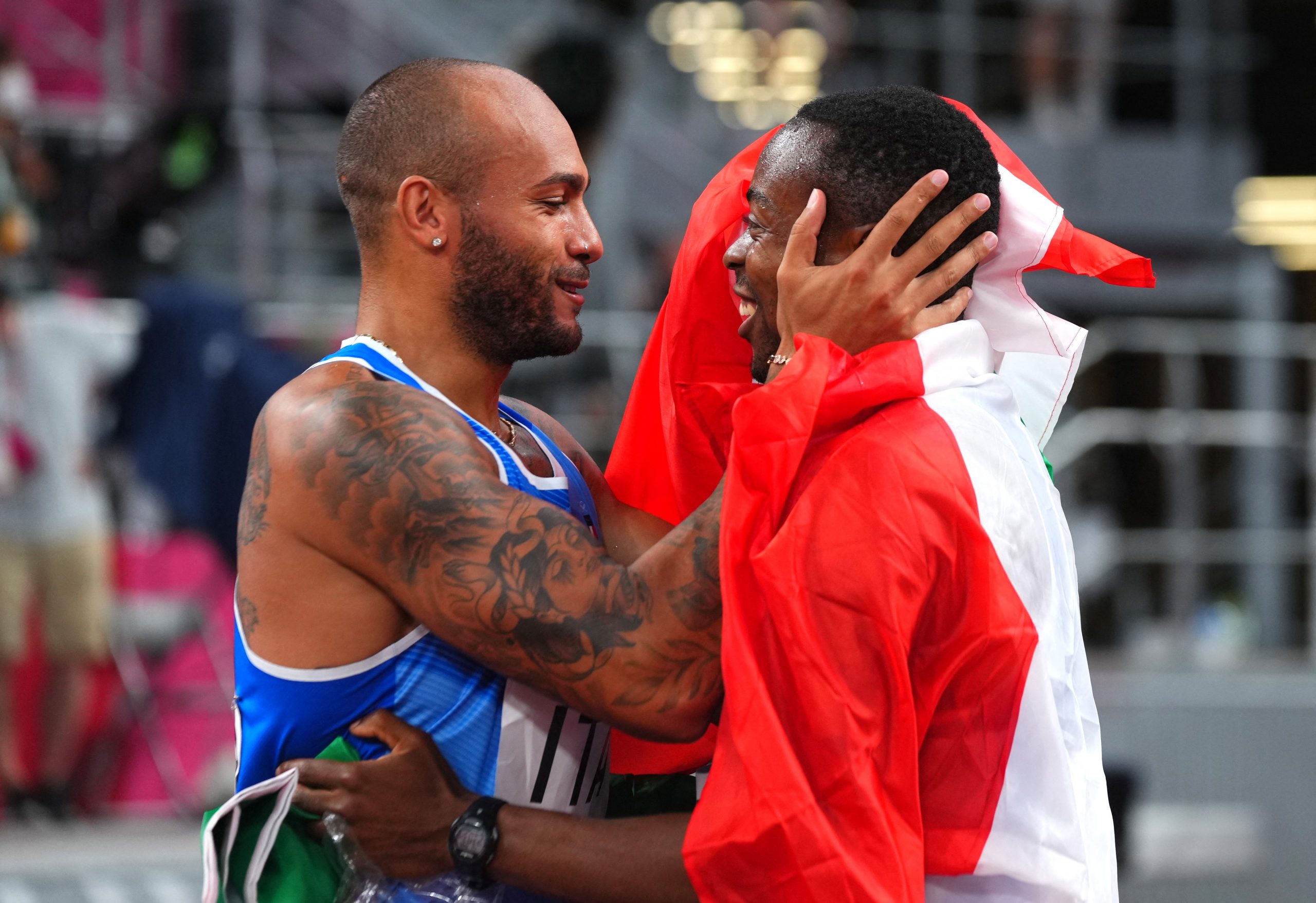
The debate comes on the heels of Italy’s best performance in history at the Olympic Games, with 40 medals from a diverse band of athletes from a variety of backgrounds, including the country’s new star, Texas-born sprinter Lamont Marcell Jacobs.
The debate was sparked anew after the head of Italy’s National Olympic Committee, Giovanni Malago, complained of the bureaucratic headaches confronting Italian-born athletes who want to compete for their country, but lack citizenship.
Under its current path to citizenship, Italy is an outlier in Europe, providing rights based on blood ties rather than based on where children are born – an idea known as “ius soli”, or “right of the soil”.
Children born in Italy to foreign parents must await their 18th birthdays before applying for citizenship, beginning an arduous process that can take four years, one that Malago described as “a Dante-esque circle”.
After Interior Minister Luciana Lamorgese said Malago’s criticism was valid, far-right leader Matteo Salvini, head of the populist Lega party, retorted that the minister would be better served controlling the countries’ borders than rekindling “ius soli”.
In Italy, the far-right has linked the debate over citizenship with the ongoing migrant crisis, which this year has seen 31,777 migrants land on the country’s coasts, more than double that in the same period in 2020, according to interior ministry figures.
“I think the important thing is that for these kids we have to think of social inclusion,” Lamorgese told La Stampa daily on Tuesday, noting that the issue went beyond Italy’s young athletes.
“They have to feel an integral part of society,” she said.
‘Full-fledged Italian’
There are various paths to citizenship in Italy — Jacobs’ citizenship was accorded through his Italian mother despite being born in the United States to an American father — but that involving children of two foreign-born parents is the most complicated.
Case in point is 17-year-old pole vaulter Great Nnachi, who was born in Turin to Nigerian parents, and is already a champion. Having broken records throughout her teens, she most recently won a junior title with her personal best of 4.01 metres in February.
But her records are not recognised by the state, as she is not technically Italian, and she cannot compete for Italy in international competitions.
“Despite being a full-fledged Italian, I can’t represent my country in sports,” Nnachi told La Stampa Tuesday. “I’m an Italian champion but I can’t demonstrate it outside the border.”
Italy’s national statistics agency Istat calculates there are about 800,000 minors in Italy who would receive Italian nationality were “ius soli” adopted, while some 60,000 newborns a year would become automatically Italian.
According to Italy’s Olympic Committee, 46 of its athletes who competed in the Tokyo Olympics this year were foreign-born.
Author
World Cup News
-
FIFA World Cup
/ 12 hours agoFrance’s Saliba ‘fine’ after injury scare, says Deschamps
France coach Didier Deschamps said on Wednesday that defender William Saliba is "fine" despite...
By AFP -
FIFA World Cup
/ 13 hours agoYamal, Williams should be fit for World Cup opener: De la Fuente
Forwards Lamine Yamal and Nico Williams should be fit for Spain's World Cup opener,...
By AFP -
FIFA World Cup
/ 22 hours agoEngland launch World Cup build-up in steamy Florida
England kicked off their pre-World Cup preparations in Florida on Tuesday, holding a light...
By AFP -
FIFA World Cup
/ 2 days agoSotheby’s to auction Pele jersey worn in 1958 World Cup
The jersey worn by late football legend Pele during Brazil's 1958 World Cup victory...
By AFP