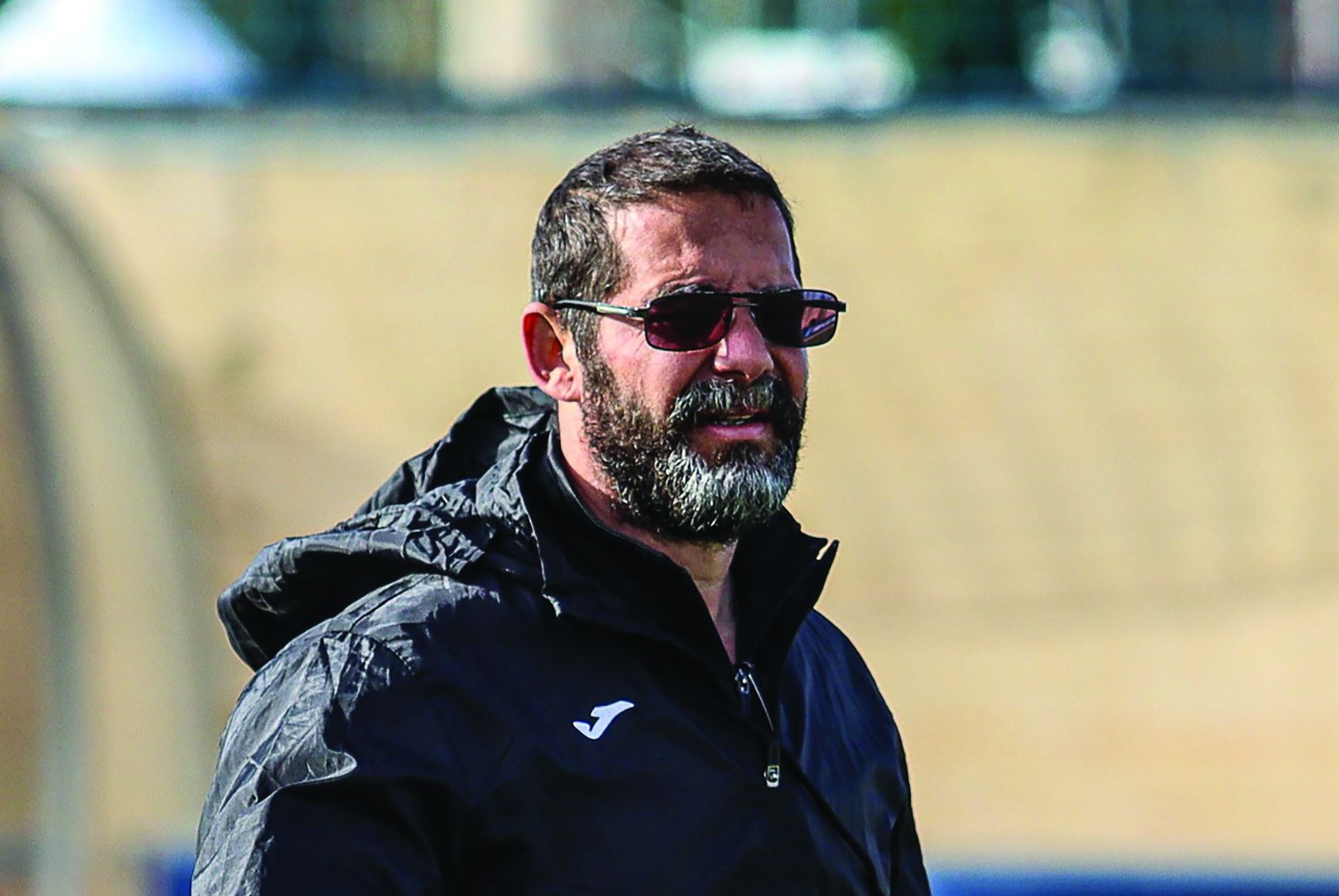
Experienced coach Kenneth Costantino has highlighted the importance of giving Maltese coaches the opportunity to increase their knowledge and help their players maximise their potential.
Costantino was recently rewarded for his dedication with the prestigious Professor Pat Shenton Prize for the Highest Research Project Mark in MSc Sports Coaching/MSc International Sports Coaching.
“Participating in this Masters’ degree has been crucial to my professional development, both academically and as a practicing coach,” Costantino, who recently completed his studies at the Liverpool John Moores University (LJMU), told the Times of Malta.
Costantino’s study focused on “implementing principles of play through a constraints-led approach within women’s football.”
Reflecting on this achievement, Costantino emphasised the impact of the programme.
“The course’s unique structure enabled me to apply research and skills necessary to make a significant impact in the field of sports coaching,” he said.
The MSc International Sport Coaching programme, which was delivered primarily online over two years, is renowned for its flexibility and cutting-edge content.
This structure allowed participants like Costantino to balance full-time responsibilities while diving deep into topics such as coaching pedagogy, psychology in sport, and physical development for athletes.
The course also included intense three-day lectures and practical sessions held annually in Malta by LJMU lecturers.
“It was the perfect blend of theory and practice,” said Costantino, now coach at Hibernians women’s team, leaders of the women’s championship.
“The programme is a testament to LJMU’s dedication to innovation and excellence in sports education.”
Costantino’s thesis, ‘Implementing Principles of Play and a Constraints-Led Approach Within Women’s Youth Football: A Collaborative Action Research Project’, explored the practical application of these methodologies in a real-world setting.
“The study involved a group of youth-level female footballers from a local club, where I supported a less-experienced coach over four months,” Costantino explained.
“We worked collaboratively, analyzing training sessions and discussing the integration of principles of play and constraints-led approaches.”
The research was conducted through three cycles, with data collection focusing on the alignment between the game model and session objectives, as well as the coaching methods applied.
“The challenges and shared experiences highlighted the importance of adaptability and innovation in coaching,” Costantino noted.
Looking back, he credits the Malta Sports Scholarship Scheme, financed by the government of Malta, for making his academic journey possible.
He also expressed his gratitude towards the LJMU and its tutors for their guidance and support.
“Sports is ever-changing, and coaching is now recognised as a growing profession. Knowledge, systematic planning, and modern methodologies are fundamental for high-level coaching. If you don’t stay updated with the latest methodologies, coaches risk becoming obsolete.”
Costantino’s insights underline the critical role of continuous learning in sports coaching.
“As coaches, we are in a unique position to influence, inspire, and enhance the development of our athletes. It is our responsibility to provide the necessary preparation to meet the demands of the sport,” he emphasised.
Costantino’s journey highlights the transformative power of combining research and practice to advance not just individual careers but also the broader field of sports coaching.
Asked about his thoughts on the coaching landscape in Malta, Costantino believes there is the need to address more issues to facilitate the opportunities made available to coaches.
“I believe that although coaching has grown considerably over the past decade, associations and government needs to address and facilitate the opportunities made available to coaches who wish to expand their knowledge and experience through exchange visits with foreign clubs,” he said.
“Although learning from local mentors and tutors could be an option, the experiences and insight gained from foreign-established coaches working within professional setups will only help in the holistic development of local coaches
“Coaching courses should provide mentors with a deeper understanding of different pedagogies and coaching methods.”
It is due to this common concern that at the Institute of Community Services within MCAST, it was felt the need to provide a degree in sports coaching, Costantino emphasised.
“Unlike other sports-related courses this degree is totally focused on the modern-day skills required by coaches,” he said.
“Several lecturers, led by Dr Renzo Kerr Cumbo, have been appointed to develop this degree aimed to developing critical individuals who wish to take up a profession in coaching.
“The purpose is to delve beyond the technical and tactical content of coaching which generally takes place on traditional coaching courses.
“Much importance will be given to practical participation, pedagogy, and sports coaching theories to explore how coaches shape the learning and development of others.
“Learners will not only obtain their academic certification, but with a strong collaboration between MCAST and Sports Associations, they will be able to also obtain sport specific coaching badges.”