The Malta Football Association is celebrating its 125th anniversary this year. A remarkable milestone for such a small island where football has been thriving since the late 19th century, influenced by the English rulers of that era.
Since then, the Beautiful Game has continued to grow and spread across the islands, becoming Malta’s most popular sport. Yet, in 2025, amid celebrations of the local football governing body’s 125th birthday, Maltese football, particularly at international level, appears to have hit another low rather than showing signs of progress.
Ħamrun Spartans’ qualification for the UEFA Conference League is undoubtedly a massive achievement. However, their success is not necessarily a reflection of the overall growth of Maltese football, but rather the result of smart, targeted investment by the club, both in its squad and administration.
In recent years, reaching the group stages of a UEFA club competition seemed an impossible dream, while promotion in the UEFA Nations League appeared more attainable. One national selection did manage that feat, the women’s team, which earned a return to League B last May.
The men’s team, however, continues to chase that coveted promotion to League C, something even the world’s lowest-ranked side, San Marino, has managed to achieve.
Malta comfortably defeated them in a September friendly, but must now face Luxembourg in a two-legged play-off in March – a daunting task, especially considering the team’s recent form.
Sadly, in the year the Malta FA marks 125 years of football heritage, we find ourselves acknowledging the progress of other small nations rather than our own.
The latest example is the Faroe Islands, another Nordic nation following the footsteps of Iceland, from whom they take inspiration.
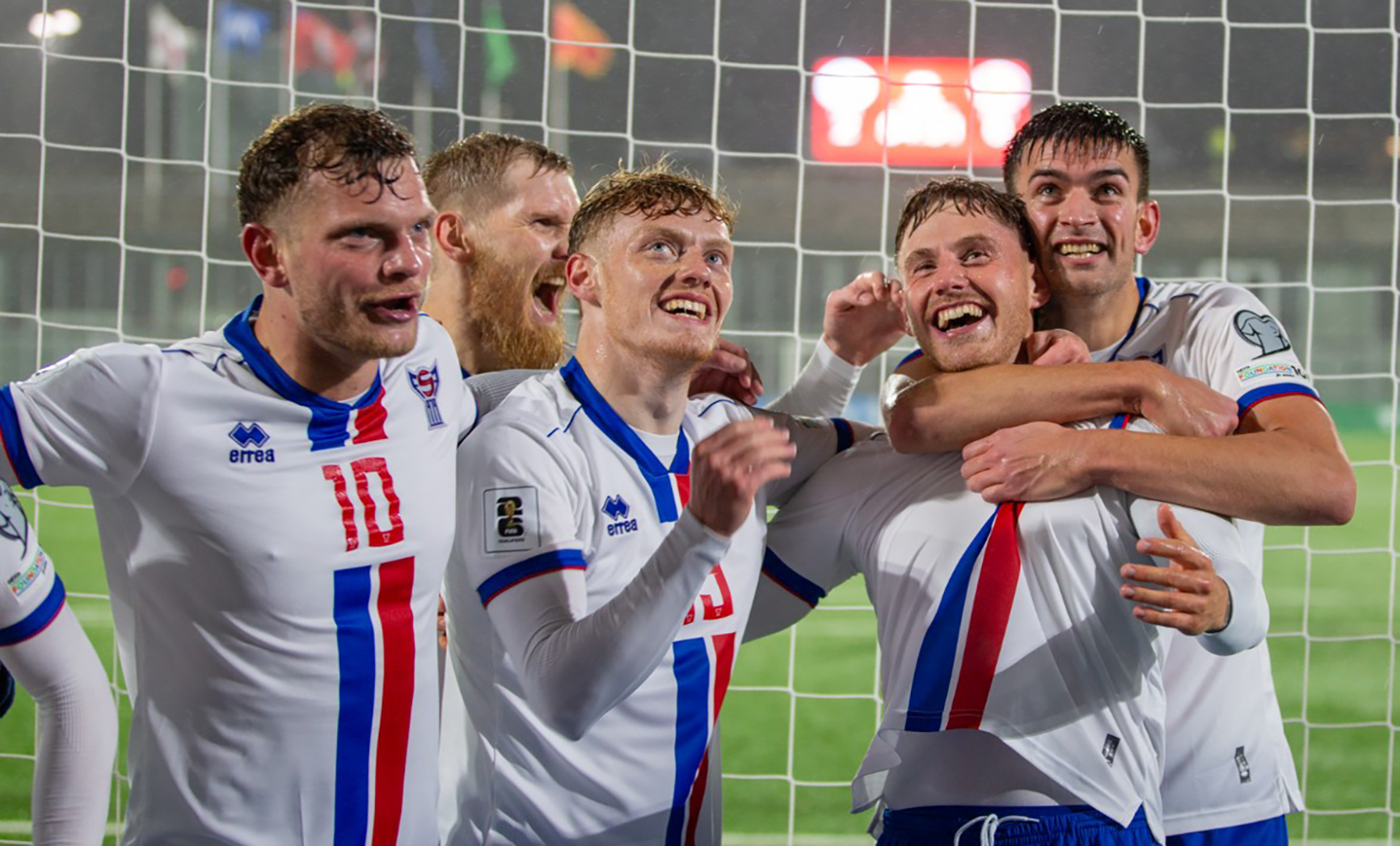
The Faroe Islands have just over 55,000 inhabitants and are living their dream in the 2026 FIFA World Cup qualifiers. They sit just one point off a play-off spot after a historic run of three consecutive victories, including a stunning home win over Czechia (ranked 39) that cost coach Ivan Hasek his job.
“The wins against Montenegro, and especially the Czech Republic, mean a great deal to Faroese football fans. But I think they also mean a lot to the Faroese people as a whole,” Faroese journalist Leivur Frederiksen told the Times of Malta.
“It’s important for our national identity that we can compete with bigger nations – and sometimes even beat them. It inspires young people and proves that hard work eventually pays off.
“This is why we joined international football in the first place, 35 years ago. We love being David in the story of David and Goliath.”
“In the Faroe Islands’ lineup against the Czech Republic, there were six full-time professionals and five semi-professionals who combine their football careers with regular jobs.”
World Cup qualification hopes
In fact, the Faroe Islands made their competitive international debut during the Euro 1992 qualifiers, marking the occasion with a stunning 1-0 victory over Austria.
Malta, on the other hand, played its first UEFA competition much earlier – in 1962, during the Euro 1964 qualifiers.
With one match remaining, their chances of overtaking Czechia for second place are slim, as they face group leaders Croatia while Czechia take on minnows Gibraltar.
Nonetheless, 12 points from seven matches is a remarkable return for a side that, despite its limitations, currently ranks 129th in the world – 37 places above Malta.
“When the draw was made, I think most people were quite satisfied with the group the Faroe Islands ended up in. It’s not because anyone in the Faroes believes we’re Spain or Italy, but when we drew Gibraltar, the expectation was that we’d get at least six points,” Frederiksen said.
“Fair play to Gibraltar, though those six points didn’t come easily; they had to be earned the hard way.
“Beyond that, most people felt that any additional points would simply be a bonus. I don’t think anyone expected the Faroe Islands to finish with 12 points.”
Meanwhile, Malta, under new coach Emilio De Leo, who took charge ahead of this campaign, have collected only two points so far. Both came against Lithuania: a disappointing 0-0 draw on home soil and an eventful 1-1 stalemate in Kaunas, where the Baltic side salvaged a point through a controversial stoppage-time penalty.
The Faroese are no strangers to Maltese football.
The two nations have often met in recent years, particularly in the Nations League, usually contending for the same promotion spot.
Unfortunately for Malta, the Faroe Islands have consistently had the upper hand, even sealing promotion at Malta’s expense on one occasion. In 10 meetings, the Faroese have won six times, losing only twice, with only one of those defeats coming in a competitive fixture.
Facing the Maltese side in those encounters was Atli Gregersen, then the team’s captain and now assistant coach under Eyðun Klakstein.
Strong sense of belief
While Frederiksen does not think this is the case of a golden generation, the Faroese journalist praised the coaching duo for instilling a strong sense of discipline and belief within the squad, transforming the team’s mentality both on and off the pitch.
“This team’s strengths are its organization, physicality, and the willingness of the players to run for each other. In addition, we have a few players with a fantastic strike, which makes us very dangerous on set pieces,” Frederiksen underlined.
“The new coach, Eyðun Klakstein, and his assistant, Atli Gregersen, have done a great job during their first year in charge of the team. Eyðun Klakstein is only the second Faroese coach ever to lead the national team.
“When he was appointed, he told the press that he wanted to bring the team back to true Faroese values through hard work and strong defensive organization at the core.
“The new coach has placed great emphasis on organization in defence, physical conditioning, and we also have two or three set-piece specialists, which allows the Faroe Islands to go all in on free kicks and corners.”
Over the past year, one trait that stands out for the Faroe Islands is their impressive home record.
They have lost only once in their last seven home matches, a narrow 1-0 defeat to European giants Croatia, while winning four of their last five games on home soil.
“If you ask the players, I’m sure they’ll say that it’s mainly the support from the Faroese fans that drives them forward when they play at home,” Frederiksen explained.
“The Faroe Islands is a small country where almost everyone knows each other, so when you step onto the pitch, you’re playing for your neighbours, your friends, your family – even your colleagues if you have a job alongside football. In recent years, I’ve seen a tremendous amount of heart and passion from the Faroese players.”
One of the projects the Malta FA has pursued to make the national team, particularly the senior side, more competitive, at least in the short term, is the recruitment of foreign players through the passport scheme.
In recent years, the national team has seen an influx of imported talent aimed at upgrading the squad.
Notable names include defenders Enrico Pepe and Gabriel Mentz, midfielder Teddy Teuma, and forwards Ilyas Chouaref, Irvin Cardona, Kemar Reid, Jodi Jones, and Basil Tuma.
Most of these players continue to be regular selections under the current coach, while several others have been called up in the past but are no longer involved.
Nonetheless, this strategy has not fully addressed the team’s underlying issues.
While the side may appear slightly more competitive and capable of scoring goals, depending on the system and approach deployed, results suggest inconsistency.
Under Devis Mangia, Malta showed marked improvement, recording 10 wins and five draws in 28 matches while scoring 33 goals.
By contrast, under Michele Marcolini, the team managed only three wins and two draws in 16 matches with eight goals scored. Under Emilio De Leo, so far, the team has secured one win – against San Marino – and two draws in eight matches with five goals scored.
Tactical approach
Of course, the quality of opponents under each manager must be considered. Still, the improvement in performance, mentality, and tactical approach under Mangia was visibly clear to the naked eye.
“There is one player in the team with dual citizenship. Geza David Turi, born in Hungary, came to the Faroe Islands when he was five years old. His father and mother came to the Faroe Islands, because his father was signed by a Faroese club. This was back in 2006,” the Faroese reporter said.
Turi, 24, is one of the few players who does not play in a Nordic country as he plies his trade in England’s League Two at Grimsby Town with whom he eliminated Manchester United in the EFL Cup second round in August.
“The Faroe Islands are not a member of the European Union. Therefore, the Football Association has set a limit of a maximum of five foreign players in the squad for a league match. There are no restrictions on players from the Nordic countries though,” Frederiksen said.
“The strongest team in the Faroe Islands in recent years, KÍ Klaksvík, typically has around seven foreign players in their squad. However, they usually field seven or eight Faroese players in the starting lineup. This means that the Faroese players have earned their places in the team.”
“In the squad for the matches against Montenegro and the Czech Republic, 11 of the 23 selected players were professionals playing abroad. That’s fairly typical and sometimes the number has even been higher.
“It’s worth noting, however, that in the starting lineup against the Czech Republic, five players came from the domestic league and six played abroad. This shows that you don’t automatically secure a place in the national team just because you play at a bigger club than those in the Faroe Islands.”
European success at club level
At club level, Faroese football made a name for themselves when KI became the first Faroese side to play in a main stage of a UEFA competition as they qualified for the League Phase of the Conference League in 2023-2024.
“I think the experience KÍ Klaksvík gained from the Conference League has been hugely important. They’ve developed a clear playing style and mastered the 5-4-1 formation,” Leivur said.
“The Faroese national team has adapted to this approach and now also plays with three central defenders. It’s clear that the Faroese players who featured in the group stage for KÍ have learned a great deal –lessons they now bring with them when representing the national team.
“The football players are likely also drawing inspiration from the national handball team which continues to export players to important players such as the German Bundesliga, with handball being the second most popular sport and afterwards rowing.”
Ah, rowing – another Maltese “national sport” that has been popular for over two centuries, yet we continue to neglect it year after year.
“I don’t think football has fully reached that point yet in finding its own clear identity, but it’s getting closer, and it’s necessary. We will never beat the big nations if we try to play the same type of football as they do – it simply isn’t possible.
“Therefore, we must develop our own approach,” Frederiksen explained as he dived into the Faroese FA’s projects.
“The FA and the clubs have placed great emphasis on educating coaches for both boys’ and girls’ football over the past many years. This also applies to senior football, where we now see many young coaches with advanced coaching licenses under the UEFA system.
“This has undoubtedly lifted Faroese football to a higher level, and it has also ensured that even though some Faroese clubs are not fully professional, their set-ups are as professional as they can be.”
Youth level
In fact, the Faroe Islands are also obtaining commendable results at youth level.
At U-21 level, their men’s side have nine points after five Euro qualifiers while the Maltese side have lost their opening three matches, conceding 12 goals and scoring none in their own group.
“The FA has provided support to neighbourhoods in almost every town in the Faroe Islands, allowing them to build their own small football pitches.”
“There’s one right outside my door, and there are children playing football there from early morning until late at night.
“The opportunity for children to play football is always there, and it’s those many hours of free play, in my opinion, that make the biggest difference.”