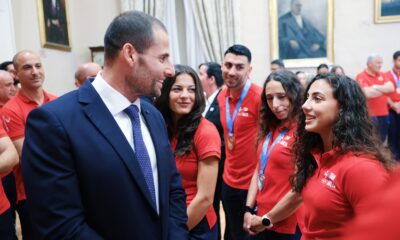
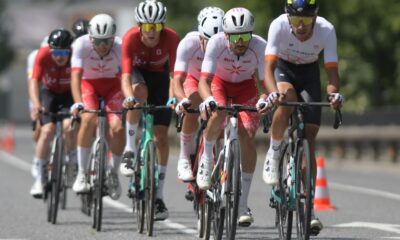
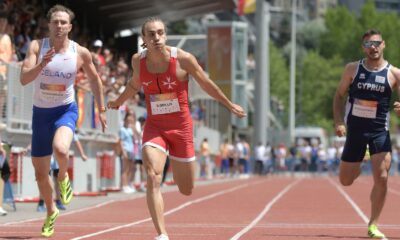
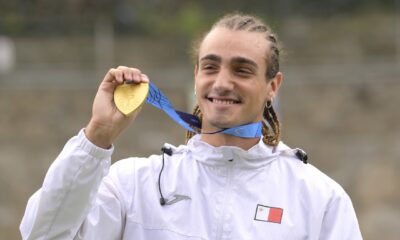
Team Malta is geared up for another strong performance at the Games of the Small States of Europe that will get underway on Monday with the opening ceremony in Andorra.
Two years ago, Team Malta did the unthinkable as they finished in first place in the medal standings with a staggering tally of 97 medals, 38 gold, 30 silver, and 29 bronze.
This time around, expectations are not that high as the Maltese Olympic Committee has already set its sights on securing its best-ever performance in a foreign GSSE, which at the moment stands at eight gold, 12 silver, and seven bronze medals attained in the Liechtenstein edition in 2011.
The build-up for this year’s Games was not shorn of controversy with Malta table tennis champion Gabriel Grixti accusing the Maltese Olympic Committee of ignoring its own selection criteria and discriminating against Maltese athletes after he was omitted from the team.
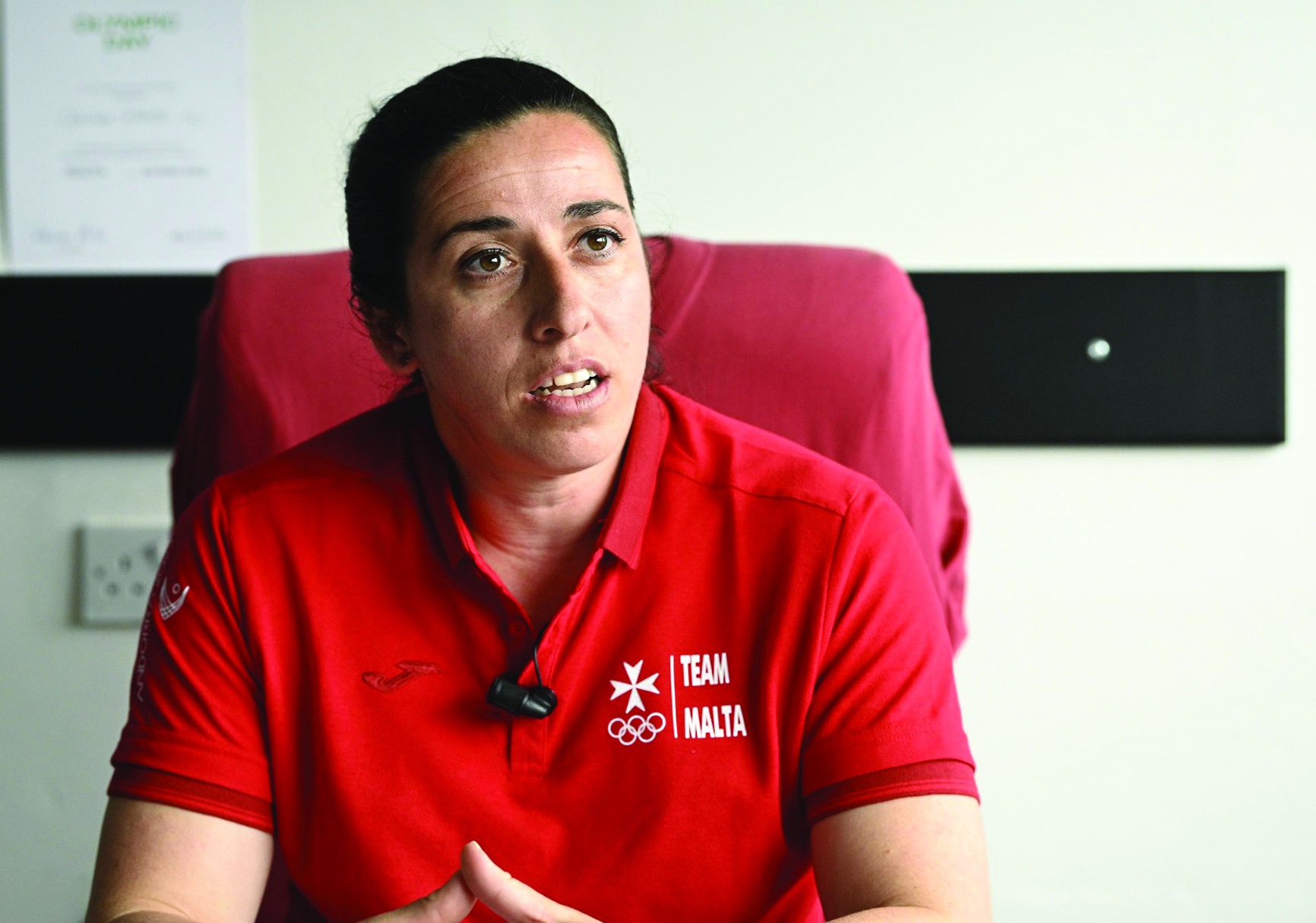
Charlene Attard, the MOC Director of Sport, was responsible for the athletes’ selection process for the Games in Andorra, and has rebuffed comments made by Grixti, describing them way off the mark.
Attard gave an insight on the qualifying process for the Andorra Games.
“The system of how athletes were selected for the 2025 GSSE in Andorra were posted by the MOC several months ago so that everyone knew what standards they had to achieve to make it into Team Malta,” Attard said.
“Once the long list, which established which athletes were eligible to participate, was finalised we established who had qualified on his own merit, and a decision was taken on others who were close to the MQS on whether they made the team or not.
“This time we had two qualifying criteria, one for the seniors and the other for the junior athletes as our philosophy is to also build a team for future editions.”ż
Pressed on Grixti’s comments over his omission for foreign-based athletes, Attard said that she understands the athletes disappointment of failing to make it into the team. But she said that claiming that the MOC had used a different criteria in its selection process is completely wrong.
“I can’t agree with him when he claims that we didn’t use the same system for every athlete’s selection,” Attard said.
“First of all, you have to make a distinction between those sports that have a quantifiable qualifying mark, such as athletics and swimming, just to name two, and racket sports, which can be gauged by the results one achieves.
“In table tennis, the level is very high. This year’s tournament in the GSSE carries ranking point, meaning all the top athletes from the small European countries will be there.
“Monaco, for instance, has a Chinese player, who holds a Monegasque passport, and is ranked 20th in the world. The same can be said of Luxembourg who have a top quality foreign player in their team.
“Malta has four athletes that have already represented us in the 2023 edition and their level is still good enough to compete at the Games.
“One has to point out that this time we have to take only three players and not four, like happened in Malta, as the Andorra organisers took this decision and rebuffed any attempts to increase the quota to four.”
Attard said that all athletes eligible to compete in table tennis were asked to compete in foreign tournaments and those who decided not to go for personal reasons, like Gabriel Grixti, inevitably hampered their chances.
“To compete in a GSSE you have to gauge the level of the players at your disposal and this time we asked them to go and compete in the Cyprus Open where there would be Cypriot representatives as well as players from other small nations,” Attard said.
“If someone couldn’t go due to personal reasons, I cannot discriminate against those players who went to play in these tournaments.
“Added to that, one can maintain that he did play an international tournament but we have to assess the level displayed in that competition because if it’s lower than that in the GSSE, then you cannot take a decision based on one’s results in such tournaments.”
Attard said that Maria-Carmelia Jacob, Dmitrij Prokopcov, Renata Strbikova and Felix Wetzel are not just coming to play in GSSE for Malta, but during the year they are also assisting in the formation of homegrown talent here.
“One of the players has his own academy and he has invited Maltese players to go and train with his coaches,” Attard said.
“Another player has been in Malta since 2005 and trains with Maltese players while the other two in the team also invite Maltese players for camps at their training base, where they have the opportunity to train under high-level coaches.
“Our goal at MOC has always been to push our athletes to go on and continue their careers abroad, as that is the only way to improve. We had athletes who are residing abroad and will have to miss the Games due to commitments related to their respective scholarships. We understood their position and moved on.
“One has to remember that the decision to bring in these foreign players was not made by the MOC but by the previous table tennis administration, and we agreed with that stance.”
Change of approach
Attard said that the approach to the GSSE needs to change as we can no longer look at these Games just as an opportunity to participate in international games.
“Our mindset has to change and we need to set higher targets than the GSSE,” Attard said.
“If we keep going to these Games with the mindset just to compete, we will never improve. We participate in the GSSE to be competitive and challenge for a medal. That has to be the mindset in all the competitions we take part in.
“We need to use the GSSE as a stepping stone for bigger competitions such as EYOF, Commonwealth Games, and Mediterranean Games.”
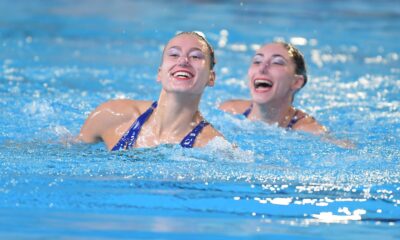
In Andorra, Malta will be competing in disciplines that are not very common in these Games such artistic swimming, karate and rhythmic gymnastics.
Speaking on Malta’s chances in these disciplines, Attard said: “In artistic swimming we have three very good swimmers who stand a good chance of winning a medal.
“San Marino and Andorra have some talented participants too but I believe that we will be in contention for a podium place.
“In artistic gymnastics we have a team five athletes, two seniors and three juniors. We are stronger in some apparatus than others but I believe we can hold our own while giving much needed experience to the junior athletes in the team.
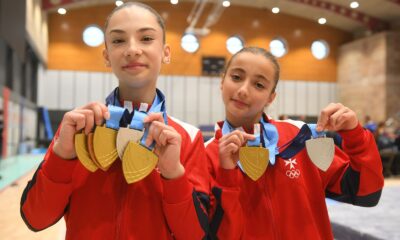
“In rhythmic gymnastics, we have two junior athletes who are competing for their first participation in these Games. Cyprus have a very strong athlete and even San Marino but the others are more or less of the same level so I am sure we can have our say for a very good result.”
Malta’s participation in this Games has been aided by the government’s decision to inject €5 million for the athletes technical preparation for the next four years.
Attard said that these funds were crucial for the MOC to build a solid structure to aid all athletes.
“After the Games in Malta, the government gave us €5 million for the next four years and we are using those funds not just for the GSSE preparation but to build a solid structure for the future.
“We have included schemes aimed at aiding young athletes to maximise their talent. All athletes who are receiving funding must prove that they deserve the support through the results they achieve.
“Should they fail to reach their objectives, the funding will be transferred to someone else, and that is done as we cannot afford to throw away financial resources.”
Note: This coverage is being brought to you thanks to National Lottery.